


“One radiant energy pervades and gives rise to all life. While it may speak to us through plants, nature spirits or the human beings with whom we share life on this planet, all are reflections of the deeper reality behind and within them. Myth has become reality in the Findhorn Garden.”
Extract from The Findhorn Garden (1969 edition).
Introduction
The Original Garden at the Park Ecovillage Findhorn is famous for being ‘where it all began’ and the place where the Community’s founders first connected with and worked with the subtle realms, devas, and nature spirits in Co-creation with Nature – which is one of the three core principles of our community along with Inner Listening and Work as Love in Action.
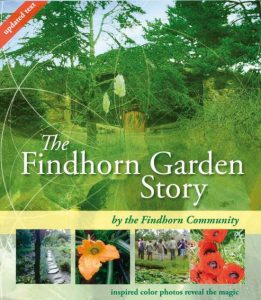 In this topic we give a taste of how partnering with subtle realms during the 1960s and 1970s helped to create the Original Garden at the Park Ecovillage Findhorn – a garden that confused the experts by how abundant it was, despite the poor sandy soil, and puzzled them as to how the space managed to produce record-breaking vegetables, including huge cabbages, seemingly against the odds. We have used the Findhorn Garden book[1] as a framework for this particular topic and have provided links to numerous other articles, posts and videos that enrich the story of the Findhorn Garden and the daring to co-create with nature and spirit.
Peter Caddy often referred to “The Three Kingdoms” – humans, devas and nature spirits – and we will look at each, exploring how human co-operation with the subtle realms was so well received and how it created such an amazing partnership while turning within to co-create a thriving and loving world. As the story unfolds we will ‘hear’ messages from numerous devas and also provide links to more in-depth articles, videos and publications on this subject.
So, let’s get started…
Human Creates The Garden
In The Findhorn Garden Sir George Trevelyan said:
“I make no claim to be a gardener, but I am a member of the Soil Association and interested in the organic methods and have seen enough to know that compost and straw mulch alone mixed with poor and sandy soil is not enough to account for the garden. There must be, I thought, a “Factor X” to be taken into consideration. What was it?”
He also added:
“This book will be an encouragement to many at a time when it is sorely needed. It will stretch thought and imagination and lead us out into the beauties of nature with a renewed sense of the vibrant kinship of all life.”
In the iconic TV program Mainly Magnus recorded in January 1973 at Findhorn, he made this emphatic statement: “One garden can save a world!”.
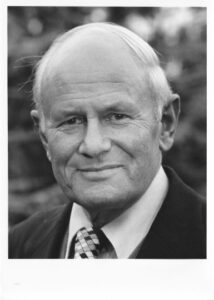
Peter Caddy portrait from Findhorn Foundation archive
In the Findhorn Garden book, Peter Caddy takes up the story of how the experiment in co-creation began in the garden:
“I started my first garden at Findhorn with no intention of it becoming a major project.”
And he continues…
“To begin with, a wooden interwoven slatted fence was erected and inside this, a concrete square with a small patch for radishes and lettuces was planned and a patio where we could sit in the sun in privacy.”
But then things took a different turn as Peter Caddy explains in the book…
“Of the three of us Dorothy had always had the closest contact with nature. One morning in May, a couple of months after we had first started to garden, she received a message during meditation that brought us into a totally new phase of the garden’s development. She directly contacted a spirit of the plant kingdom, the deva of the garden pea. We knew the devas to be that part of the angelic hierarchy that holds the archetypal pattern for each plant species and directs energy toward bringing a plant into form on the physical plane. To me devas and nature spirits were an integral part of the creative process, the life force personified. I brought out all those questions that had stumped us over the past several weeks as our gardens began to grow and Dorothy put them to the deva of the species concerned. Strange as it may seem, we received the answers. Practical answers to practical questions.”
For example:
“When Dorothy asked the lettuce deva what to do, we were told it would be better to sow the seeds thickly in each row then eliminate those that were weak rather than transplant. We could recycle the life force in them through the compost. This proved to be sound advice.”

The Landscape Angel by Brian Nobbs.
Peter says: “Frequently questions arose that were of a more general nature, and these were answered by a being who, for want of a better name, we called the Landscape Angel. This Being is the one who overlights the whole area and frequently acts as spokesman for the deva world. From this Being we learned many things. We learned, for example, that the devas deal with forces or radiations, whereas man tends to think in terms of chemicals, elements, trace elements, etc. We were told that the most important contribution man can make to a garden is the radiation that he puts into the soil with cultivating it, such as Love, and that every member of the group at Findhorn had something to give to the whole. One could contribute strength and power, another love and so on. We were told that this was far more important than the addition of chemicals or fertilisers, since the devas were quite capable of producing these for themselves without any help from man – presumably from the surrounding ether.”
You can watch videos of messages received by Dorothy Maclean from the Landscape Angel here.
Importance Of Co-creation
The following is an extract by Peter Caddy taken from The Findhorn Garden Part 1-4 Introduction…
“At first the creation of the garden at Findhorn, which started from small beginnings, seemed equally as senseless as that of the building of the Ark. Now, looking back, one can discern a thread running through everything that has happened since November 1962. One is able too to realise that there has been an underlying reason for everything that has taken place.
“It must be emphasised here that although both the Devas and the Nature Spirits belong to the Angelic Kingdom, their work is different. The Findhorn garden may therefore be regarded as an experiment in co-operation between three kingdoms: that of Man, that of the Devas and that of the Nature Spirits.
“The Devas are the Angelic Beings who wield the archetypal forces. There is one of these for every species of the plant kingdom and in addition there are Devas of sound, colour, wind, etc. These Devas deal with forces and with pattern or form. The Nature Spirits, or Elementals, are concerned with using energy to build the form, e.g. causing the sap to rise. In effect, the Devas provide the blueprint and energy and the Nature Spirits carry out the actual work.”
Many experts arrived to inspect the garden and give their thoughts and opinions including Lady Eve Balfour who said:
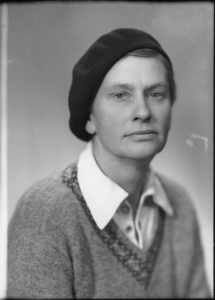
Lady Eve Balfour in 1943 reproduced by Licence from the National Portrait Gallery
“The impression uppermost in my mind is that something important is happening here. Gardens like this are needed the world over. If I were asked to describe the Findhorn garden in one word, I would answer ‘life’. Life abounding.”
On Lady Eve’s recommendation, Professor R. Lindsay Robb, consultant to the Soil Association, arrived in early 1969. After his tour of the garden he wrote:
“The vigour, health and bloom of the plants in this garden at midwinter on land which is almost barren powdery sand cannot be explained by the moderate dressings of compost, nor indeed by the application of any known cultural methods of organic husbandry. There are other factors and they are vital ones.”
Richard St. Barbe Baker, founder of the Society of the Men of the Trees, also paid a visit. Having dedicated himself for over fifty years to active co-operation between man and nature St. Barbe saw in the gardens a living promise of success for his work. In the chapter Talking Trees he writes: “The ancients believed that the Earth itself is a sentient being and feels the behaviour of mankind upon it. As we have no scientific proof to the contrary, I submit that we should accept this and behave accordingly and thus open up for ourselves a new world of understanding.
“How dull life would be if we did not accept anything we could not explain! For my part, I would rather be a believer than an unbeliever. It would be conceited to be otherwise, when there is the miracle of sunrise and sunset in the Sahara, the miracle of growth from the tiny germinating seed to the forest giant – a veritable citadel in itself providing food and shelter for myriads of tiny things which acts as an indispensable link in the Nature cycle and give the breath of life to man.
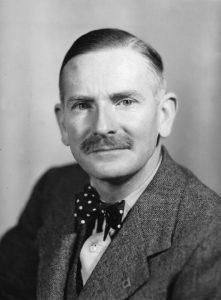
Richard-St-Barbe-Baker under license from National Portrait Library, London
“Let us accept that miracle of growth as fact and as a living symbol of the Tree of Humanity and the Oneness of Mankind and all living things.”
A phrase from a prayer by Richard St. Barbe Baker encapsulates things beautifully when it says: “Help us give our best to life and leave the earth a little more beautiful for having lived on it.”
The Findhorn Garden had demonstrated what could be done by man working hand-in-hand with the devas and nature spirits.
Peter Caddy said: “Our work in the garden has deeply rooted the energies of love and light in the very soil of Findhorn. The forces of nature have been our teachers.
“Much has been demonstrated at Findhorn of what can be done in a spirit of co-operation between man and nature. There is so much we have yet to do. In the new phase of experimentation we are moving into in the garden, we must begin to live more fully what we have been given. Some of the directives we have received present great challenges, but we know we must proceed as we have always done, step-by-step, in faith that we are revealing the oneness of all life.”
The Kingdom Of Light
Though Eileen Caddy was the person who brought in much of the more general early guidance she wasn’t particularly involved in the nature spirits side of things. In the Findhorn Garden book she said: ” I do not claim to understand many of the things that happened to us during the growth of the garden and of the Findhorn Community. Nor do I have any particular advice to give, except that the most important thing is for each individual to look within for his or her answers.”
The Deva Consciousness
The main ‘point of contact’ with the subtle realms was Dorothy Maclean who received numerous messages and said:
“The devas, who at first seemed to be far-off beings, through a joyous communion grew into close companions until eventually they made me realise that they, like the kingdom of heaven, are within.”

Original Garden, Original Caravan photo Findhorn Foundation
During a meditation Dorothy received the following instructions:
“My Child, to those who have an insight into life everything has meaning. The forces of nature are something to be felt into, to be stretched out to, and one of the jobs for you is to feel into the nature forces such as the wind, feel its essence and purpose for Me, and be positive and harmonise with that essence. It will not be as difficult as you immediately imagine. All the forces are to be felt into, even the sun, the moon, the sea, the trees, the very grass. All are part of My life. All is One life. My one life on this planet has been hacked into pieces by man instead of building a generous co-operation. Play your part in making life one again, with My help.
“Begin by thinking about the nature spirits, the higher nature spirits who overlight, and by tuning into them. It will be so unusual as to draw their interest here. They will be overjoyed to help and to find some members of the human race eager for their help.
“By the higher nature spirits I do not mean just the one that geographically overlights the area but the spirits of the different physical forms such as the spirit of clouds, of rain, of the separate vegetables. In the new world their realms will be quite open to humans – or I should say, humans will be open to them – and when rain is needed, for example, it will be brought about. It is even possible with you now if your faith were great enough and there were no sense of limitation.
“Now just be open and seek out into the glorious realms of nature with sympathy and understanding, knowing these beings are of the Light, willing to help but suspicious of humans and on the look-out for the false, the snags. Keep with Me and they will find none, and you will all build towards the New.”
In the book, Dorothy explains:
“At this point I might say that the term ‘deva’ is a Sanskrit word meaning shining one. On the whole, I have chosen to use this word rather than the English equivalent ‘angel’ which calls up stereotyped images that are more of a barrier than a help in understanding the true nature of these beings. The devas hold the archetypal pattern and plan for all forms around us, and they direct the energy needed for materialising them.
“While the devas might be considered the ‘architects’ of plant forms, the nature spirits or elementals, such as gnomes and fairies, may be seen as the ‘craftsmen,’ using the blueprint and energy channeled to them by the devas to build up plant form.”
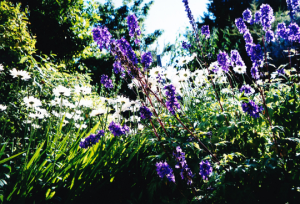
flowers photo Anniese Giuntini Worth
Dorothy adds that she also received the following in guidance:
“You are simply surrounded by life. You are a life force moving along with other life forces. As you recognize this, you open up and draw near to these others, becoming more and more one of them, working together.”
In the book it says that, to a deva, the garden is not an assembly of various forms and colours but rather moving lines of energy and it goes on to add: “In describing our garden they said they could see the forces from below gradually being drawn up and blending with those coming down from them in great, swift waves.”
The book later explains:
“The devas said, viewing it from the angle of energy, that the greatest physical contribution to the garden was the compost heap. We were given specific advice as to what ingredients to use, when to mix each individual heap, and when and where to spread the ripened mixture.”
And these extracts are from a little further into the book:
“It delighted the devas when Peter acted on their suggestions. While at the beginning of our contact they had seemed remote, our co-operation changed that, and they became friendly and even anxious to help.”
“Forces work through us into the soil, and extra strength is given to them by your consciousness of them.”
“Considerations we had hitherto thought impractical in the garden, the devas insisted were eminently practical. Our attitudes, thoughts and feelings had a great effect on the plants, they said.”
In the Findhorn Garden, we saw what the co-operation of humans and devas could bring about, each realm contributing a unique and vital energy.
 The deva messages weren’t just relating to the fruit and vegetables side of the garden as there were numerous messages from flower devas too including the following:
Polyanthus, azalea, yarrow, rue, periwinkle, wild rose, foxglove, honeysuckle, iris, wisteria, gentian, rhododendron, daffodil, nasturium, aster, dahlia, hellebore, lavender, honesty, sunflower, chamomile, lilies, sweet peas, carnation, marigold, cornflower, clematis, lilac, gorse and many others.
You can hear Judy McAllister reading some of these messages here
There were also messages from the tree devas such as cedar, birch, bamboo, oak, rowan, horse chestnut, holly and several messages from overarching tree devas. The video readings of some of these can be viewed here.
You can read more devic messages from trees in The Findhorn Garden Story[1].
Messages from the devas of various fruit, herbs and vegetables as well as those of the Angel of Sound, the Spirit of Air and the Sun Being from the Findhorn Garden Story are explored in The Findhorn Garden Part 2, The Devas.
In addition, there were devic messages relating to how to connect with the intelligence of nature as well as that of the elements and even with machines. You can watch video readings of some of these here.
Further devic videos can be seen in this post of short extracts
The Nature Spirits
Robert Ogilvie Crombie (known as ROC)

ROC photo. Findhorn Foundation.
Robert Ogilvie Crombie (ROC) was born in Edinburgh in 1899, and was the community’s protector, teacher and friend from 1966, when he first visited, until his death in 1975. His relationship with the elementals, the nature spirits ruled by Pan, is one of the pillars on which the community is built. Within a very short time of Dorothy having her first interaction with those she termed Devas, ROC visited Findhorn and became an ambassador for the Elemental Kingdom.
His role in the Findhorn gardens was pivotal, as he explained what was to be done and corrected errors that had inadvertently been made.
In the book ROC says:
“The true nature of plants cannot be described by scientific data only. My experience with the elemental kingdom has demonstrated that to me. But it was only after the research on plant sensitivity was published, opening up a deeper understanding of nature, that I became willing to speak publicly about the experiences I have had with the nature spirits, the elementals.
“Their realm is intangible and non-material, and cannot be appreciated by the five physical senses, except in a condition of heightened awareness. The existence of the elemental kingdom cannot be proved to the satisfaction of the scientist, nor can the reactions of it’s inhabitants be demonstrated in the laboratory. Yet to one perceiving with the higher senses, it is as real as any of the more material kingdoms.
“When we see the leaves change colour in Autumn, we might wonder how this is brought about. The botanist has one explanation, based on observation and analysis. The elemental kingdom has another, attributing the work to energy forms known as fairies and elves. Both are right. It all depends on the way you look at it.”
Discover more on this by visiting this post.
You can watch videos about ROC’s conversation with Pan here.
This post, about contacting the nature spirits, relates to both Dorothy and ROC, and was written by Brian Nobbs and can be read here.
Over the decades, Frances Ripley has enchanted many with her Visions Unseen, drawings of unseen beings and energy fields. In the book she describes in detail how she was compelled to draw without actually seeing what she was drawing at the time. Only afterwards, as her ‘vision unseen’ was made manifest on paper, would a name for the particular Being she had drawn come to her. She shares her delight and reassurance when ROC confirmed that he actually saw these beings exactly as she had drawn them.
From Dominance To Synthesis
David Spangler first visited Findhorn in 1970 and has been a teacher of subtle realities for over fifty years.
In The Findhorn Garden David says:
“In January of 1969, a colleague told me about a small community in northern Scotland, growing a miracle garden on sand through communication with devas, elves and other nature spirits. he showed me an advance copy of their booklet entitled The Findhorn Garden, An Experiment in the Co-operation Between Three Kingdoms. I was enthralled. Here was the very thing I had been looking for, a living demonstration of a trans-physical reality, anchored in tangible manifestation.
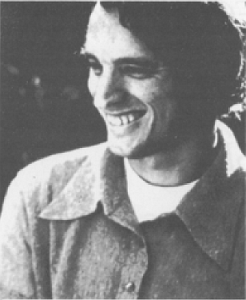
David Spangler is a philosopher, educator and writer on New Age themes.
“Little, if anything, is said about the relationship between humanity and nature as two aspects of a single life, or the soul relationship between them. But there was the Findhorn Garden, demonstrating a solution based on that same oneness of life that had become a guiding principle for me, and on an expanded vision of environment which included levels of consciousness not ordinarily taken into account.
“In the course of its development, Findhorn has pursued this exploration through communication with the inner reality behind the forms of nature, combined with practical action within the garden as a result of these communications. The community is demonstrating that there do exist lives from other dimensions of energy who are directly responsible for the manifestation of nature – the invisible lords and builders of the environment, known as the devas and the elementals. The story of the Findhorn Garden is essentially the story of communication with these beings and the resulting manifestation within the garden.”
This extract from David Spangler’s ‘Man, Nature and the New Age’ in the Original Series of Study Papers includes a message from the elementals:
“You must understand first how we work. We are not of the physical body of the plant of which you are aware. We represent the beings who make possible the growth and development of the forms of nature. We are not the physical body of the plant but we nurture it and enable it to grow. Indeed, all of the elementals are far more ancient as a kingdom than the Earth itself, and we draw freely upon the powers of cosmic creativity. We are children of the vast reaches of space, as much as citizens of any planet. Before a planet can come into existence, we are. And we bring the planet into existence. All that you see, we have formed following the plans laid down by God.
“As we enter the etheric world, we may take on various forms which are provided by the imaginations of human beings. But we are not the simple little beings that appear to flit from flower to flower, or hover about a tree; the simplest elemental of the tiniest flower is still an outpost of vast and cosmic power.”
To read this article in full please click here.
You can watch David Spangler’s video ‘Co-Creative Spirituality: David Spangler and an Overview of the Subtle Worlds’ by clicking here.
The Sequel
This chapter of the book brings things more up to date…
“A visitor to the Findhorn garden today would find it quite different from the phenomenal young garden Peter created in the mid-60s. Cabbages are back to their average weight and foxgloves once more aspire to reach four rather than eight feet. In many places the sandy base of the soil is barely visible beneath layers of compost.”
When Fred Barton arrived in the Community, with over 40 years experience as both an amateur and a professional gardener, his wisdom was derived from years of study and fond observation of nature. However, Fred didn’t hear, see or feel what were called nature spirits or devas. In time though, Fred was not only reading but also studying deva messages.
In the book he says:
“I have found here a far greater consciousness in regard to plants and gardening than I have ever had before. I wouldn’t have believed it possible because I have always had a deep caring for plants. But this knowledge of devas and nature spirits has lifted gardening for me beyond a process and given it a new vitality.”
Co-Creation With Nature Today
In the 2007 edition of the book Alan Watson Featherstone takes up the story. Click here to read the full chapter.
“A few months after joining the community I began working in the garden at Cluny Hill College (the former hotel that Peter Caddy had been the manager of, and which the community had purchased in 1975 to use as the centre for its educational programmes). I was eager to learn about the “Findhorn method” of gardening and to have experiences similar to those of Dorothy, ROC and others.
“I found myself responsible for a vegetable garden of about one acre with no previous experience of growing vegetables, no access to the previous focaliser of the garden for consultation and no clear model for how to work in the “Findhorn way”. It was not exactly the introduction to the garden I had expected, but with hindsight I know that, although it was uncomfortable at the time, it was exactly the situation that best enabled me to discover my own inner spiritual connection with Nature.
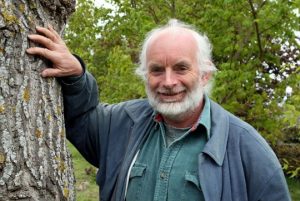
Alan Watson Featherstone, founder of the award-winning Trees for Life conservation charity that is dedicated to restoring the Caledonian Forest. Photo Geoff Dalglish
“I had to turn to the garden itself – to the plants, animals and the spirit there – to find what I needed in order to do my work. I started by spending a lot of time just looking at what was in the garden and seeing how things began to grow as spring commenced. At the same time I sought to develop through meditation some kind of connection with the essence of the garden, with the nature spirits or devas.
“The other major insight that I gained then was that by working in the garden, I became a part of it myself, and just as I was affecting the vegetables and other plants in the garden, so too was the garden affecting me on a daily basis, sometimes in unexpected ways. I was beginning to experience, in my own way, something of what the Deva messages referred to as the oneness of all life – that everything is interconnected, and what happens to one part affects the whole.
“Everyone, I now believe, has their own unique form of communion with spirit in the world, and it had been vital for me to discover my own, rather than try to duplicate those of Dorothy or ROC or whoever. By following my individual path, with my own personal experiences, I had in fact learned the same two fundamental principles from the garden that the Devas had provided to Dorothy all those years before: the power of love to nurture all life, and the interconnectedness or oneness of all life.”
He concludes:
“As I look at the world today, I see that all the elements for the emergence of a new human culture, based on the principle of co-creation with Nature, are in place. One of the essential foundations for a new culture that incorporates the principle of co-creation with Nature is that we need to learn to give something back to Nature, rather than just endlessly taking.
“Secondly, I believe we have to give life back to those areas of the planet which have been depleted and impoverished – this is where the work of ecological restoration comes in. The third aspect is in many ways the most important one, and is that we need to give love back to the Earth, to Mother Nature, to Gaia. The power of love to nurture all life is one of the key messages from the Findhorn Garden, and is central to what I have learned here over the years. The need for love to bring about healing on the planet, both in Nature and in the human world, has never been greater.”
Alan also wrote in Findhorn Today 1987 “Integrating Co-creation with Nature into the Wholeness of our Lives” which you can read by clicking here.
To Find Out More:
[1] The Findhorn Garden Book:

The 1975 cover of the first edition of the Findhorn Garden.
To purchase the book in the USA please click here.
The evolving topic:
This Topic has provided a brief overview of the subtle realms only in the context of the Findhorn Garden but there are many other avenues to this subject. If you wish to explore further then please use the search function on the Celebrating One Incredible Family website for the following words or click on the links given: subtle realms; nature spirits; co-creation with nature; devas; nature; our roots; ROC; angels; and many more.
- You may also like to read this article Pan, ROC and the Findhorn Garden (2002) by Brian Nobbs.
- In October 2025 BBC Radio 4 produced a radio programme about the Findhorn Garden. For more details and listen to it, please click here.

I’m a member of the Global Community and discovered ‘Findhorn’ back in 2020. Since March 2024 I have been a COIF volunteer. I live in England, in the East Midlands, with my husband and a family of dogs. I love to spend my days out in nature, going for walks in the countryside. Reading books, especially ones on poetry, philosophy and seasonal living is another favourite pastime. I’m a keen gardener and, perhaps unusually, prefer to spend time in my garden during winter and spring. Hobbies include nature photography, phenology and meteorology.


Leave A Comment