


Lady Eve Balfour OBE (1898-1990) was a founding member, and first president of the Soil Association. She gave a presentation at a conference at Findhorn in 1976 entitled ‘The World Crisis and the Wholeness of Life’, along with David Spangler, E.F. Schumacher, William Irwin Thompson and Sir George Trevelyan. The event was focalised by Roger Doudna and Tom Welch. Eve first became interested in Findhorn through her association with Sir George Trevelyan, who suggested that the Soil Association should pay attention to the gardens at Findhorn where unexpected results were being obtained on very poor soil. The Soil Association’s philosophy was one of enriching soil though composting, eschewing the agriculture community’s increasing focus on the use of chemical pesticides and inorganic fertilisers. Perhaps there was also a ‘Factor X’ to be taken into account …
Lady Eve’s Vision for Farming
Lady Eve decided when she was 12 years old that she wanted to be a farmer. At 17 she became one of the first women ever to study agriculture at an English university and she graduated from what was to become Reading University.[1] In 1919, at the age of 21, she and her sister, Mary, bought a farm in Haughley Green, Suffolk at the suggestion of a family friend. At New Bell’s farm a British scientist named Sir Albert Howard sparked Eve’s interest in organic farming. He had developed the Idore process of composting based on methods he discovered during his travels in the east. In 1931, he returned to Britain and tried for the rest of his life to convince the agricultural community here that farming methods should be based on large-scale composting and not the inorganic fertilisers that were becoming popular. Howard held a passionate belief that agriculture based on chemistry was unsound, and that inorganic fertilisers altered soil microbiology, lowered disease resistance in crops and generally led to a deterioration in the quality of soil.[2] He influenced Lady Eve’s farming methods, as did the work of Rudolph Steiner and the bio-dynamic techniques he had developed and recommended.
In the early 1930s, Lady Eve’s farm, along with others in the UK, was subjected to a church tithe amounting to a tenth of annual income. This threatened the bankruptcy of many, including Lady Eve. She campaigned extensively against tithes and was in opposition to the Vicar of Haughley.[3] To help finance the farm she co-wrote several detective novels under the pseudoname, Hearnden Balfour, the most successful of which, The Paper Chase (1928), was translated into several languages.[4] She also played saxophone in a local jazz band. She lived with her life partner, Kathleen Carnley (1889–1976) at Haughley Green for 50 years. Kathleen joined Eve in the 1930s and was herself a skilful dairy worker. From 1939 onwards, refugees were sheltered, and taught agricultural skills, at New Bells farm for a number of years.
Lady Eve’s describes her perspective on farming in her own words in an address to the IFOAM conference in Switzerland in 1977 entitled, ‘Towards a Sustainable Agriculture – The Living Soil’. Also speaking at the conference was Stuart Hill, Findhorn Fellow.
She said: “I hold that what we have to teach is the attitude defined by Aldo Leopold as ‘A Land Ethic’. This requires that we extend the concept of Community to include all the species of life with which we share the planet. We must foster a reverence for all life, even that which we are forced to control, and we must, as Leopold put it–‘Quit thinking about decent land use as solely an economic problem, but examine each question in terms of what is ethically and aesthetically right, as well as what is economically expedient. A thing is right when it tends to preserve the integrity, stability and beauty of the biotic community. It is wrong when it tends otherwise.”[5]
In 1939 New Bells farm, along with an adjoining farm owned by Alice Debenham, became the focus of ‘The Haughley Experiment’ which was the first scientific comparison of organic farming and conventional farming. One organic plot, one mixed plot, and one intensive plot were established side by side. Results from the experiment concluded:
- Organic fields can become self-supporting. This happens because of increased biological strength.
- Organic crops put more energy into establishing a healthy and expansive root system.
- Livestock in the organic section required less food for a higher yield of produce such as milk, meat or eggs.[6]
- The soil in the organic section was more able to respond to the needs of plants through seasonal and rotational cycles, hence the concept of the Living Soil. [7]
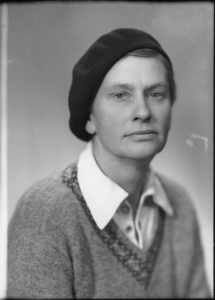
Lady Eve Balfour by Elliott and Fry 1943 NPG x95254
Lady Eve published her findings in a book in 1943 entitled ‘The Living Soil’[8] which became an international bestseller. This book and the success that followed led Lady Eve to form the Soil Association in 1946 with a group of likeminded pioneers. Sir Albert Howard chose not to join the Soil Association as he considered Steiner’s biodynamic techniques to be scientifically unsound. He coined the term ‘muck and mystery,’ or alternatively ‘muck and magic,’ to sum up his disapproval of the marriage between science and Anthroposophical bio-dynamic techniques practised at New Bells farm, and embraced by the Soil Association.Eve hoped that the government would provide support and funding for organic production, but she was to be disappointed as the 1948 Agriculture Act committed Britain to a system of highly mechanized, intensive methods to the detriment of ecosystems, biodiversity loss, and chemical contamination of rivers and food chains.
Six years after its inception the Soil Association membership had increased to 3,000 owing to the dedication of a small committee, including Lady Eve. The journal that they started, then called ‘Mother Earth’, is still running over 50 years later under the name ‘Living Earth’. Discussion about developments in scientific research, particularly developments in biology and the emerging field of ecology as well as discussions about progress in agricultural science and technology, were a dominant feature of the early Soil Association’s quarterly journal, Mother Earth. In 1949, the Soil Association succeeded in gaining status as an official “agricultural research association”. Eve made clear her view on the importance of biological science: “biology, hitherto the most neglected of sciences, is the most important of them all, for while we have learned how to use the sciences of physics and chemistry to produce material things and to bring about mass destruction, we have patently failed to solve the problems of how to live in harmony with ourselves, with each other, or with our surroundings”.[9]
The Soil Association held their annual conference from the late 1940s until the late 1960s at Attingham Park, an establishment run by Sir George Trevelyan, a long-term friend of Eve’s and himself a Soil Association member and advocate of Rudolph Steiner and his bio-dynamic agriculture techniques.
Lady Eve Balfour and the Findhorn Garden
Lady Eve’s interest and involvement with Findhorn began in the late 1960’s after Sir George visited for the first time in 1968. He advised her and her associates at the Soil Association to visit and see for themselves the spiritual forces at play in the growth of the garden, and to give advice on composting. Later in 1968, Mary Balfour visited Findhorn and wrote to Eve about what she found there: “.. the Findhorn experiment is definitely a continuation of the work you have evolved at Haughley but including possibly a new dimension. Terms used and the explanations given tend to be different, but I don’t feel the results are so different… it is possible that by combining the two techniques – as it were – the art of growing things would be enriched and expanded”.[10]
Eve encouraged other members of the Soil Association to visit Findhorn. Mary agreed with her and wrote in November 1968: “Yes, obviously, that is the right thing for the Soil Association to encourage as many individuals as possible to go and see for themselves”. The Soil Association’s involvement with Findhorn grew and in 1969 an eminent member of the Soil Association and one of Eve’s close associates, Dr Lindsay Robb, visited and wrote the following about his findings: “The vigour, health and bloom of the plants in this garden at midwinter on land which is almost barren powdery sand cannot be explained by the moderate dressings of compost, nor indeed by the application of any known cultural methods of organic husbandry. There are other factors, and they are vital ones. Living, as this group are [sic] living, on the land, by the land, and for love of the land, is the practical expression of a philosophy which could be the supreme form of wisdom and freedom”.[11] Members of the Soil Association began to refer to the new dimension Findhorn brought to bio-agriculture as Factor X.
At Eve’s suggestion in 1969, one of the Soil Association’s founding members, Donald Wilson, made the first of four visits to Findhorn with a view to assisting the Findhorn community in developing a composting system, as Trevelyan had initially suggested. Wilson gave Eve a document when he returned from his first visit that included an account of the spiritual dimensions of the Findhorn garden. It is not clear how many members of the Soil Association made links between the scientific base of the Haughley Experiment and the spiritual underpinnings of the garden at Findhorn. Dr Lindsay Robb and Donald and Enid Wilson, close allies of Eve, and possibly others seem to have shared a similar view that the two experiments had some type of connection or common ground. Barbara Crump wrote a letter to Eve in 1970 to suggest that some Soil Association members viewed the organisation as part of a “spiritually-aware” network of organisations.[12]
Lady Eve presented at the Findhorn conference on ‘The World Crisis and the Wholeness of Life’, in 1976. Fortunately, we have access to her presentation through Findhorn Fellow, Angus Marland, who was present at the event. He recalls her telling the story of the importance of observation, citing the botanical discoveries on the rose family by a French monk. Evidently, Lady Eve was able to value and integrate a combination of an interest in observational scientific study alongside a belief in a spiritual dimension to her work with plants.
The Spiritual Dimension
The spiritual dimension played a very important and significant role in Lady Eve’s life and thinking in this period of her life. She made a clear expression of her spiritual perspective in a letter to a Soil Association member who petitioned for the Soil Association to have the outward face of a Christian organisation. Eve’s response included the following:
“I must reply, like the late Prof Joad, ‘it depends what you mean by’ religion – my definition may be very different to yours. To me it means recognising the spiritual basis of everything that is. I believe spirit to be the only reality, that it is the substance out of which all that exists is created. Thus, what we call the material world is a physical manifestation of spirit, a kind of ‘precipitation’ of it. I believe that the all-pervading creative force which has fashioned everything is LOVE, and I believe that a divine plan for the planet in general and each one of us in particular is being worked out, and that our purpose here is to learn first how to become channels through which that force can be transmitted and finally to become conscious agents of it. All the great spiritual teachers of the world have been such God-centred conscious agents of the spirit”.[13]
She wrote a letter to her agnostic brother in the early 1960s, to explain to him aspects of her spiritual worldview:
“I believe that as indestructible spiritual beings, we have lived actively on many planes, and will continue to do so; that whatever wavelength, or rate of vibration, we happen to be operating on, we build ourselves bodies suitable to those conditions, both for protection, and to use as our instrument. Here on Earth, I believe our physical bodies and brains are intended to be the instrument of our minds and that our minds are inseparable from our spirits… I believe that the purpose of our individual existence is to gather experience into the pool of spirit, and to evolve until we are fully self-conscious, recognising and fully aware of the divinity within us and identifying our ‘I’ with it, so that we can use our instrument as our tool… instead of having it largely control us…”[14]
Eve expressed her view that “the Kingdom of God on Earth” will be achieved through humanity’s spiritual transformation:
“I believe that the ultimate development of a race of fully conscious God/Man is the purpose of human evolution and that when the majority of mankind has so evolved we shall have the Kingdom of God on Earth… I believe that each existence, whatever plane it is on, is a school where certain spiritual lessons have to be learnt, lessons that take us one step further in this evolutionary process…”. She continued “… I believe we all live simultaneously on two levels – an inner spiritual (ie. eternal or cosmic) level, and a material, outer and transient level. When these two levels are perfectly integrated we see perfect man (as in the human who was one with the cosmic Christ). Probably the majority of people are totally unaware of the inner level. To them the outer level is all, and the other is thought of, if at all, as something belonging only to an after life state. The next evolutionary stage, which many of us have now reached is, I feel, to know intellectually that we are dualities and that the inner level is the most important. But we still act sometimes on one level and sometimes on the other, but without necessarily being aware of which is dominant (awareness is yet a further stage on). All the senses are duplicated on both levels. There is the outer physical ear, eye, voice, etc., and the inner ear, eye and voice. When people have E.S.P gifts and see and hear non-material things it is not the physical ear, eye they sense them with, but it seems to the beholder or hearer that it is.”[15]
There was no contradiction between Eve’s spiritual awareness and her respect and adherence to scientific knowledge and method. Indeed, her spiritual attunement enabled her to stay with uncertainty and humility as to what was yet to be discovered in the world of science. In the foreword to a pamphlet entitled ‘9,600 Miles Research Tour Through the USA in a Station Wagon 1953’ she writes:
“Our ignorance about Life is at present profound. Those who believe in Wholeness know that we can increase our knowledge only by admitting ignorance, by cultivating humility, by enlarging our field of vision through learning how to observe ecologically, and by respecting all life rather than wantonly destroying it; by learning to use science to interpret, and work with, natural processes, instead of providing inferior substitutes for them, and by acknowledging that within natural laws Divine Law is manifested”.[16]
Advocates of the organic movement within the Soil Association consistently studied the complexity of soil and insisted on the crucial role played by a myriad of microbiological compounds, particularly mycorrhizal fungi, in promoting healthy plant growth, even though these were little understood at the time.[17] Scientific discoveries in the 21st Century have been able to greatly expand and develop this knowledge with the discovery of the ‘wood wide web’ and the interrelationship between fungi and tree root systems.
Later Life
Lady Eve retired from the Soil Association in 1984 at the age of eighty-five but maintained the cultivation of her extensive garden. She continued to write and lecture for the rest of her life. A statement that “Health can be as infectious as disease, growing and spreading under the right conditions” is attributed to her. She was convinced that her organic method of farming was central to “a standard of health and a power of resisting disease and infection… greatly in advance of anything ordinarily found in this country; such health as we have almost forgotten should be our natural state…” She believed organic food is part of the solution, alongside spiritual awareness, without which ‘wholeness’ is impossible to achieve.[18]
She died from a stroke in 1989 at Belhaven Hospital, Dunbar, on 14 January 1990. She had been made OBE a few weeks before her death, despite opposition which continued until the eleventh hour. The very next day after receiving her OBE the government announced the first ever British grant enabling farmers to convert to organic methods.[19]
———–
[1] https://en.wikipedia.org/wiki/Lady_Eve_Balfour
[2] The impact of the early British organic movement’s anti-science bias and New Age religious beliefs on relations with agricultural scientists and policy makers. Erin Gill, (2011)Aberystwyth University, UK
[3] Soil Association Article- ‘Lady Eve wanted to do things differently – and she did.’ www.soilassociation.org
[4]https://thebertonandeastbridge.onesuffolk.net/history/history/lady-eve-balfour/
[5] ‘Towards a Sustainable Agriculture–The Living Soil’ Presentation at IFOAM conference in Switzerland in 1977 by Lady Eve Balfour
[6] Soil Association Article- Lady Eve wanted to do things differently – and she did. www.soilassociation.org
[7] The Living Soil and the Haughty Experiment (Universe Books, 1975)]
[8] Balfour, E. (1943) The Living Soil, Faber and Faber
[9] The impact of the early British organic movement’s anti-science bias and New Age religious beliefs on relations with agricultural scientists and policy makers. Erin Gill, Aberystwyth University, UK
[10] Erin Gill (2010) Lady Eve Balfour and the British organic food and farming movement, PhD thesis, Department of History & Welsh History Aberystwyth University
[11] Op Cit
[12] Op Cit
[13] Op Cit
[14] Op Cit
[15] Op Cit
[16] Op Cit
[17] Op Cit
[18] Op Cit
[19]https://thebertonandeastbridge.onesuffolk.net/history/history/lady-eve-balfour/

I first visited Findhorn in 1979 and came back regularly before buying my caravan when I retired in 2019. I worked as Director of an NHS Training School running a clinical and doctorate programme.


Leave A Comment