


First Impressions and the Esalen Connection
The first time I remember Cullerne was during my Experience Week in 1979. A tour of Cullerne was included in that week, and I was deeply impressed. I had just come from Esalen, where I’d been in the garden and grounds for three months and had “got the bug” for French intensive biodynamic gardening, which they were practicing there.
When I saw Cullerne, it was the early days of the Garden School. I think they had three or four apprentices working the grounds, and they were beginning to break ground for vegetables.
The land had previously been owned by the Gibsons, the owners of the Findhorn Bay Caravan Park. All the grassland and vegetable fields you see now were originally horse grazing. There was a big barn area and the gardeners were starting to run chickens, hoping to provide enough eggs for the entire Community – which was about 300 to 320 people at the time.
Returning for the Garden School
I had a very short, ‘meteoric’ career at first. I left after about six months as a member; I had wanted to go to Cullerne, but I wound up in Home Care. I eventually left for the United States but, while I was there, a prospectus about the Garden School came to me in the post. I got really excited, wrote to Michael Lindfield about it, and started saving money. I worked and eventually had saved enough to do one of the courses which were running quarterly.
 I returned in mid-summer 1981 for the second intake of the Findhorn Foundation Garden School. Before I arrived, Michael Linfield warned me that I needed to drop all my idealistic notions about community and prepare for hard work. Since I was working in a department store at the time, I told him I was on board. I had a ‘religious conversion’ so to speak. I came back so happy I could have kissed the ground all the way from the airport
The Origins of Project Cullerne
The story of the project’s origin, as I had it from Gordon Cutler, involved Dick Barton. Dick was really the mind and inspiration behind the whole thing. He had been General Secretary of the Findhorn Foundation, but Cullerne was his ‘baby’.
The Foundation had originally bought Cullerne from the Gibsons. There’s a famous story about a ‘missing decimal place’- management thought they were getting a £70,000 donation to support the purchase but it turned out to be £7,000. The Foundation was in a period of massive expansion but in the process was running into big debt. In 1982 the feeling was that we had to ‘jettison’ something, and Cullerne was chosen.
As far as I understood, Dick Barton and Francois Duquesne came up with Project Cullerne to save it from being sold. A company was set up and, to raise money quickly, they offered shares with up to 12% interest, which was very attractive to investors. They saw it as a long-term asset for a garden school and a vegetable source for the Community. The running of the project was held at ‘one step removed’ from the Foundation.
The Management Group and Mentors
The management group and trustees included:
- Dick Barton: The visionary.
- Fred Barton: A consultant and source of wisdom. I learned most of what I know about gardening from Fred; he was absolutely amazing.
- Vance Martin: Involved with the tree nursery.
- Michael Lindfield: Part of the management group from the beginning.
- Gordon Cutler: Formerly in personnel and management. He was good at adding a ‘touch of reality’ to the fairy dust, though he could be quite critical of the history. I admired him tremendously; the time I spent talking with him built my blocks of understanding the Community.
- Hugh Ferrar: Previously focalised Cluny and had been a Rhodesian civil servant.
- Alan Jacobson and George Ripley: Both were among the first directors and investors.
- Will Raap (Gardens for All) became involved. Will Raap helped with fundraising for rotavators, garden carts, and infrastructure.
The Philosophy of the Garden
I remember that the Garden School ran for about two or three years. I eventually became a staff member, though I was initially told I had a “terrible attitude.” I think I was a bit ‘Eeyore-ish’ and critical. In response, I became almost fanatically positive, what I call ‘neon orange.’
Cullerne drew a dedicated crowd. I used to consult the I Ching about my relationship to the Foundation, and I always got “The Army” (Hexagram 7), which signifies discipline and a pointed purpose. Our purpose was clear: grow vegetables, make it work, and demonstrate spiritual principles through practical results.
Dick Barton insisted we work in silence whenever possible, which was very powerful. I once told Dorothy Maclean that I felt guilty because I didn’t “hear voices” or see devas. She told me, “Don’t worry. Your love of nature is your entry into cooperation with nature.” Fred Barton used to say that if he heard voices, it would just throw him off his work!
The Garden School Curriculum
The three month programme was very much work-based with some educational input in specific topics.
 The presentations covered
- Propagation
- Compost and soil preparation
- Tunnel growing
- Ornamentals
- Vegetable Growing
- Landscaping
- Tool care and use
- Appropriate technology
We also did monthly trips to visit local gardens.
Much of the learning took place through practical work, the students rotated through the different areas of the garden and also took part in group projects.
The Transition Back to the Foundation
Eventually, the Garden School closed. I had suggested that it wasn’t a ‘real’ school and that we were operating under false pretences, hoping to spark improvement. Instead, they just decided to stop the school entirely.
Later, I felt Cullerne needed to come back into the Foundation. This led to a difficult management meeting where we asked Dick Barton to resign. He had always said that if the management asked him to, he would go without quibbling – and he did. He and Marny moved south, and the rest of the garden group gradually drifted away.
The task of ‘rolling up’ Project Cullerne fell to Maureen Smith and me. Maureen was a real trooper – a former stockbroker from the London Stock Exchange. She had fallen in love with the place and, despite gardening not being her forte, she tended the relationship with the investors. To ease the pressure, she explored with them if they could donate their capital or stop receiving interest. In the end she arrived at a manageable amount for the Foundation to buy out the company. As I remember, around 1984, the Foundation bought it back and it became a Community Department.
 The Mid-80s: Fences and process
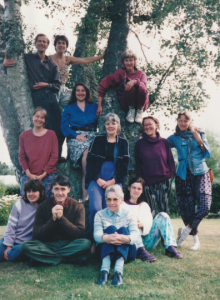
During an interim period around 1984, Jonathan Caddy worked with us. There was a brief ‘crazy’ time where the group didn’t want ‘focalisers’ – they thought the term was too masculine – so Jonathan and I were called ‘facilitators.’
Later, Jon Drake became the focaliser. Jon ushered in a new and more gentle regime and though I took on projects such as rebuilding the perimeter fence with Gary Johnson using timber we cut and milled with John Christie at Black Hills, it was clear I needed to move on. In the mid 80s I went back to the USA for some time and when I returned, I started focalising Cluny Garden. By 1988, Peter Caddy told me the garden had never looked so good, even when it was a hotel.
 The Community Supported Agriculture (CSA) Era and Restoration
In the early 1990s I started exploring the option of running a separate smallholding with Christopher Raymont and Hugh Andrews. We were advised by Alan Lee, who had CSA experience from the Intervale Institute in Vermont, Cullerne would be a great place to start a CSA.
Christopher and I became co-focalisers of Cullerne Gardens. We upgraded the space, reskinned the polytunnels, and rejigged the irrigation. We started working with Mathis Rosenbusch, who was an incredibly hard worker, and Cullerne Gardens became a partner in Earthshare,
Leaving the Garden
By the early ’90s, I was limping badly. My GP showed me an X-ray of my knees. I had no cartilage left; the tibial plateau was cracking and growing back in spikes. He told me exercise wouldn’t help and that I shouldn’t get an operation until I was “crawling on all fours.”
My sister, an osteopath in the US, told me simply: “You need to change your line of work.”
I eventually moved on to focalising the Community Centre (CC) and worked in S&PD (Spiritual and Personal Development). I realised I could “clean up as well as the next man,” even if my days of hard digging were over. In a way it was a blessing as I felt making a religion of hard work and pushing myself and others was in the long term a poor spiritual practice.

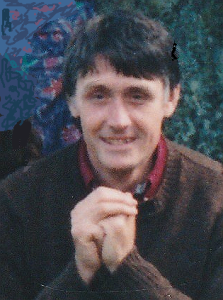
Came to Findhorn in 1979; a musician first and foremost and gardener; married to Kate O’Connell


Leave A Comment