


I produced this document for the Visitor Centre in 1995 to support members conducting Park Tours. The original document is quite tattered but we added it at the end in case you’d like to see the ‘real thing’.
I revised it several times over the years but include here only the 2003 version which I co-wrote with my wife Sam Graham. It shows the progress made over the intervening 8 years.
***
Starting at the Universal Hall Visitor’s Centre
It is important to note that the Foundation community here at The Park is not a fully functioning ‘eco-village’. But we are aspiring to that goal of complete ‘sustainability’, which simply means that we live and use resources in a way that doesn’t deplete the environment around us over time. We have carried out lots of building and different applications of alternative technology in the last ten years which we will see on the tour.
A little about The Hall. It was started in 1974 and is not particularly ecological or energy efficient, as that wasn’t being thought about much when it was being designed and built. But it is beautiful and it is a great space and tribute to beauty and craftsmanship.
Point out the stonework: to the left of the entrance doors was a section that a local builder did. It wasn’t great and we reckoned we could do better ourselves. It took over 5 years but two masons worked their way around the building toward the Café, getting better and better. Neither had done masonry before. The stones are all laid without mortar and were shaped and fitted by hand. The stone came from Hopeman, 5 miles east.
Burt Lancaster worked on the building for 3 weeks when he was in Scotland making ‘Local Hero’ and said it was the ‘best 3 weeks of my life”!!!
The stained glass is by James Hubbell of San Diego, California, a visionary artist who also designed several buildings for the Foundation that were too far out to build, even for us.
Walk from the entrance to the café
Point out the improvement of the stonework to the pinnacle of perfection at the chimney. Worth a close up.
Point out AES solar panels on the roof of the Press Bldg.- aka Alternative Energy Systems alias Weatherwise – that are manufacturers of solar panels since 1980. They are a very high quality ‘flat plate’ collector that uses a tedlar/teflon film double glazing system in an extruded aluminium frame. They have been used all through the UK and exported as far away as Africa and India. Typically you can get about 50% of domestic hot water from a 3-4 m2 system (normal family size).
There are 3 types of solar energy typically used: 1) Active solar 2) Passive solar and 3) PV or photovoltaic or electricity producing panels. Solar panels are what is known as ‘active solar’ because they generally use a pump or other mechanical methods to move water around the system from panel to hot water tank.
The panels on the roof of the Press building is an experiment with a new low cost system that uses a solar powered pump and so needs no mains electricity to work. It is less efficient than the current AES panel but is very cheap and easy to install, (there are additional notes on this) [1]
Walk toward Caledonia and stop where you can see the front.
Two kinds of solar energy application are used on this building. An active solar panel system on the roof (8 m2) that produces hot water and was made extra large to see if we could also heat the house with solar. It doesn’t heat the house, but makes a shit load of hot water! It is the Rolls Royce of the 12+ active systems we have.
Passive solar energy is what the conservatory and the large bay windows and patio doors are providing. Passive solar is generally when we design the building to be a collector of solar heat by having large window facing south to collect and trap the sun, so that the building becomes a large solar collector. That is instead of making panels and put on roof, we make the building a solar panel. It works great in this climate. Simple principle: big windows on south, small windows on north. It is hard to measure how much benefit in terms of cash savings, but it is significant and makes a wonderful space to be in during sunny winter days (winter lasts 10 months here) when it’s too cold to sit outside. In reality we don’t get much energy of any kind in Dec & Jan. The rest of the time it can be really good. We are the 6th sunniest place in Britain.
This house has been retrofitted from being a completely normal Scottish modern bungalow (not built by us) to quite an energy efficient and solar building. As well as the solar features we increased insulation in loft and floor. Major transformation from what it was!
Walk down the path and onto runway.
Explain the origin of the caravan park was as a ‘dispersal runway’ for planes during the war. Why we have such a large road, (and why we always call it the runway!) Essentially it was a big parking lot for planes. Now we’re building an ‘ecological village’ on it – a great example of recycling!
Take the path between Sunrise and Treetops bungalow through the central gardens and tell a little about the desolate sand dunes that were here in 1962 when Peter. Eileen and Dorothy arrived. Dramatic transformation. Walk through the original garden and point out the original caravan which has recently been restored (at huge cost). Garden is still very productive and intensively cultivated, all organically. Soil has been improved by compost and hard work can point out Peter Caddy’s bust – no it’s not Winston Churchill!
Walk by Eileen’s house, the first permanent house completed for her in 1990. More on construction later. Take them to CC mosaic (patio) where you will see the 12 m2 solar system for the Park kitchen – a great place to use solar as a big hot water need for cooking-for 1-200 people twice a day. Point out the extension, great passive solar features…. very special argon gas filled windows that are the best you can get. If time you can take them inside, very beautifully built with building school students and all volunteer crew over 16 months. The second summer the crew was almost all women. Stained glass of the Firebird by Hubbell. A student architect had the idea for the 12 sided shape and the use of recycled telephone poles as the main structure. We bought them from British Telecom for £10 each.
Walk to the Runway
Point out the recycling area. We recycle paper, cardboard, glass, aluminium, copper, steel and other metals, batteries (very toxic). As yet can’t do plastics in this area. Recycling is important but we shouldn’t produce alot of this stuff to begin with.
Move to Guest Lodge and Youth Building on the village green.
Again lots of solar. This is guest housing built in 1991/2. Cost £85,000. Youth Building is for the community kids, and the insulation is tested to the max with the loud music they play!
The construction we use is based on all timber fibre ‘breathing wall’ that allows the materials to interact and moderate indoor air humidity. Normal practice is to seal the house with plastic or aluminium foil, trapping the air and that can result in serious ‘indoor air pollution’. Many modem man-made materials, paints and fabrics are not stable and give off gases and chemicals after they are in the house. Can lead to ‘sick building syndrome’ that affects health. We use all natural and non-toxic materials throughout. Based on German system called Building Biology, that tries to replicate natural conditions found in nature.
Wall is clad in timber (Douglas fir, locally grown in managed forests), insulated with recycled paper (called ‘cellulose’ treated with naturally occurring salts for fire and vermin) and using boards that use the natural lignin in the wood for binding rather than formaldehyde glues or resins. Inside surface is plasterboard. All the paints and finishes inside are organic plant based products that are safe to use and produce no toxic or hazardous waste in then- manufacture. Most conventional paints do give off nasty fumes and can produce as much as 30 times their volume in waste products that have to then be treated or often not and just adding to pollution.
The grass on the roofs was an idea we wanted to try because it allows the earth to still have living things over this patch of ground. It is interesting, low cost and fun. It changes with the seasons, has different kinds of wildflowers and you only need to mow it maybe once or twice a year, or get a goat. It has been very successful.
The organic ‘natural’ paints haven’t worked so well on the outside of the buildings and we are still experimenting with different ones.
Walk up to Pineridge, can point out ‘Meadow’, the kit house from Finland. We wanted to experiment with a good quality kit house, highly insulated and well built, that would be faster to erect. It did go up faster, but cost about the same per m2. (This is available for viewing)
Stop on road and talk about windmill. Officially called a ‘wind generator’, it was erected in October 1989 at a cost of £72,000. Its is rated at 75 kilowatts and has 17 m diameter blades. The generator is 23.5m above ground and the top of the blades reach to 32m (108 ft). It produces about 20% of our electricity, or about 10% of our overall energy (ie electricity is about 50% of our energy). We export what we don’t need to the national grid, usually very little. It has been highly reliable, only one or two very minor problems and we are very happy with it. Someday hope to put up another 2 machines. They would be slightly bigger but produce three times the energy (225 kilowatts). It is very quiet when you stand next to it. Generally when the wind blows the noise from the wind is louder than the generator.
Point out the boutique, which is our community clothes recycling centre, and you can explain the principles of manifestation!
Point out Family House, now mainly the Planning Office, our first passive solar building, one of the first in Scotland built in 1981 at a cost of £10,000. Very cheap and utilitarian, but not so well finished or pretty to look at.
Walk up the path an around to compost area. Explanation of composting by one of the gardeners.
Walk to Nature Sanctuary, let people ooo and aah. All natural and local materials built by Ian Turnbull, a geologist turned stone mason. Turf from a local building site in Findhom and stone from several local quarries. Only cost £1000 in materials and took a year to build and dedicated to Nature. Take them in to look around. The interior represents earth, sun and moon: the stone in the middle from Iona is the earth, the skylight in the roof the sun, and the pattern in the slate floor the path of the moon around the earth. The balance of female and male energies. Whiskey barrel window frames and seats. The building expresses the feeling of harmony between humans and nature.
Walk up the steps and to the back road to Bag End.
Now they get to see caravan living at its best. Most of these have been here 20 or more years. Caravans could arguably be called the most unecological dwelling imaginable, as the thin walls make them impossible to heat and the metal box construction leads to condensation. The result = cold and damp, unhealthy to live in. We have tried in some cases to insulate them, apply double glazing etc but they still are not great. One thing we have done is to install a lot of wood stoves. Wood is a cheap and renewable fuel, provided it comes from sustainable sources. We are fairly careful to get ours supplied from forest thinnings and plantations, not from mature woods being clear cut. Burning wood does produce CO2 and contributes to global wanning (greenhouse gases) but provided new trees are planted then the same amount of CO2 will be absorbed when the new trees grow, thus maintaining the balance. Fossil fuels release CO2 that has been stored for millions of years and the biosphere has no way to reabsorb it quickly.
Our strategy has been to try to replace the worst caravans first. Which is why we started our first big housing cluster at Bag End. We started designing in 1989 and began the project in 1990, starting the first 4 houses (on the left, Treya, Ian, Meridian and Rose of the Heart). They were mostly built with building schools that we put on to teach ecological self-build methods, and they were meant to be 90% done in the 3-week course but if that was true then the last 10% took about about a year to finish. We found that the courses were loved by the students/trainees but were totally exhausting for us to put on. So we stopped doing them after a couple years. We may try again soon. Most of the people doing the courses had never built before and it was quite amazing to see the house go up very quickly. Usually we did get a few roof tiles on by the end of the third week, but the house was more like 15-20% done, not 90.
The houses have many ecological features, including the breathing wall. The principle features are:
- Use of passive solar features where possible through orientation and window layout.
- Use of solar panels for domestic hot water heating.
- A district heating system using a gas condensing boiler for highest fuel efficiency.
- High levels of insulation (U-values of 0.2 watts/m2 C in roof, walls and floors).
- Use of low-energy light bulbs.
- Triple glazing (U=1.65 watts/m2 C).
- Use of cellulose insulation (made from recycled paper).
- Non-toxic organic paints and wood preservatives throughout.
- Composite boarding manufactured without the use of toxic glues or resins.
- Locally grown and harvested timber from managed forests.
- Local stone for skirting, patios and pathways.
- Roofing with natural clay tiles.
- Innovative ‘breathing wall’ construction with a controlled exchange of air and vapour.
- Suspended timber floors for better air circulation to avoid a build-up of radon gas.
- Isolating electrical circuits to reduce electromagnetic field stress.
- Water conservation (showers, low-flush toilets and self-closing taps).
- Collection and recycling of rainwater for garden use.
- Shared facilities (laundry, kitchens, lounges) avoiding unnecessary duplication.
- Simple timber frame construction and detailing suitable for self-build.
We were generously sponsored by many companies over the years that were genuinely interested in supporting an ecological development. The cost come in at something between £500-550/m2.
There are 3 more units to build and there will be 10 houses in all. Bev’s House, Bag End 9/10, is a shared house for 10 people with common kitchen and living area, and the most recent no 8, built by Eileen’s sons, took only 4 months to build.
Can take them into one of the houses. All the wood is Scottish and generally done here in our shop. The kitchen units in 9/10 and no.8 were built here.
We purposely built more conventional shapes for Bag End, thinking they would be easier and faster to build than the round buildings we had done up till then. If fact they took just as long and the speed of building is much more to do with the skill of the builder! Surprise surprise. Most of the people that have built these houses were only semi-skilled at best, but all gave a great deal of enthusiasm and energy. We say that the most important ingredient in our buildings is love xxxxxx
Walk to the barrels. The famous Whiskey barrel houses.
First conceived by our resident philosopher who was out looking for a small barrel he could use as a hot tub. Came upon these old vats being stored at a cooperage in Craigellachie on the Spey River (intense whiskey making country) that were about to be cut up for firewood. He became possessed by the idea of living in a whiskey barrel and made plans and got planning permission. The first one, and smallest is only 26 m2 and was done over 15 months in 86/87. It was very popular and we built two more in 89/90, but began to vary the theme with different roof, extensions to make them bigger.
The two most recent got even more creative with stone work and split level on Auriol’s and then the two storey joined barrels with greenhouse and turf roof (JT‘s). All are built from the wood of one barrel and all but JT’s are the same shape as they were in the distillery. The experience of living in the round is unique and very different than square!
The barrels are made from Canadian Douglas fir, were built in 1920’s, were in service for about 60 years. They are therefore very well preserved!! In the distillery process they were called ‘spirit receivers’, where the spirits were blended. We think this is very appropriate for the Foundation, being a ‘spiritual community’!
Can take them to one of the barrels on view.
Walk back in front of the studios and can point out the arts and crafts that are an important creative part of community. Local classes are offered regularly.
Have time for questions as you walk back.
Can tell them about the future plans for the Living Machine natural sewage treatment plant that will hopefully go ahead this year. It uses a constructed ecosystem and solar energy inside a greenhouse to treat our domestic sewage on site to a very high standard. It is generally more reliable and purer than conventional sewage works. It will be partially funded by the EC and will serve as a demonstration of this technology as the first of its kind in Europe. There is much interest and support from the local and regional water authorities, as they will have to spend £260 million over the next ten years in Grampian alone to improve water quality from sewage works in order to meet new EC directives.
It will probably be good to include something about the ‘Eco-Village’ model as being more than just the green technology and environment friendly technology. True sustainability in human settlements depend equally on economics and social structures, as well as a sense of purpose and meaning in life, call it spiritual sustainability. See the enclosed diagram and see if you can explain it!!
Tell them about the conference in the autumn “Eco Villages & Sustainable Communities: Models for 21st Century Living”, and invite them to take flyer from the Visitors Centre, where are some nice displays and pictures of the various projects there if they would like to have a look.
Remember to enjoy yourself !! and include your own stories or experiences. Feel free to leave out as much as you want of the text so that the tour flows. You may want to shorten it so that you can do it in an hour. Experiment!
Please fill out the enclosed feedback sheet for ideas and suggestions for improving the tour.
with love, JT
[1] The experiment being carried out on the roof above AES is to compare the performance of the new freeze tolerant solar panel designed by Kerr MacGreggor with the current AES panels. The experiment comprises two totally independent and complete solar hot water systems, one using the new panel, and one using the AES panel. Electronic controls drain water out of each system’s storage tank periodically, to simulate domestic use. The temperatures of the two storage tanks are measured every few hours automatically, in order to find out which system does better.
The new panel, which is freeze tolerant because it uses flexible rubber tubing instead of copper pipes, appears to be about 15% less efficient than the AES panels. However, since the new panels are much cheaper to install, they will probably be more economical, especially on small systems. AES is licenced to manufacture the panels, and plans to do so during the next few months.
The guest lodge solar hot water system is a good example of a well utilized AES system. During summer, when most of the solar hot water is produced, the building is generally filled with people all taking showers and doing dishes at different times during the day. It was therefore an excellent system on which to test the new energy meter, which has been designed to measure how much of an energy saving the solar panels provide. It uses sensitive temperature measurement electronics, combined with a measurement of water flow through the solar panel, to determine the energy output of the panel. This gets clocked up on a counter so that a reading in kilowatt hours is available, just like on an electricity meter. This allows the saving to be directly calculated.
The initial results are encouraging. The prototype unit is performing well, and is indicating that the solar panel is saving between £300 and £400 per year. A second trial year will be more revealing still.
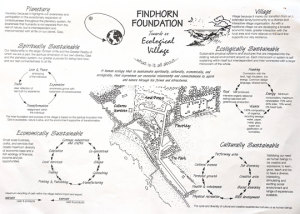
The Findhorn Foundation is an international spiritual community with a membership of some 150, situated close to the village of Findhorn on the Moray coast in Northeast Scotland. It was founded in 1962 by Peter and Eileen Caddy and Dorothy Maclean, based on belief in God and in an underlying Spirit and intelligence within all life. There is no formal doctrine or creed, but there is a common understanding that an evolutionary expansion of consciousness is taking place in the world, creating a human culture that is based on love, cooperation, wholeness and respect for all life. The Foundation is a charitable trust, its purpose being as a centre for education and demonstration to encourage and work with this emerging consciousness. In addition a growing number of individuals and families in the local area are associated with the Foundation. With the related activities and businesses we have the beginnings of a village of some 300 people.
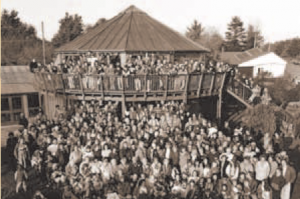
Fig 1.2 Community photograph at the 30th Birthday Celebration photo Kathleen Thormod Carr
The Findhorn Community has long held a strong environmental ethic based on the idea of cooperation and co-creation with Nature. We were first widely known for our work in the gardens, where phenomenal results were achieved under adverse conditions. This took place in a caravan park, an unlikely choice since caravans are, environmentally speaking, arguably the worst possible dwelling in which to attempt to live in harmony with Nature. But it has given us the opportunity for a dramatic transformation as, nearly thirty years later, we begin to extend these same founding principles to the built environment. Through our new buildings, integrated landscape and infrastructure we intend to create a model of a sustainable and ecologically sound village.

Fig 1.3 A typical community caravan photo Findhorn Foundation
The concept of developing a sustainable lifestyle for humanity is now becoming widely accepted not just as a good idea, but as something that is essential for our own and the planet’s survival. A ‘sustainable lifestyle’ implies that the impact of our living on the planet will not deplete or in the long term adversely affect the natural environment in which we find ourselves. In other words the earth is maintained and replenished through our collective actions upon it, and can therefore continue to sustain us indefinitely.
A simple example is that of a managed forest, where the number of trees cut down is matched or exceeded by the number of trees planted. That way the forest will continue ad infinitum and the tree harvesting is sustainable. Cutting trees without replanting means the forest is depleted and eventually disappears — obviously an unsustainable practice but one that is occurring in many places even today.
Human activity around the planet is currently very much in the non-sustainable mode, in almost any area one could choose to focus on. Stopping the destruction perpetrated on the biosphere through our collective actions and moving to a sustainable existence is now one of the key issues of our times.
To do that we feel that a new working model is needed. It is our hope that through our modest experiment we will discover better and more fulfilling ways to live and work together in active relationship with the other life forms and the natural world around us. This includes the physical systems — developing ecologically sound practices and materials. But it also includes the social, community and collective experience; the economic and wealth creation/sharing systems; and finally the context of human fife — how it fits into our planet’s own evolution and development — so that we may better know our place.

Entrance sign at the Findhorn Bay Caravan Park photo Findhorn Foundation
***
Below is the 2003 version, to help you with the ‘spot the difference’, we have highlighted major changes to the 1995 version in green.
Eco-Tour of The Park (2003)
Starting at the Universal Hall Visitor’s Centre (Though it could start anywhere!)
It is important to note that the Foundation community here at The Park is not a fully functioning ‘ecovillage’. But we are aspiring to that goal of complete ‘sustainability’, which simply means that we live and use resources in a way that doesn’t deplete the environment around us over time. We have carried out lots of building and different applications of alternative technology in the last ten-twelve years, which we will see on the tour.
A little about The Hall. It was started in 1974 and is not particularly ecological or energy efficient, as that wasn’t being thought about much when it was being designed and built. But it is beautiful and it is a great space and tribute to beauty and craftsmanship. Point out the stonework: to the left of the main entrance door is a section that a local builder did. It wasn’t great and a couple of lads reckoned they could do better themselves. It took over 5 years but the two self taught masons worked their way around the building toward the Cafe, getting better and better. Neither had done masonry before. The stones are all laid without mortar and were shaped and fitted by hand. The stone came from Hopeman, 5 miles east.
Walk from the entrance to the café
Point out the improvement of the stonework to the pinnacle of perfection at the chimney. Worth a close up. Awesome work.
Burt Lancaster worked on the building for 3 weeks when he was in Scotland making ‘Local Hero’ and said it was the ‘best 3 weeks of my life”!!!
The stained glass is by James Hubbell of San Diego, California, a visionary artist who also designed several buildings for the Foundation that were too far out to build, even for us.
Walk toward Caledonia and stop where you can see the front.
This house has been retrofitted from being a completely normal Scottish breezeblock pebbledash bungalow (not built by us) to a very energy efficient solar building. As well as the various solar features we increased insulation in loft and floor and walls, finishing it with timber cladding. Major transformation from what it was!
Point out AES solar panels on the roof – aka Alternative Energy Systems that are our local community based manufacturers. They have been manufacturing solar panels since 1980 that are a very high quality ‘flat plate’ collector. They incorporate a tedlar/teflon film double glazing system in an extruded aluminium frame. These have been sold all through the UK and exported as far away as Africa and India. Typically you can get about 50% of domestic hot water from a 3-4 m2 system (normal family size).
A word about solar energy. There are 3 types of solar energy typically used in building: 1) Active solar 2) Passive solar and 3) PV or photovoltaic or electricity producing panels. Solar panels for hot water heating are what is known as ‘active solar’ because they usually use a pump or other mechanical methods to move water around the system from panel to hot water tank.
AES is experimenting with a new low cost system that uses a solar powered pump and so needs no mains electricity to work. It is less efficient than the current AES panel but is very cheap and easy to install. A regular 3-4 m2 system costs around £2000 to install.
Two kinds of solar energy application are used on this building. An active solar panel system on the roof (8 m2) that produces hot water and was made extra large to see if we could also heat the house with solar. It doesn’t heat the house, but makes a big load of hot water! It is the Rolls Royce of the 20+ active systems we have.
Passive solar energy is what the conservatory and the large bay windows and patio doors on the south side are providing. Passive solar is generally when we design the building to be a collector of solar heat by having large window facing south to collect and trap the sun, so that the building becomes a large solar collector. That is instead of making panels and put on roof, we make the building a solar panel. It works great in this climate. Simple principle: big windows on south, small windows on north. It is hard to measure how much benefit in terms of cash savings, but it is significant and makes a wonderful space to be in during sunny winter days (winter lasts 10 months here) when it’s too cold to sit outside. In reality we don’t get much solar energy of any kind in Dec & Jan so we’re always going to need some back up form of heating. But the rest of the time it can be really good. We are the 6th sunniest place in Britain.
Walk down the path and onto runway.
Explain the origin of the caravan park was as a ‘dispersal runway’ for aeroplanes during the war. Why we have such a large road. (and why we always call it the runway!) Essentially it was a big parking lot for planes. Now we’re building an ‘ecological village’ on it – a great example of recycling!
In 1997 we were given the opportunity to purchase a 400 acre estate to the north owned by the Wilkie family. A group of community members raised the money and bought it to help complete the land base for the developing ecovillage. Most of it is sand dunes, thus the name they chose: Dunelands Ltd. Half of the estate was recently donated to a trust set up to extend the local nature reserve and the fragile dune ecosystem is protected. More on this later.
Take the path between Sunrise and Treetops bungalow through the central gardens and tell a little about the desolate sand dunes that were here in 1962 when Peter, Eileen and Dorothy arrived. Dramatic transformation in terms of the gardens. The 7 cedar wood bungalows have been there over 30 years and now well past their sell by date, though still needed until we can afford to replace with more permanent dwellings. Walk through the original garden and point out the original caravan, which was restored in the mid 1990’s (at huge cost). Garden is still very productive and intensively cultivated, all organically. Soil has been improved by compost and hard work….. can point out Peter Caddy’s bust – no it’s not Winston Churchill! There is now an outdoor meditation space where once a caravan sat.
Walk through Downtown Findhorn which is where all the sheds come offices are, as well as the main sanctuary. All 1970’s era and still heavily used. Plan is for this area to eventually be cleared when we can afford eco-offices! Dedicate it to the original garden, maybe expand the sanctuary.
Walk by Eileen’s house, the first permanent truly eco-house was completed for her in 1990. Very appropriate that she should be the first after nearly 30 years in a caravan. More on the construction later. Take them to CC mosaic (patio) where you will see some gorgeous mosaic work. Done by Cecelia Stanford who spent six months doing it. Notice the 12 m2 solar system for the Park kitchen – a great place to use solar as a big hot water need for cooking for 1-200 people twice a day.
Point out the extension, great passive solar features with large south facing windows…. very special argon gas filled windows that are also good insulators. If time you can take them inside, very beautifully built with building school students and all volunteer crew over 16 months in 1987/8. The second summer the crew was almost all women. Big central carved post done with chain saw artist Tom Buhler from a tree that blew down in a storm at Cluny Hill. Upstairs the stained glass of the Firebird by James Hubbell, famous artist from California. Notice the beautiful stone hearth built by Ian Turnbull, originally for a wood stove. But the building was so energy efficient it wasn’t needed and we took it out.
A student architect, Andrew Yeats, had the idea for the 12 sided shape and the use of recycled telephone poles as the main structure. We bought them from British Telecom for £10 each. Andrew has become well known in the UK now as an eco-designer and has done another 8 buildings here.
Walk across the Runway
Point out the recycling area. We recycle paper, cardboard, glass, aluminium, copper, steel and other metals, batteries (very toxic). As yet can’t do plastics in this area. Recycling is important but we shouldn’t produce a lot of this stuff to begin with.
Move to Guest Lodge and Youth Building on the village green.
Again lots of solar. This is guest housing built in 1991/2. Cost £85,000, built with volunteer labour and sleeps 16. Youth Building is for the community kids, and the insulation is tested to the max with the loud music they play!
The construction we use is based on all timber fibre ‘breathing wall’ that allows the materials to interact and moderate indoor air humidity. Normal practice is to seal the house with plastic or aluminium foil, trapping the air and that can result in serious ‘indoor air pollution’. Many modern man-made materials, paints and fabrics are not stable and give off gases and chemicals after they are in the house. Can lead to ‘sick building syndrome’ that affects health. We use all natural and non-toxic materials throughout. Based on German system called Building Biology, that tries to replicate natural conditions found in nature.
Wall is clad in timber (Douglas fir, locally grown in managed forests), insulated with recycled paper (called ‘cellulose’ treated with naturally occurring salts for fire and vermin) and using boards that use the natural lignin in the wood for binding rather than formaldehyde glues or resins. Inside surface is plasterboard. All the paints and finishes inside are organic plant based products that are safe to use and produce no toxic or hazardous waste in their manufacture. Most conventional paints do give off nasty fumes and can produce as much as 30 times their volume in waste products that have to then be treated or often not and just adding to pollution.
The grass on the roofs was an idea we wanted to try because it creates replacement green space where living things can grow and do their thing. It is interesting, alive, low cost and fun. It changes with the seasons, has different kinds of wildflowers and you only need to mow it maybe once or twice a year, or get a goat, and pull up the trees that self seed before they get too big. It has been very successful.
The organic ‘natural’ paints haven’t worked so well on the outside of the buildings and we are still experimenting with different ones, but also trying nothing at all, as you will see in the newest area of housing.
Point out ‘Meadow’, the kit house from Finland, behind the Guest Lodge. We wanted to experiment with a good quality kit house, highly insulated and well built, that would be faster to erect. It did go up faster, but cost about the same per m2.
Walk to The Field of Dreams. This is the newest area of housing in The Park and represents the kind of third generation of buildings. They may not look that different than some other earlier buildings but they tend to work better and are more efficient.
This land was part of the farm next door when the farmer received planning consent for housing we thought we ought to be the ones who built….. in fact it met a huge need for housing. We bought it in 1995 and in 1998 received planning consent for 44 houses on 33 house sites, with one office site, an arts centre and children’s play area.
The sites are all sold and now rapidly being built on after quite a wait. People are encouraged to find their own designers (or design it themselves) but have to go through a community planning process to approve what they do before they apply to the local council for planning consent. Many have said that the community process is more rigorous than the local authority! We have a 20 page guide we’ve written to help people new to the process, called the Essential Guide. They are required to adhere to ecological and energy efficiency standards while also encouraged to try new and/or innovative ecological techniques. We also encourage architectural innovation but many people are limited by cost (and sometimes imagination) and feel that conventional is the way to go. That’s fine too.
There are also some more unusual designs, like Kay’s and Mary’s. Also some quite low cost and simple houses, like Dave and Trevor & Birgitta (yellow house).
Cost of the houses varies, from £50,000 to over £160,000. The newest major building project is the 14 terraced studio flats in the middle of the Field. These one and two bedroom units are quite small but still very ecologically sound and will help to meet the demand for lower cost housing. They are called the ‘Centini’ Studios (pronounced chen-tini) after one of the early supporters of the project. The prices range from £60-80,000.
The plots on the Field are all rather small by normal housing standards. We did this consciously so that we could have the large communal play areas that have been newly seeded. We are using the water from the Living Machine to irrigate all the ornamental and grass areas, making use of this nutrient rich resource.
You might notice that on several of the houses the cladding is not painted and is being allowed to weather naturally. This is a bit of an experiment but has to do with our not being able to find a really good eco-timber treatment that works. In thinking about the issues of sustainability and ‘greenness’ in building, things are not all that clear cut. In choosing to treat the wood siding we commit to a regime of recoating with paint or stain on a 3-6 year cycle for the life of the building. This might be several hundred years. Using a timber that has natural weather resistant properties, in this case European Larch, we might need to replace it in 50+ years, but the savings in all those paint materials and labour we think is worth it. The windows and other special joinery pieces are painted, but this is minimal. The cladding will eventually go a silver colour.
Stop on road and talk about, Moya, (means both wind and spirit in the Lesoto language of South Africa) the windmill when you have a good view. Officially called a ‘wind aero generator’, it was erected in October 1989 at a cost of £72,000. Its is rated at 75 kilowatts (kW) and has 17 m diameter blades. The generator is 23.5 m above ground and the top of the blades reach to 32m (108 ft). It produces about 20% of our electricity, or about 8% of our overall energy (ie electricity is about 40% of our energy). We export what we don’t need to the national grid, usually very little. It has been highly reliable, only one or two very minor problems and we are very happy with it. It is very quiet when you stand next to it. Generally when the wind blows the noise from the wind is louder than the generator. This is now a relatively small machine in commercial terms but over its life here we have generated over 1.2M kW hours of energy and saved over 600 tons in C02 emissions.
We are now organising a series of larger machines, a small wind farm, which will produce as much as 80% of energy needs. Our goal is to be fully renewable as soon as possible. With wind, sun and firewood (from sustainable sources) and eventually hydrogen. We know this is possible.
Look south across the Field and point out the Living Machine. This was built in 1995 and now treats all of the residential waste water on site. It was the first of its kind in Europe and uses all natural processes to clean our sewage. Essentially it is an intensified wetlands, concentrated inside a 300 m2 greenhouse. It is generally more reliable and purer than conventional sewage works and produces far less sludge. It has a capacity to treat up to 65 m3 of waste water a day, which is approximately equal to 320 people. It cost £160,000 to construct, half of which was funded by the EC and serves as a demonstration of this technology. There is much interest and support from the local and regional water authorities, as they will have to spend £260 million over the next ten years in Grampian alone to improve water quality from sewage works in order to meet new EC directives.
Moving up to Pineridge point out the Solus House – our first strawbale structure. It is a timber frame with the bales serving as the infilled walls. The straw is a waste product and a nuisance for most farmers and yet as a building material can be great. There are many houses built from strawbales in North America that are over 100 years old. They make tremendously well insulated structures and are finished with mud plaster. This house will have large south window for solar gain and a wood stove for heating. The drawback to this house was the cost, some £250,000.
Walk up the road pointing out the greenhouse (self build) and strawbale shed, both demonstration projects. The strawbale shed was built in 1995 as an afternoon hands on workshop during an international conference on Ecovillages and Sustainable Communities. The soil for the render was taken from the Field and mainly mud with a small amount of lime to give it hardness. The interior plaster is mud only.
Move to compost area. Explanation of composting and recycling of our solid organic matter to provide natural fertiliser for the gardens. Essential part of the process of living sustainably.
Walk to Nature Sanctuary, let people ooo and aah. All natural and local materials built by Ian Turnbull, a geologist turned stone mason. Turf from a local building site in Findhorn and stone from several local quarries. Only cost £1000 in materials and took a year to build and dedicated to Nature. Take them in to look around. The interior represents earth, sun and moon: the stone in the middle from Iona is the earth, the skylight in the roof the sun, and the pattern in the slate floor the path of the moon around the earth, as experienced by us on the Earth. The balance of female and male energies. Whiskey barrel window frames and seats. The building expresses the feeling of harmony between humans and nature.
Walk up the steps and to the back road to Bag End.
Now they get to see caravan living at its best. Most of these have been here 25 or more years. Caravans could arguably be called the most un-ecological dwelling imaginable, as the thin walls make them impossible to heat and the metal box construction leads to condensation. The result = cold and damp, unhealthy to live in. We have tried in some cases to insulate them, apply double glazing etc. but they still are not great. One thing we have done is to install a lot of wood stoves. Wood is a cheap and renewable fuel, provided it comes from sustainable sources. We are fairly careful to get ours supplied from forest thinnings and plantations, not from mature woods being clear cut. Burning wood does produce CO2 and contributes to global warming (greenhouse gases) but provided new trees are planted then the same amount of CO2 will be absorbed when the new trees grow, thus maintaining the balance. Fossil fuels release CO2 that has been stored for millions of years and the biosphere has no way to reabsorb it quickly.
Our strategy has been to try to replace the worst caravans first. Which is why we started our first big housing cluster at Bag End. We started designing in 1989 and began the project in 1990, starting the first 4 houses (on the left, Treya, Ian, Meridian and Rose of the Heart). They were mostly built with building schools that we put on to teach ecological self-build methods, and they were meant to be 90% done in the 3-week course….. but if that was true then the last 10% took about a year to finish. We found that the courses were loved by the students/trainees but were totally exhausting for us to put on. So we stopped doing them after a couple years. We may try again soon. Most of the people doing the courses had never built before and it was quite amazing to see the house go up very quickly. Usually we did get a few roof tiles on by the end of the third week, but the house was more like 10% done, not 90.
The houses have many ecological features, including the breathing wall. The principle features are:
• Use of passive solar features where possible through orientation and window layout.
• Use of solar panels for domestic hot water heating.
• A district heating system using a gas condensing boiler for highest fuel efficiency.
• High levels of insulation (U-values of 0.2 – 0.15 watts/m2°C in roof, walls and floors).
• Use of low-energy light bulbs.
• Triple glazing (U=1.65 watts/m2 C).
• Use of cellulose insulation (made from recycled paper).
• Non-toxic organic paints and wood preservatives throughout.
• Composite boarding manufactured without the use of toxic glues or resins.
• Locally grown and harvested timber from managed forests.
• Local stone for skirting, patios and pathways.
• Roofing with natural clay tiles.
• Innovative ‘breathing wall’ construction with a controlled exchange of air and vapour.
• Suspended timber floors for better air circulation to avoid a build-up of radon gas.
• Isolating electrical circuits to reduce electromagnetic field stress.
• Water conservation (showers, low-flush toilets and self-closing taps).
• Collection and recycling of rainwater for garden use.
• Shared facilities ( laundry, kitchens, lounges) avoiding unnecessary duplication.
• Simple timber frame construction and detailing suitable for self-build.
We were generously sponsored by many companies over the years that were genuinely interested in supporting an ecological development. The costs come in at something between £500-600/m2. We’re finding it difficult to match these build prices today.
There is 1 more unit to build in the cluster (the southwest corner). Bev’s House, Bag End 9/10, is a shared house for 10 people with common kitchen and living area, and Bag End 8, built by two of Eileen’s sons, took only 4 months to complete. The most recent building is Bag End 2/3, built in 1998 and our most energy efficient house to date with 300 mm of insulation in the roof and 225 in the walls and floors.
All the wood is Scottish and generally done here in our shop. The kitchen units in 9/10 and in 8 were built here.
We purposely built more conventional shapes for Bag End, thinking they would be easier and faster to build than the round buildings we had done up till then. If fact they took just as long and the speed of building is much more to do with the skill of the builder! Surprise surprise. Most of the people that have built these houses were only semiskilled at best, but all gave a great deal of enthusiasm and energy. We say that the most important ingredient in our buildings is love xxxxxx
Walk to the barrels. The famous Whisky Barrel houses.
First conceived by our resident philosopher who was out looking for a small barrel he could use as a hot tub. Came upon these old vats being stored at a cooperage in Craigellachie on the Spey River (intense whiskey making country) that were about to be cut up for firewood. He became possessed by the idea of living in a whiskey barrel and made plans and got planning permission. The first one, and smallest is only 27 m2 and was done over 15 months in 86/87. It was very popular and we built two more in 89/90, but began to vary the theme with different roof, extensions to make them bigger.
The two most recent got even more creative with stone work and split level on Auriol’s and then the two storey joined barrels with greenhouse and turf roof (JT’s). All are built from the wood of one barrel and all but JT’s are the same shape as they were in the distillery. The experience of living in the round is unique and very different than square!
The barrels are made from Canadian Douglas fir, were built in 1920’s, and were in service for about 60 years. They are therefore very well preserved!! In the distillery process they were called ‘spirit receivers’, where the spirits were blended. We think this is very appropriate for the Foundation, being a ‘spiritual community’!
Walk back in front of the studios and can point out the arts and crafts that are an important creative part of community. Local classes are offered regularly.
Point out Family House, now mainly Foundation administration, our first passive solar building, one of the first in Scotland built in 1981 at a cost of £10,000. Very cheap and utilitarian, but not so well finished or pretty to look at.
Point out the boutique, which is our community clothes recycling centre, and you can explain the principles of manifestation!
Have time for questions as you walk back.
Future Plans – include more houses to replace caravans in Pineridge (the Pineridge Cluster now beginning design phase on the north road) and the next major area of development is the 15 acres on Dunelands to the north of the Universal Hall between Cullerne House and Pineridge. This area we hope will have many more community building as well as housing and space for more business activities.
We are also hoping to reduce the car traffic through car sharing and centralised parking to make the main part of The Park more pedestrian friendly.
It is good to include something about the ‘Ecovillage’ model as being more than just the ecological sustainability and environment friendly technology. True sustainability in human settlements depends equally on community and social structures, economic viability, as well as a sense of purpose and meaning in life. We call it spiritual sustainability. See the enclosed diagram and see if you can explain it!!
Invite them to take flyer about the Ecovillage Project from the Visitors Centre, where are some nice displays and pictures of the various projects there if they would like to have a look.
Remember to enjoy yourself!! And include your own stories or experiences. Feel free to leave out as much as you want of the text so that the tour flows. You may want to shorten it so that you can do it in an hour. Experiment!
With love, JT & Sam
Towards an Ecological Village diagram

Came to Findhorn for the full curriculum and found my life’s work on developing sustainable regenerative human settlements through the ecovillage movement. Lived in Findhorn for more than 26 years.




Leave A Comment