


I’m very pleased to write that I attended a long-awaited landmark ecological event on Friday, 24th October 2025 – the official release of 7 European beavers (Castor fiber) into Loch Beinn a’Mheadhoin in Glen Affric.
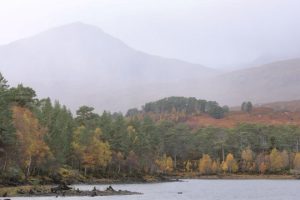
Scots pines (Pinus sylvestris) & downy birches (Betula pubescens) in autumn colours at the west end of Loch Beinn a’Mheadhoin Glen Affric
-
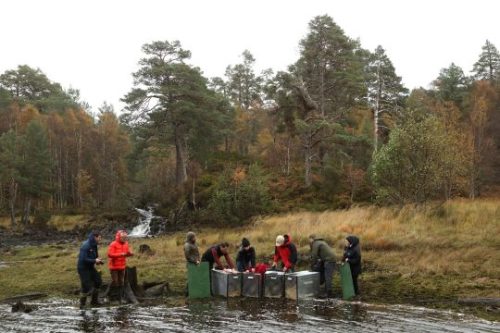
- Beavers (Castor fiber) in their crates, about to be released
-
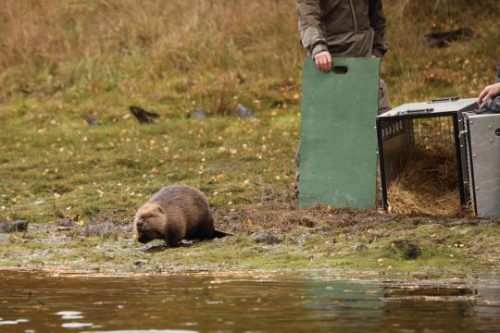
- Female beaver (Castor fiber) being released
The following photographs show the beavers exploring their new home in the loch, just a few minutes after they were turned loose there.
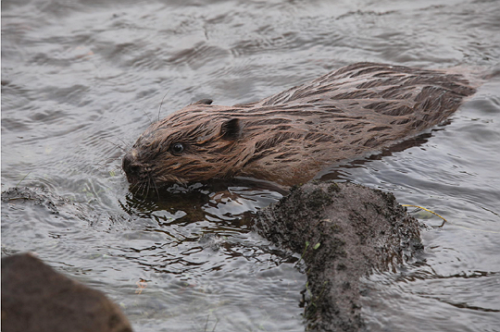


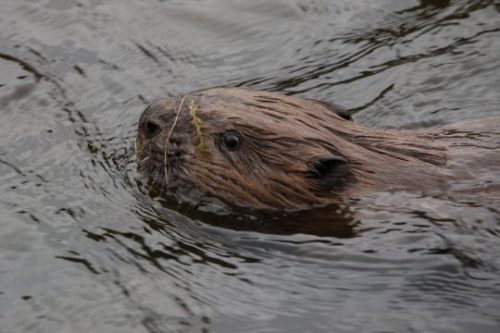
The beavers were translocated from the Tay river catchment in central Scotland, where the population has been growing since the species was re-established there in 2006.
It is estimated that beavers were hunted to extinction in Scotland about 400 years ago, and an official trial reintroduction project was initiated at Knapdale in Argyll in 2009.
In ecological terms, the beaver is a keystone species, meaning that it plays a significant role in an ecosystem, having a positive impact on many other species that far outstrips its relatively few numbers. By making small dams, it regulates the flow of water, reducing the extremes of droughts and floods, and creates a habitat for amphibians, fish, aquatic invertebrates, and the birds that feed on them.
When I founded Trees for Life in 1986, my vision for the restoration of the Caledonian Forest included the reintroduction of Scotland’s extirpated mammals, such as the beaver, and we began practical work to provide suitable habitat for them by protecting and planting aspen trees (one of their favourite winter foods) in Glen Affric in the 1990s. I’ve not been part of Trees for Life for a number of years now, but it’s a great tribute to the charity, working in partnership with Forestry and Land Scotland (who manage the National Nature Reserve in the glen), to have achieved this highly-significant and vitally-important result after 3 years of hard work and numerous public consultations.
I take my figurative hat off to all those who have contributed to this wonderful outcome, which is a great step forward for ecological restoration in Scotland!

Born in Scotland, travelled the world over for nature, photography and nature conservation. I walk my talk through my lifestyle and my work – both professional and volunteering. Proud father of Kevin.


Such a happy story.
So great to read about this, thank you Alan and all at Trees for Life!