


How do you adequately describe the enduring social experiment that is Findhorn? And is it a blueprint for planetary survival, as some believe?
Born in the Swinging Sixties, the pioneering international community in northern Scotland has withstood the test of time, celebrating its 50th birthday during November 2012 and continuing to attract thousands of visitors each year.
Is it a physical place or simply a state of consciousness?
In a half century it has evolved from a trio of out-of-work adults and three children living in a caravan to a world renowned spiritual community, a holistic education centre and an ecovillage with one of the lowest recorded ecological footprints in the developed world.

Field of Dreams photo
Today what is known as the Findhorn Foundation (to distinguish itself from neighbouring Findhorn village) is a force for positive change and a demonstration of new ways of living harmoniously and sustainably which has gained United Nations recognition, spawning other ecovillages around the planet.
Trudging through deep snow to the former caravan park three years ago, I wondered if I’d lost my marbles to have willingly turned my back on a blissful Cape Town summer. And yet I sensed my first visit would be pivotal and life-changing. And it was.
Findhorn had been on my horizon for some years although I clearly needed a nudge and got it when a friend handed me a book, insisting, “Here’s something you might find interesting.” It looked like the kind of 1970s book you’d find in a second-hand junk market and definitely not something I’d normally pick up. It was called The Magic of Findhorn and the blurb could have sent me sprinting in the opposite direction, ‘The full, fascinating true story of a miraculous community where a modern Garden of Eden grows, where people are reborn, and faith, love and energy triumph … an eyewitness account by Paul Hawken.’

Flipping to the back cover of the book I noted that the Findhorn gardeners grew 40-pound cabbages and roses that bloomed in the snow. Did I care? And yet my interest was aroused by the author’s observation, “Findhorn may be a manifestation of light and power which could transform our planet within a lifetime.” I started reading …
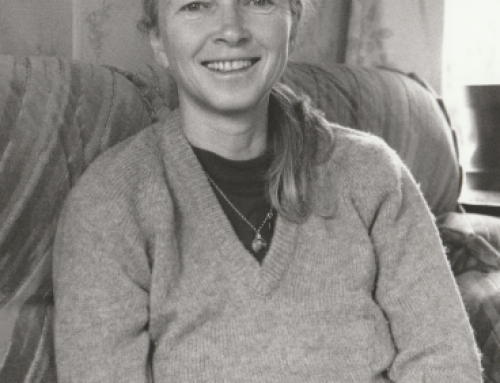
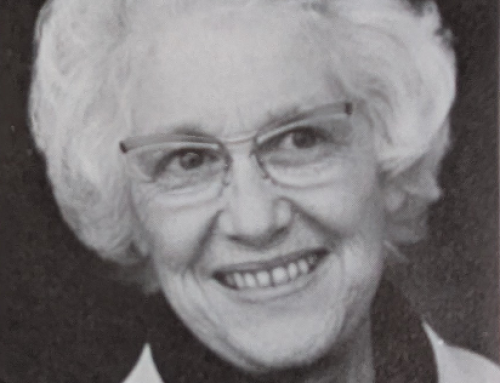
The origins of the now famous community couldn’t have been more inauspicious, Peter Caddy and his wife Eileen, their three young boys and friend Dorothy Maclean arriving with a caravan in tow after he’d lost his job as a hotel manager. That was on November 17, 1962, and they imagined they’d be at the Findhorn Bay Caravan Park for a few days at most.
It was a bleak and inhospitable place consisting of sand dunes and prickly gorse bushes and in winter it was wearing its least welcoming face, Findhorn being further north than Moscow.
Strangely, despite a superb track record as an RAF squadron leader who’d catered for up to a million men daily during the war, also dramatically raising standards at the Cluny Hill Hotel, Peter failed to find work and the six of them lived on a pittance as the weeks stretched into months. They had to do something to survive and began a vegetable garden.
Each of the trio had individually spent years tuning in to their inner guidance and each knew their calling was to be together, although they had no idea that they would form the nucleus of a community committed to awakening the highest in human potential.

The cover image for Dorothy Maclean’s autobiography entitled ‘Memoirs of an Ordinary Mystic.’ I snapped it in the central garden area of the Park Ecovillage.
Dorothy, who is now 92, recently confided to me, “Looking around now I am absolutely amazed and can hardly believe it. I think of the three ordinary people that we were, but we had the commitment to God and that takes you everywhere.”
Eileen listened to a small, still voice within and received guidance which Peter followed in complete trust.
Dorothy, meanwhile, began receiving messages from the overlighting intelligence of the Nature kingdom and passed on the very specific and practical instructions about what to grow and how and when to do it. Despite poor sandy soil in what had been little more than a rubbish dump in the dunes, the miracle of Findhorn’s gardens began to unfold.
It is a story of unwavering faith that moved me deeply and it was here too among like-mined souls that I had my own epiphany, resolving to go from petrolhead to pilgrim, turning my back on a much-envied materialistic life of jet-set travel and fast cars.
Now I’ve shed almost all my world possessions to become a pilgrim, walking with a climate change message about living simply and sustainably while treading lightly upon the Earth.
My life had always been a rollercoaster of fun and adventure but my carbon footprint was huge. So, it is payback time and an opportunity to raise awareness about issues that matter to me while demonstrating that a simpler life can still be joyful. In fact, if it isn’t fun, it’s not sustainable. And I’m still smiling.
Having spent more than a year at Findhorn I’ve experienced a different way of living and been inspired by many amazing people, delighting in a community that sees itself as a laboratory for change, the collective embracing young and old, differing philosophies, and people from all walks of life and all nationalities.
The glue, it seems, is a freedom from dogma or boundaries, community members attempting always to respect and accommodate each other, and to work in co-operation with Nature.
There’s a wonderful sense of well-being and joy that bubbles up at the most unexpected moments. People smile and laugh a lot, as well as having the courage to confront all the difficult questions. Who are we? Where are we going? Is there a way out of the mess Spaceship Earth finds itself in at the beginning of the 21st century? Can we build a new social paradigm where money and economic growth are not the primary motivators?
Here people are encouraged to always question, knowing that it is at the edge of our comfort zone that life begins.
-

- Whiskey barrels
-

- Nature Sanctuary
It’s accepted that we need to work with Nature and not against her. Many homes are knocked together from locally sourced or discarded materials, including whisky barrels; while sun and wind supply electricity; organic veggies are grown nearby, and car-sharing schemes are available to those who haven’t kicked the petrol habit.
Especially impressive is The Living Machine, a sewage treatment process which was the first of its kind in Europe and relies exclusively on natural means and the use of plants and bacteria to create clear, clean water as an end product.
My contribution is to walk my talk, accepting Gandhi’s challenge to ‘be the change you wish to see in the world.’
OK, it’s still wobbly, baby steps as I slow my life to pilgrim pace, although already I marvel at where my feet have taken me. I’ve followed in the footsteps of our ancestors from the sacred Isle of Iona to Findhorn; traversing Scotland from west to east and north to south; also walking in England, France and across the breadth of Spain on the legendary Camino de Santiago.
“I’m choosing a simpler and more sustainable way of living that is joyful and fulfilling. Instead of acquiring ever-more things while chasing the idea of Bigger, Better and More – the mantra of materialism – I’m enjoying having enough but no more than I need. And I’m appreciating that unnecessary possessions become unnecessary burdens. The more things you have the more you have to take care of them.
I’m making the transition from skid marks to gentle footsteps – from being a tourist in a hurry to an Earth Pilgrim who takes time to appreciate the wonders of Nature and interconnectedness of all things; recognising that we humans are but a strand in the intricate web of life.
Gaia Earth or Mother Nature is a miraculous self-organising, self-healing and interdependent system – and we humans are part of it but don’t own or control it. My aim as a pilgrim is to raise awareness about the magnificence of our planetary home and the benefits of treading more lightly upon it.”
It feels good and in time the plan is to walk 25 000 miles (40,000km), symbolically the circumference of this beautiful Earth that is our home.


An author, writer, and spiritual and ecological activist




Leave A Comment