

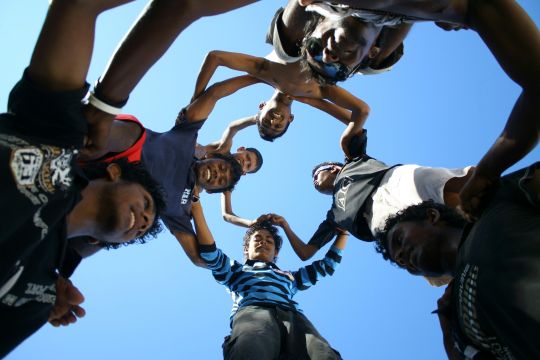
Editor’s Note: The following is a transcript of a conversation with Jyan Bean about the youth empowerment programme she facilitated for the Findhorn Foundation for several years.
***

marcin-kempa-1qpIY7jdgz0-unsplash
I want to begin by saying how privileged I feel to have worked on this programme and to have met some of the most courageous young people of Morayshire. It has been both a gift and an experience I shall treasure.
Referrals for the programme came through Action for Children Scotland. This charity works with young people who’ve been through the care system, and the charity’s commitment to support through care to after care was the initial initiative behind this aspect of their work. The Scottish government had in recent years started to make inroads in supporting this demographic group. Action for Children (AFC) wanted to offer a new kind of support, and they partnered with the Findhorn Foundation to reach the hardest-to-reach people in Moray aged 16 to 24. Referrals came from many areas within Moray that needed support with young people, such as mental health units, social services and hospitals. I loved their work and spent days with social workers and representatives of other bodies learning the paper work needed to record the progress of young people under and after care. (See further down for a sample report.). I facilitated the youth empowerment programme as a self-employed contractor and set my hourly rate much lower than I would have elsewhere because I wanted to support their initiative.

alvin-sadewo-D4k00sUDjzk-unsplash
The number of participants varied. The first programme started with five, and three remained for the whole three months. The next programme was full with 14, and they all made it to the end, apart from one who got a job. That’s a success, too! We did one-on-one interviews every few weeks during lunch breaks to set goals and monitor their progress, using the work star sheets that were part of the AFC training I participated in.
The first two weeks were all about emotional intelligence and group building agreements. We used images of cartoons to voice things we don’t usually say out loud, and it was extraordinary.


We were asked not to touch on life stories or past traumas, but to focus on the future. All aspects of each individual’s experiences were shared at different points, once trust was established. The referral forms we received showed we had young people joining us with a wide variety of complex emotional and behavioural ‘acting out’ behaviours.
Agreements were made around all that was presented in the circle in which we sat, because those behaviours always led us all to discover together the emotional needs behind them. As the weeks went by, we began to notice as a group that it served us to stop everything when inappropriate behaviour occurred, take a pause, and deal with the pain. It was the most incredibly hard work I’ve ever done in my life, and the most worthwhile.


It wasn’t a full-time programme—it was one full day and two half-days a week, which included mealtimes. Some of the group had never sat with other people to eat before. Some were afraid to get in the queue and choose food. So just even for us to stay at a table together in dialogue was a process from day one.

jana-doro-UYSJPcuAurc-unsplash
We also introduced an employability qualification. At first, they said, “No point, it won’t get you anywhere,” so I stepped in and chose to share that I was certainly interested in doing the same qualification they were doing.
Once I started, they all began to do it, too. We used flip charts, and they all contributed. The group would work together and share with each other what they had noticed, for example “Yeah, but I’ve seen you being able to do this, that could go on your…” It was beautiful.

Erraid 2021 photo Mark Richards Aurora Imaging
There was always pain and drama throughout every module we introduced: it was particularly noticeable when we went to Erraid for our residential week. The group shared cottages with each other and were involved in the cooking and other work on the island. Perhaps they had never had a sense of what it is to live like that, to take responsibility.
We did all sorts of workshops with other facilitators: clay work, trapeze, theatre, dance, drumming, poetry, and storytelling. They also joined a work department such as the community garden or maintenance. Not everyone would get their first choice, but they all showed up. It was quite intense, especially since some of the work departments had to be convinced to take more than one young person. We had a phone so the departments could call on us if something came up; it was our responsibility, as facilitators, to take care of the young peoples’ needs, not the work department’s.

eean-chen-5hz5hpjFIro-unsplash
The confidence participants gained over the time of the programme was amazing. For instance, one of the participants, a young man, shared “When you prepare food, you’re giving somebody your love.” To hear him say the word love was alien even to his own ears!. This became apparent when in an Angel meditation, one of the groups got the Angel of Love card. They were furious because for them, love didn’t exist. So, our process after that was to dismantle what that simple word can mean. The discussions and learnings we collectively shared were liberating.

tanya-prodaan-DPxgBhW64Kk-unsplash
I can honestly say that my personal journey with this work was often challenging as challenging behaviour was directed towards me, let’s call it an initiation test… it was usual for some of the young people to test me. Because of my approach, my consistency, and my ability to listen, I was , I feel, tested because I wasn’t seen as real. That feeling was also voiced by some brave voices in the group. They needed to know that I would stand the test of their life experience.
There was one programme in particular when one young woman tested me woman-to-woman. Nothing changed between us until the very last day of the three months, when she apologised to me for the blatantly harsh ways she had acted towards me.. She expressed in the final session that she just had never, ever met anybody who didn’t walk away when she was like this. Her apology was the most heartfelt I have ever received in my life. I was deeply moved in that moment by the honesty, humility and courage demonstrated to speak with such rawness from a place of truth.
What resourced you to be able to do that?
I love the work. I absolutely love working with young people, and I don’t get frightened by difficult behaviour because it’s just behaviour—it’s acting out. I trust my instincts. My own background—I was born in a very working-class area where there was poverty, and poverty does things to humans that strips away a sense of self. I spent my whole school life being bullied because I loved learning. When I was 15, I managed to turn my life around by applying to an Art College. My understanding of poverty is what happens inside a human being when they feel taken to the edge, and I witnessed that daily. I didn’t have a feeling of poverty because I was young, but I wanted to feed something. A lecturer heard this desire and convinced the whole interview board to give me a chance. I was way behind everybody on the course, but I knew I could work hard. And that I did, moving onto doing a degree and becoming a lecturer in Art&Design at 21.
These young people came from a different starting point than me, but they have the same power of self- efficacy inside. I believe it to the core because if I can do it, anybody can. We humans are so full of potential. I shared this belief without sharing my personal story when we had group sharings: I, too, was seen as part of the group. I shared equally as they did. I was always included.

jordan-elliott-c5ClsjeBy1Q-unsplash
Building Bridges Report – Youth Empowerment Programme & Employability Skills (please click the arrow on the left to expand the text)
This sample report is a slightly redacted version of the reports we submitted after each programme. The changes are minimal and are aimed at preventing that any of the participants could be identified.
A EXECUTIVE SUMMARY
Youth Empowerment Programme (YEP)and Employability Skills initiative at the Findhorn Foundation began with fourteen referrals, Eight of these individuals attended the two week introduction to the Youth Empowerment Programme which enabled the group to form, get a sense of the Findhorn Foundation (FF) and a sense for the programme that they were being invited to say yes too.
The programme ran for 12 weeks in total, two afternoons (Tues/Thurs) per week and a full day on Wednesdays. Week eight of the programme took the group for a six day residential week on the Isle of Erraid on the west coast. Weekly sessions were designed to involve the Young People (YP) in participating in Findhorn Foundation service departments such as gardens, the kitchen, and woodland; as well as providing complementary educational, creative, and nature-based activities. The participants have been consistent in working with their individual challenges such as attendance, time keeping, and a continuous willingness to inter-relate and engage regardless of historic patterns, edges, and external stressors, The group has consistently encouraged each other to participate and engage in group activities, and was also able to collaboratively create strong group agreements and be with one another throughout the ongoing and sometimes difficult process of maintaining them. The group has steadfastly supported one another to explore themes around one another’s choices, attendance, and behaviours on an individual basis, being willing to engage around the reality that different individuals have different needs. This group has been able to support one another and themselves to move to get their needs met and towards positive internal destinations.
The curriculum is designed to offer different activities that allow the groups diverse preferences to be explored so that each individual gets an opportunity to shine with their personality, strengths, and skill base. As the programme progressed and the young people became more confident in themselves they more openly began to express their feelings, thoughts, ideas and dreams. They also demonstrated a stronger sense of readiness to stand in their own truth and found a place to listen to each other and to explore the group dynamics, diversity, and differences even when not always in agreement.
This programme began with fourteen referrals, eight of whom joined us on the first day. Six males and two females began the programme. Two referrals were supposed to join on day one but did not end up coming to participate. In the middle of week four one young man left the programme. In week three this young man had been away on holiday and upon his return YEP staff came into the knowledge that he had also lost his housing; it is possible that either or both of these of two big events had impact on this young man’s ability to engage with the programme.
All seven of the remaining participants joined us for the residential week on Erraid. The feedback from participants demonstrates the importance of getting away from their normal day to day lives, giving them an opportunity to experience themselves differently in a new and extremely supportive setting. The residential week enabled and cultivated space for self-reflection, integration, independence, freedom, accountability, and fun. The participants enjoyed island life, the beauty of the landscape, and working and living with the Erraid community. The young people collectively and individually engaged in island rhythms to the fullest. Each young person demonstrated an interest in learning about, understanding, and participating in the routines of the island and how it is to live on an island more long term and committed to participating in daily activities fully. The feedback from participants upon returning from the island was that they had experienced contact with what an alternative future for themselves could feel and look like in how invested and independent they felt during life on the island. Currently two of the participants are actively in the process of exploring future work exchange opportunities on the island.
Objective of the Project
To support and empower a group of young people (YP) who have left statutory schooling and are currently unable to enter the local employability market and/or re-enter education. The Youth Empowerment Programme provides a programme of activity, emotional self-awareness, and learning that will support these young people along the path towards a sustained positive destination. In addition and in partnership with Action for Children, participants now use this experience to help them achieve an SQA in employability skills.
Building Bridges Aims for the Project
- To provide a space for local YP to expand their horizons and worldviews; to reignite their hope and passion and see a broader range of opportunities to create the life they want for themselves.
- To provide an experience in a safe environment where participants strengthen their sense of belonging, self-worth, self-confidence and self-efficacy.
- To empower local YP by actively engaging them in a working community.
- To support the Scottish government’s agenda of improving the life chances and life choices of YP, and in particular the most vulnerable of Moray’s YP.
B CONTENT
A Executive Summary
B Content
C Introduction
D Programme Aims & Activities
E Programme Purpose & Outcomes
F Evaluation
G Conclusion
C INTRODUCTION
This Youth Empowerment Programme as been lottery funded and written by Building Bridges in partnership with Action for Children.
The aim for this programme has been to run twice a year and we are currently hoping to secure funding for future programmes.
Background: A core group of agencies have been working on launching the Care Farming Model; now named Employability Skills, in Moray and the Highlands. Building Bridges offered to support this initiative by running a Care Farming pilot at the Findhorn Foundation from July to September 2011. Following on from the inaugural programme, we have consistently run twice a year for twelve week programmes in the spring and autumn from 2012 until 2018; shifting in 2013 to the new title of the Youth Empowerment Programme.
Partners: Action for Children & Findhorn Foundation.
Participants: Eight participants ages 16-21, from the Moray area – Elgin, Forres, Lossiemouth, Findochty, and Hopeman.
Participants have been referred by Moray Council Social Work-Through Care After Care, Sacro, Elgin Youth Cafe, Skills Development Scotland, Mental Health Link Workers from Community Renewal, and Moray Council Activities Agreement
Programme: A twelve week programme at the Findhorn Foundation, The Park. Two half-days and one full day per week with a four-day residential trip in week eight, with a day of travel on either side, totalling five nights away.
This programme has been designed to inspire and empower the young people to make good choices for their future from a place of increased self-awareness, emotional wellbeing, and self-confidence. The programme also aims to raise a sense of belonging in participants which strengthens self-esteem and self-efficacy in all that they will endeavour upon in their futures.
D PROGRAMME AIMS & ACTIVITIES
Give young people a voice
- Scheduled one to one interviews three times throughout the programme with a coordinator with the addition of extra sessions as needed.
- An introduction to Employability Skills.
- A video diary of activities and sessions.
- Support to state individuals needs, to ask for help and to discern the difference between pleasing others for the right reasons with the balance of choosing to meet one’s own needs.
- Meeting, greeting, interacting with and deepening relationships with the community and members.
- Informal dialogue during break and meal time.
- Group dynamics and emotional intelligence work.
Build trust in YP so they can express themselves freely
- Group building games
- Sharing circles
- Developing kindness, self respect, and respect for others.
- Group agreements, accountability, taking personal responsibility, and guidelines.
- Educational session in group dynamics and the importance of each of our individual voices. Equality and the roles we take on in a group.
- Residential, fostering an extended time together in a small working community and nurturing environment, working together as a team and as part of a more broad island family.
- Encouragement and leading by example to “walk your talk”.
- Keeping our word to each other.
Foster creative expression and learning new skills
- Gardening
- Art
- Trapeze
- Cooking
- Storytelling
- Poetry
- Social interaction during meals
- Woodland Shelter Building
- Tai Chi
- Theatre skills and expressing the voice. Speaking up, speaking out.
- Fire Skills and Wild Cooking
- Forestry
- Music expression
- Drumming
- SQA employability skills
Encourage self-reflection
- Attunement & consistent check ins
- encuraging awareness of physical, emotional, and mental levels
- Group sharing time
- Group knowledge and behaviour
- Feedback
- Personal and Group Accountability
- Quiet moments
- Understanding feelings and needs.
- Relaxation and body awareness
Encourage self-responsibility/accountability
- Attendance
- Time keeping
- Team work
- Independent travel
- Positive attitude, personal responsibility
- Agreeing to and creating group agreements and ground rules (no alcohol, no drugs, respect)
- Individualised risk assessments as necessary.
- Noticing needs and making requests
- Responding to community needs
- Commitment to the work departments and individual work placement
Build team work/ group awareness/sense of achievement and self-worth
- Obtaining an SQA in Employability Skills
- Working with gardeners, cooks & Hinterland departments as well as with other YP
- Creating group agreements
- Residential: working with Erraid family and community needs, dealing with new places & experiences in a group setting.
- Positive inclusion and encouragement from staff & residents
- Try out new activities twice a week
Broaden environmental awareness
- Composting
- Recycling waste and materials
- Using local resources
- Time in woods
- Growing food, eating locally produced food
- Low impact, communal living
- Wind turbines
- Permaculture
- Residential; living in a small, largely self-sufficient island community in tune with the rhythms of nature.
Introduce physical activity/encourage health, well-being and social interaction
- Walking
- Tai chi
- Gardening – composting, digging, landscaping, planting, weeding
- Movement and mindfulness
- Eating and preparing fresh, organic food in a community setting
- Walking tour around the island of Erraid.
E PROGRAMME PURPOSE & OUTCOMES
For 12 weeks, eight participants came to The Park, Findhorn, to engage in the following activities, resulting in the below outcomes.
ACTIVITIES Weeks 1-2
- Group agreements and rules.
- FF community routines and rhythms, working and being with people
- Introduction to the meeting spaces for our group.
- Team building games and exercises.
- Intro: Cullerne Garden.
- Meeting community members and feeling a part of the Findhorn Foundation (FF).
- Community and Hinterland group projects.
- Cooking for the whole Community and celebrating completion of the first two weeks.
- Emotional intelligence work and being part of a “group being”, taking responsibility for the self and empathy for others.
PURPOSE
- To orientate and welcome participants into the community
- To outline the program; introduce the purpose and vision for the 12 weeks.
- To build trust and safety within the group and the community.
- To give opportunities for individual expression.
- To give opportunities for YP to feel self-worth via their work contribution.
- Foster an ability to encounter ourselves and each other in all of our activities.
- Inspire and plant seeds of possible employment and future aspirations and choices.
- To understand both the simplicity and complexity an individual’s emotional capacity as well as the joy of being human.
OUTCOME
- All YP showed willingness to respect community routines, rituals, ways of working and living together.
- YP fully engaged in all that we introduced and in the process of team building even when it sometimes pushed their edges of comfort.
- All YP showed willingness and were motivated and engaged.
- Confidence and courage demonstrated in group sharing, discussion and cooking for 80 community members and celebrating the results.
- Ability in their own ways was demonstrated by all to engage and reflect personal and group behaviours that affected the whole.
ACTIVITIES Weeks 3-7
- Intro to work departments
- Cullerne Garden
- Theatre & Voice Skills
- Drumming session
- Celebrating birthdays
- Outdoor Shelter Building
- Tai Chi
- Mosaic Creation
- Creative writing and storytelling
- Group time and preparation for our week on Erraid
PURPOSE
- Introduce participants to a variety of creative skills and activities both encouraging and allowing each individual the possibility to explore, overcome personal obstacles and to engage with new tools and experiences.
- Increasing levels of self-confidence and self-esteem by taking risks.
- Increasing levels of group awareness and feelings of inclusion within community.
- Group dialogue, speaking about what is needed.
- Listening to others and responding accordingly.
- Increasing levels and awareness around personal and group responsibility regarding presence, attendance, and punctuality.
- Exploring the relationship between emotional and physical wellbeing; through mindful practice
OUTCOME
- YP were able to hold the process of choosing service departments, were able to hold the edge of disappointment in not all being able to work in their first choice, and agreed to work in departments available.
- Positive relationships with staff developed in Cullerne Garden and the Hinterland departments
- Skill development and cooperation fostered in Cullerne Garden
- Opportunity for individual creative expression
- Gaining self-confidence
- Learning how to overcome personal restrictions
- Learning how to overcome personal preferences for the good of the whole group
- A willingness to challenge and explore preconceived worldviews in order to better understand and relate to one another
- To see another part of the FF Community.
- Making agreements for preparation and residential visit to Erraid.
- Consent, risk assessments and medical forms completed.
ACTIVITIES Week 8, Erraid
- Introduction to island and Community routines
- Sharing accommodation
- Participation in community working and living.
- Walking, exploring, celebration music session, cooking for the community both brunch and dinner.
- Welcome meditation and angel cards.
- Group project
- Tour of the island.
- Bonfire evening for the community
- Group choice evenings.
- Completion with the island, the community, and each other.
PURPOSE
- Develop team spirit and personal willingness to contribute.
- Develop self-esteem by undertaking work of genuine use to the community.
- Developing comfort and relationship with nature as a support for emotional well-being.
- Confronting differences by living together.
- Deepening YP group relationship and confronting their own patterns of behaviour.
- Feeling connection with a new place and people, grows self-confidence.
- Gaining insights into and inspiration from community life on an island expands possibilities for YP.
- To give insight through an alternative way of living.
- Confidence, conversation and dealing with the unexpected.
OUTCOME
The week was successful as a result of each individual being able and willing, to say yes to participation in this new experience.
- Participants engaged in the island life to the best of their abilities and emotional ups and downs. YP contributed to the best of their physical and emotional ability to the day to day activities; for example, cooking a meal, collecting wood, fire maintenance, cleaning, caring for the homes… As well as working as a team in the island work departments.
- Young people engaged in the activities and expressed in their own way a deep appreciation of being somewhere so peaceful and beautiful.
- Several of the participants found their voices and actively showed phenomenal progress in their own personal journey.
- Participants bonded and were able to come together through deep and meaningful discussion, mutual support, building relationship, and sharing deeply through trust and active listening.
- Discovering the beauty of their own country.
ACTIVITIES Weeks 9-12
- Group time and sharing coming back together after Erraid.
- Continued work in gardens, forest, and the Kitchen.
- Trapeze and circus skills
- Outdoor fire skills
- Art Session with found materials
- Group session and introduction to saying goodbye
- Land Art
- Poetry and storytelling
- SQA session
- Completion with Cullerne, service departments and group
- Final appreciations and farewells
- Collaborative music session
- Watching together the video of the Programme
PURPOSE
- Increasing levels of transparency and authentic communication and awareness of personal feelings around saying goodbye and how we might work with that to complete together.
- Developing the skill and importance of body awareness
- Develop team spirit and personal will to contribute
- Developing comfort and relationship with nature as a support for emotional well-being.
- Individual work experience emphasised their time-keeping skills and task completion.
- Strengthening connections, visioning, affirming and looking at next steps.
- To normalise the importance of saying a “good and meaningful goodbye”
OUTCOME
- Positive relationships with staff and good working rhythm developed in Cullerne garden, kitchen and maintenance departments. All departments were appreciative and welcomed the young people’s participation.
- Ability to express their feelings and emotions grew throughout the programme.
- Willingness to experiment and be stretched and creative, with often very new experiences.
- Willing to work with obstacles and defensive behaviours, to get the best out of the programme.
- Demonstrated a measure of self-confidence through creativity and the group.
- Positive group building, developing awareness of being valued and appreciated.
- Some of the participants progressed phenomenally in simple social, written and verbal interaction skills.
- Overcome huge personal barriers to be and experience the importance of feeling included, seen, valued and heard.
F EVALUATION
We monitored the programme in the following ways:
- Attendance was monitored
- The Work Star charts were introduced to participants by Action For Children staff and were used consistently with the young people three times throughout the programme in one to one sessions with staff . Work Star chafts will continue to be used by AFC in post program follow up.
- The group activities were recorded by camera.
- Time was given for verbal reflection, feedback and group integration.
- Informal evaluation happened with participants throughout, with one to one and group chats during walks/activities, lunchtimes, breaks and transportation
- Continuous informal monitoring of activities whilst they were happening to ensure maximum possible engagement
What Worked:
- The two week introduction really worked well for building a strong holding container, bonding the group. This solid and integrated start left participants feeling ready to begin in their chosen work departments in week three.
- The introduction of an emotional intelligence session in week two enabled the young people to voice a lot of unspoken feelings, thoughts and it encouraged the development of trust in the group. This session also provided the facilitators a point of reference for the remainder of the programme to explore and facilitate with each individual young person ways to manage and understand what are sometimes unruly feelings.
- It was clear that the majority of young people relaxed and found their place within the community. Participants appreciated being welcomed, accepted for who they are and what they bring. The experience of not being judged and feeling a ‘part of’ has an extremely powerful and enriching impact on the young people. This steadfast non-judgement gave them a model in how to best learn and move with their own group dynamics and first impressions of each other.
- Throughout the programme it was evident that the young people’s sense of inclusion grew from a sense of purpose, meaningful work and engagement. Stable relationships with focalisers, key workers and community members were established; enhancing their experiences, developing safety and trust. The impact of being accepted in the community spreads into their relationships with each other and themselves.
- The community engaged positively with the participants, with much goodwill shown. Trust and respectful ways of relating have been recognized and appreciated. Working through behaviour patterns and defensive responses together assisted each individual to both see and seek out alternative choices.
- With this being our third programme in the coordination team of three, our working relationships grew throughout, becoming more grounded, fluid, and aligned.
- The rhythm of Tuesday and Thursday afternoons and Wednesdays all day continues to work well.
- Focalisers were able to problem solve and shift direction, creating new sessions as needed whenever the group ran into unforeseen circumstances as well as when confronted with behavioural difficulties that have challenged the wellbeing, cohesion, and accountability of the groups dynamics and self regulation. Focalisers clearly facilitated and supported the group to communicate and come back into relationship to themselves and to each other.
- The diversity of different activities enabled and encouraged the young people to experiment, take risks, dare to try different and unusual experiences, overcome embarrassment, be seen in a new light and move from a “no I can’t” to “yes I can” attitude with enthusiasm and willingness.
- The Erraid community is an ideal destination for a residential trip. Its existing structure, the residents, and the simplicity of accommodation, coupled with the wildness and beauty of the landscape makes it a perfect place for retreat and reflection and group cohesion.
- The YP being supported and collected for the first 7 weeks of the programme, has supported the YP to be on time and show up. From week nine participant pick up and travel has been tailored to meet each individual’s different abilities and needs.
- Having all the participants starting the same day, allows each member of the group to meet, explore, question and agree together as a unit, enabling equal status in the group to begin to form.
- The Findhorn community as a whole is now very familiar with the YEP programme and we notice this in how excellently these YP are supported to integrate in the work departments and into the daily rhythms of the Community.
- In the final week of the programme the group was given the opportunity to invite one of the guest presenters in for a group choice session. The group invited back a local poet and storyteller and the afternoon was full of deep insights and discernment by group members regarding what they have harvested over these three months and what they will take forward with them. This session truly cultivated and demonstrated the experience and ability to make the unspoken inside of the young people more explicit through words, and to have their experiences and learnings witnessed by the rest of the group. An example of one young man’s reflection;
“I am grateful for being with the people around me,
And all being the most incredible people they can be.
Here I found my own little family, everyone with their own unique ability.
Here, I found peace from my broken broken path where I didn’t know what to do.
Here I found a story that I can talk about for years to come,
I take with me friends, knowledge, and a story.
I take with me responsibility and encouragement.”
Learning for Future Programme:
- Keep the two weeks introduction for the group bonding and cohesion.
- The more comprehensive referral packet that was introduced in a previous session continued to support the Findhorn Foundation facilitators to have a better understanding of the young people coming into the programme prior to their arrival on campus.
- This programme saw the introduction of an alternate work star chart which was tailored to the more relevant areas to particular age group and programme; focusing more on personal awareness, lifestyle strategies and coping mechanisms, and social and interpersonal skills which are the building blocks for self-efficacy.
- The continued team of two facilitators representing the Findhorn Foundation created a committed, versatile, and highly enjoyable and stable working relationship and holding model.
- The variety of activities and skills offer the opportunity for each individual to shine and to discover their own talents and passions; this variety also enables dreams, future aspirations, and self-employment ideas to begin to dance in these young people’s minds. We offer the young people an opportunity to collectively decide two presenters they would like to invite back for a second session to learn more skills through. This decision is made through open dialogue, discussion, and each young person validating why. It has proved to be an empowering process where everybody is heard, has equal voice, and experiences fairness in the outcome.
- We will continue to explore more educational methods through activities that engage the YP to be proactive in choosing emotionally balanced and focused skill based options for their future.
- Work star charts were used consistently throughout this programme, enabling very rich and focused one to one time between facilitators and each member of the group. One to one sessions were held with each young person in weeks four, seven, and eleven of the programme. Facilitators met with young people to explore and set very clear goals and commitments, a process which deepened and strengthened personal aims, trust, and confidence and self esteem.
G CONCLUSION
This YEP consisted of a group of individuals who truly came together over the twelve weeks of the programme. This diverse group of young people from varying backgrounds and life experiences brought themselves in their fullness, which allowed the development of a sense of care and understanding for one another which demonstrated true personal growth and awareness outside of the self, as well as an ability to discern that different individuals have different needs. Participants arrived at the Findhorn Foundation each day with a vitality and willingness to experience all that was offered to them, participating in group sessions and in interpersonal relating with a discernment, truth, and trust that was cultivated and deepened over the twelve weeks.
In the two week induction period we began to build the group container. Each group member had an equal voice; an equal say in our group agreements, how they wanted to group to be, what they were willing to contribute, as well as giving grounding to the rules and guidelines involved in being a part of this working community. The discussions and dialogues engaged with and grounded the awareness of tender life story, personal need, and the desire for respect, fairness, and equality amongst the group members. Group members were respectful of one another’s needs and opinions. This container enabled each member of the group and the facilitators to gather and gain insight into the stories and depths of true need that would influence the flow and directions of the remainder of the programme.
Each conflict, group rift, and personal disturbance was dealt with and responded to fully either in the group or through one to one coaching. This dynamic was particularly evident on two different occasions. The first example occurred during a group process before the residential trip to Erraid when one participant was struggling in herself, her own safety, and harmful patterns and it was uncertain whether it was appropriate for her to join the residential week. In a process led by facilitators, the group was able to stay with this young woman in her discomfort and pain while also practicing and deepening into their own discernment of personal boundaries, self care, and the exploration of what true support really looks like and how to share uncomfortable truths. The group was able to hold this edge together with clarity and willingness through the discomfort and with external support from mental health and medical resources from outside of the programme the young woman was able to move through what was happening and join the residential week. The second example is around a young man who struggled with attendance throughout the programme. The group and facilitators alike were able to recognise that this young man’s largest barrier and pattern to date was around both physically and internally ‘showing up’ and that actually the partial attendance over the course of the programme, combined with the full participation during the residential week on Erraid, were a significant improvement and move toward a positive destination for him. Together through one to one conversations with staff and peer support the group was able to support this young man in attending as much as he did.
The residential trip to Erraid saw the above commitments and agreements to full participation and authentic communication realised and more. Throughout the week there was a phenomenal sense of true commitment and participation both to the island family and rhythms as well as within the group with many participants participating in work experience even beyond the designated sessions in their free time. True connections were made with residents of the island and the outcome of the week was one of incredible positivity and shared support. The feedback from the residents of the island was the most positive the programme has received to date. This week on Erraid provided the young people with an alternative experience of life and cultivated a true sense of freedom, independence, and real accountability which the young people were able to recognise and reflect on both during the week and upon returning home. Currently two of the young people are actively in the application process of participating in a work exchange experience on the island which will continue to be supported where necessary by Action for Children and Findhorn Foundation staff.
Throughout the programme participants demonstrated a willingness to work on their own goals and intentions, to accept and respect each others, and to find a way to stay in communication even at times it seemed difficult. This willingness to stay with discomfort was especially evident in the lead up to the completion of the programme when all of the young people were able to continue to be present through the vulnerability and prospect of saying goodbye which held tension and fears for them. This vulnerability of goodbyes held a deep historical link of personal pain for many of the participants and they demonstrated courage in staying present to what was occurring inside of them by ‘feeling the fear and doing it anyway.’ Participants engaged in a discussion in the eleventh week around how to create a ‘good goodbye’ which everyone participated fully in and reflected real insights and ideas for how we could create a positive completion together.
Attendance of this program has on the whole been good and has been in large part self regulated. This programme has seen one participant complete with 100% attendance, of which he is incredibly proud, and three others who only missed one session. For two of the other participants, life circumstance played a factor in some of their ability to attend, but even throughout challenges facilitators were impressed with the young people’s desire and willingness to show up when possible. AII six remaining participants on the programme have successfully completed.
These young people have engaged in both self and group accountability and actively encouraged each other to show up and to be on time even when it is uncomfortable or challenging. They have shown engagement, interest, motivation and willingness throughout. This employability skills programme, at the Findhorn Foundation Community, has been successful in engaging the attention of the young people and providing the participants with a positive experience of new surrounding. This programme has given participants the opportunity to meet new people as well as to discover and develop new life-skills in a diverse and vibrant setting.
Participants demonstrated the move from an “I cant’ to a ‘I can” attitude. These young people were provided a container in which to find their individual voices, speak up for their own needs, challenge each other’s ideas, and make group decisions regardless of differences. This group also cultivated and developed the courage to articulate feelings truthfully and sensitively, especially when difficult. They each grew throughout this journey, in perfect timing for self respect to land in them and be made visible. Each individual has progressed in their own journey towards confidence, self efficacy, motivation, and next step choices. Three participants have secured acceptance to college for September, three have been offered a volunteership in one of the gardens at the Findhorn Foundation, and both young people who completed their work experience in the Findhorn Foundation kitchen have also been invited back to do volunteer work. One young woman has a vision to return to Erraid and is taking positive next steps towards her goal by attending and Experience Week programme here in the Findhorn Foundation this coming July.
In their own unique and individual ways the young people have each responded to and grown into the opportunity to expand their own potential, try new things, contribute and take responsibility for their experiences, build friendships, and to care about the groups totality. All the activities provided new skills to the young people both internally and externally, introducing participants to new people outside of the group and engaging and encouraging them to learn about their own abilities, as well as to become focused and inspired enough to start dreaming and believing into their future possibilities.
The overall intention of all the activities is to build confidence, self-esteem, group skills, personal communication, emotional intelligence, self-awareness, self respect, and self-efficacy. To support the participants in overcoming personal obstacles that hinder their potential. To generate new interest in life, to demonstrate leadership and following. To practice empathy, to be curious, to activate hope and passion for their future and to support emotional well-being. We trust that all of the activities, experiences and people we have introduced these young people to will enable them to feel encouraged and empowered in taking healthy and constructive new steps for their future, empowering them to dare to believe in their dreams and that they can make a positive contribution to society.
How were you supported in the Findhorn Foundation (FF) to do that work?
I always had a co-facilitator. We became an amazing team because we were two very different people who worked in very different ways. That dance of difference is important to me because that’s what a group is. We had a supervisor, who was fabulous because of her social work background. I also felt extremely supported by the focaliser of the Building Bridges Department. Once the community, and then FF service departments got over the initial shock of seeing the young people, the support was consistent and phenomenal.
Why did it end in 2018?
It ended because of funding. Action for Children Scotland was finding it harder to secure funds. Because Moray Council was squeezed financially, they were looking for ways to cut costs. Action for Children Scotland also wanted more for their money, and the Foundation couldn’t reduce its prices. I started to write more things into the programme to meet the other funders’ requests, trying to stretch the essence of the programme, but it didn’t hold.
However, another thing was born out of this work: the Growing2gether Project, of which I am a co-author. It came from the young peoples’ feedback that they wished they’d had something like this at school. I enrolled on a course offered called Teens and Toddlers. Initially based in London, it was then brought to this part of Scotland. Teens and Toddlers was not viable to continue in this area so the idea was born that to continue work in Scotland a new programme would need to be created. A three-way partnership was formed between myself, Diana Whitmore and Marjie Beech. Diana took care of raising finances and liaising with the schools and Margie and I co-wrote the curriculum for the Growing2gether Project, which is now offered in many schools in the Highlands and Islands. I am thrilled.
***
Photo Credits: We are very grateful for the generous free resources on Unsplash. We have used generic images of young people to protect the identity of the individuals who took part in the programmes.

Guest Authors are contributors who are not COIF members (for various reasons).



Leave A Comment