


This article was previously published in Network News January 1998.
***
In 1993, partially-sighted and in the early stages of Parkinson’s disease, 72 year old Alan Jacobsen made a pilgrimage to Nepal, accompanied by Elisabeth Tensberg, who acted as his “eyes”. Out of this odyssey came the birth of the Nepal Trust, dedicated to aiding the impoverished Nepalese. His interest in Nepal had begun during World War II when he had fought with gurkhas in Burma and had developed through his study of Buddhism. Moreover, he was intrigued that Kopan monastery was founded by Lama Yeshe in the same year as the Foundation had been and was curious to learn more about Tibetan Buddhism.
Alan has lived here for 17 years and next to Eileen is probably our most loved figure. Despite his physical ailments he is very engaged in every aspect of day to day community life. His achievement in being the inspiration for the Nepal Trust is truly awesome.
Sitting in my hotel room gazing over Kathmandu’s flickering lights and pondering over what I’d seen earlier, it came to me with clarity that I had to do something to help the Nepalese people and a phrase kept coming, “We die that you may live” and this phrase seemed to me to be a plaintive cry for help from third-world countries.
Earlier I had visited surrounding villages and was appalled by the lack of medical facilities in these villages and those close to the Tibetan border. A doctor there told me it was quite common to operate on children by candle light and child mortality was estimated at 30%. This news and visit affected me very deeply and led to my hotel room contemplation.
ln this defining moment of clarity I realised that what many Nepalese people wanted more than anything else was to have some hope for the future and another phrase, “Crossing the threshold of hope”, surfaced and I knew that I must use the inheritance my mother had recently bequeathed me to help these people.
Returning to Findhorn I talked excitedly with Peter Lloyd and Thomas Warrior, both of whom had experienced Nepal and encouraged by their support I got my Forres solicitor to draw up a Trust Deed, aimed at channelling aid into medical/health/ecological and educational provision and so in less than six months the Nepal Trust, conceived in that moment in a Kathmandu hotel, was now legally born.
I returned to Kathmandu again in 1994 and realised that to really get things going I would have to engage the active help of a project manager and on return from that visit Jim and Liz Donovan joined the Trust. Things continued to move rapidly and in 1995 the Nepal Trust’s first health post was built in Humla, in Nepal’s north western district. More than 39,400 people lived in this district and the nearest hospital was 280km away and there were no roads. Here, without medical aid people just died and we realised that our project would be to build a network of five or six health posts in this impoverished region.
ln the Autumn of 1995 Jim led a trek to Nepal to “Build Health and Community” and the 160km arduous trek was a great success. (This was described in Network News Issue 7, April 1996) The path to the Humla health post winds through terraced hillsides, dense forests, hidden river valleys, over mountain passes of 15,000ft and often shockingly poor villages of Hindu Chetris, Thakuris, Untouchables, and Tibetan Bbotias and Nyimba.
A second health post has now been built and the Trust receives many requests from doctors and nurses who are eager to give voluntary help. I have come to realise that for the Nepalese people it is not only about giving them aid but that most precious human and divine gift of hope, so Jim is examining ways of sustainability for the villages and this ranges from crafts to herbs. Humla is renowned for certain herbs.
His Majesty’s government of Nepal have agreed to take over the running of the health posts once they have been established for three years and this agreement helps secure the future though the Nepal Trust will continue to keep a watchful and fatherly eye on them. Nepal, of course, is one of the poorest third-world countries and health services there are stretched to the limit and beyond. Jim and Liz are currently reconnoitring sites for the next three posts and this has to be done sensitively as the sites are close to the border.
What has helped me enormously in this mission is that I am part of the Findhorn Foundation and as such receive enormous support and good will on all levels. I also view what we do in Nepal as outreach work, even though the Nepal Trust is a registered charity on its own.
l look at photographs of Humla’s health post and tears come into my eyes as I realise it is doing something to help those desperately poor people. Each post sees 30-40 people a day. Sometimes, photograph in hand, I’ll stare out of my Cullerne House window and turn my gaze inwards to Nepal and am grateful the villagers know there are those who care for and about them. Back in 1993 when I first went to Nepal I had been questioning why the Foundation was not doing “hands-on” work in third-world countries as it seemed to me that our work would be completed by taking out “love and compassion” to the world. I am quietly pleased to think that the two health posts over there in the roof of the world represent this aim.
Alan Jacobsen
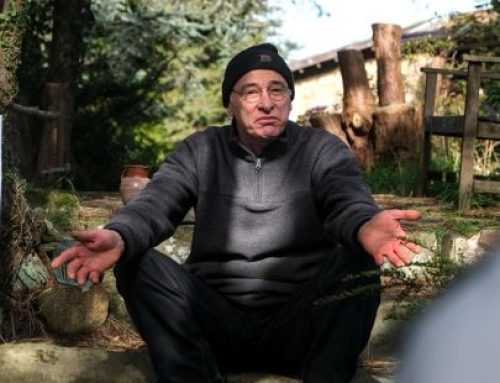
Photo: Alan Jacobsen by Brian Young

Moved from Woodstock, England to the Community bringing my experience in business and management, my love for people and education.



Leave A Comment