


Lydia Pappas CAP Presentation
1. Executive Summary & Event Overview
The UN-CAP-PED: The Living Time CAPsule public consultation workshop was conducted to engage the Ecovillage Findhorn Community as “co-curators” in shaping the governance, preservation priorities, and ethical access policies of the Community Archive. The core metaphor of the event—the Archival Capsule Challenge—framed the physical limits of archiving, demonstrating that space, funding, and preservation constraints require deliberate community appraisal rather than unselective accumulation.
While original event planning anticipated ~50 participants, approximately 20 Community members attended the session. A total of 7 participant evaluation forms were logged into the feedback system following the event. The lower-than-expected turnout has prompted a strategic operational pivot from broad crowdsourced cataloguing toward direct delivery, professional framework completion, and one-on-one stakeholder outreach as the project winds down.
2. Activity Breakdown & Key Outcomes
Segment 0.1 & 1: Intro to Archives 101 & The Vault Opening
- Focus: Governance, Stewardship & Risk Management.
- Delivery: Plain-language introduction framing archives as original, unique records (distinct from libraries) that require continuous appraisal, preservation, and access management.
- Context: Announced the operational transition of historical Community records held for over sixty years by the Findhorn Foundation Trust into permanent, public community ownership, bridging local collections into national infrastructure in alignment with the National Library of Scotland.
Segment 2: The Artifact Encounter
- Focus: Collections Scope, Data Protection & Ethical Access.
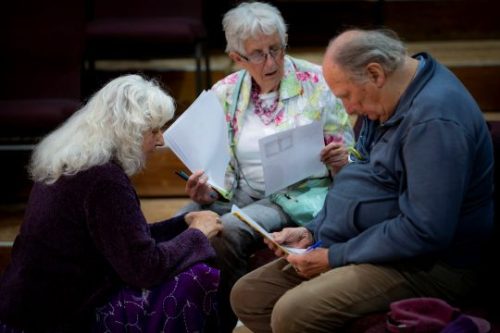
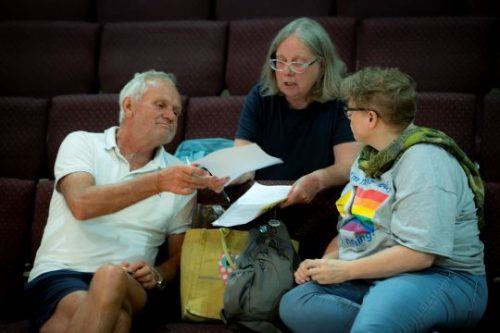
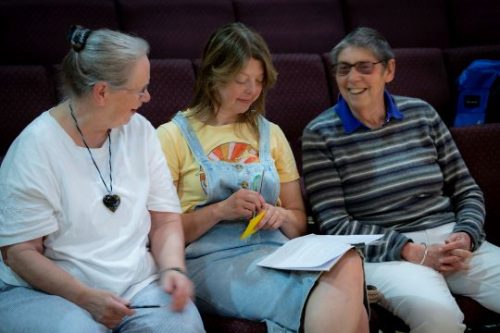
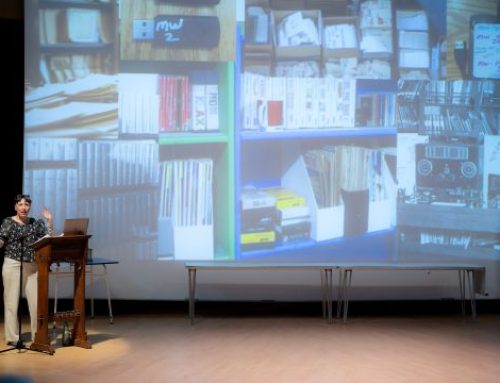
- Delivery: Paired examination of facsimile reproductions representing four primary collection scopes: Organisational Records, Community Heritage, Audio-Visual Materials, and Digital Records.
- Outcome: Participants evaluated records using the SOAR matrix (Strengths and Opportunities) and flagged sensitivity, privacy, and GDPR concerns on Field Notes cards to inform future ethical access policies.
Segment 3: Curator for a Day & The Capsule Selection
- Focus: Acquisition, Appraisal & Selection Criteria.
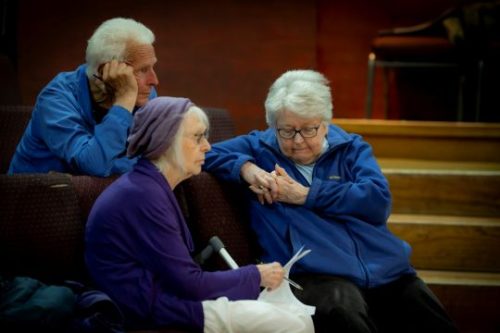
- Delivery: Micro-Appraisal Committees of 2/3 people ranked collection priorities and selected representative items to nominate for the Archival Capsule based on their core cultural strengths and future aspirations.
- Outcome: Demonstrated real-world appraisal trade-offs under physical and resource constraints.

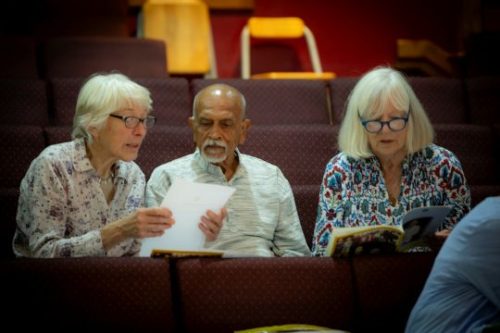
Segment 4: Community Archive Capsule Nominations
- Group 1: Audio-visual foundational holdings, including 1973 Magnus film and Roger Doudna’s 1990 documentary featuring founders Peter, Eileen, Dorothy, and David.
- Group 2: Rosie T’s summary report on Traigh Bairn and the significance of Iona.
- Group 3: Recovery and public viewing access for Eileen Caddy’s lost recorded guidance.
- Group 4: Recognition and archival representation of St. Germaine’s early engagement with the Community.
- Group 5: Archival inclusion of letters from the “Space Brothers” and other sensitive/hidden Foundation records to promote transparency.
- Group 6: Complete periodical runs of One Earth, Network News, and early newsletters from the 1960s and 1970s.
- Group 7: Joy Drake’s Game of Transformation and all historical ephemera associated with its creation.
Segment 5: The Living Memory Map & Action Plan
- Focus: Long-Term Sustainability & Community Participation.
- Delivery: Deployment of a wallpaper roll physical timeline spanning 1962 to 2026, alongside a Volunteer Grid with sticker-based sign-ups for Oral History (Pink), Cataloguing/Collections (Green), and Storytelling Events (Purple).
- Outcome: Timeline engagement was sparse during the event, leaving the map largely blank and highlighting the need for direct follow-up strategies.

Graphic Facilitation by Rosie Balyuzi
3. Feedback Analysis & Survey Results
Data collected from the 7 completed evaluation forms reveals key perspectives regarding collection risks, preservation priorities, and governance preferences.
Awareness of Archive Vulnerability
- 71.4% (5 participants): Stated they “learned a bit more, but was already aware of its vulnerability.”
- 14.3% (1 participant): Reported a “significantly deeper understanding of the urgent risks to the collection.”
- 14.3% (1 participant): Reported their understanding remained “essentially the same.“
Awareness of Vulnerability:
Learned a bit more (Aware) [██████████████████████████████] 71.4% (5)
Significantly deeper [██████] 14.3% (1)
Remained the same [██████] 14.3% (1)
Immediate Preservation & Digitisation Priorities
- Community Heritage (42.9% / 3 votes): High preference for preserving personal letters, daily life photographs, oral histories, and newsletters.
- Audio-Visual Materials (28.6% / 2 votes): Immediate concern for magnetic tapes, historic films (e.g., Magnus film 1973, Founders of Findhorn 1990), and audio reels.
Holistic Assessment (28.6% / 2 votes): Noted that all elements need comprehensive review/assessment and balanced budget allocation.

 Community Co-Curation & Stewardship Preferences
- 57.1% (4 participants): Strongly agreed that community involvement “establishes vital community ownership and democratic governance.“
- 28.6% (2 participants): Believed community input is useful “somewhat — though professional archivists should make the final technical determinations.“
- 14.3% (1 participant): Emphasized that stewardship “needs to be a person or people who know this community.“
4. Participant SOAR Vision & Qualitative Highlights
SOAR SYNTHESIS MATRIX

- Long-Term Aspirations: Participants consistently envisioned a physical and digital hybrid: a dedicated Heritage Centre / Museum and Library (potentially on the site of the original Community Centre) integrated directly into the community’s welcoming experience for visitors, researchers, and future generations.
- Volunteer Sign-Ups: Two participants explicitly registered for ongoing hands-on volunteering (processing, cataloguing, digitisation, or oral histories), while six participants requested inclusion in ongoing workshop communications.
5. Strategic Operational Adaptation (Post-Event Wind-Down)
In light of the low attendance (~20 attendees) and limited engagement with the physical timeline and post-event survey, the Project Archivist has initiated a formal strategic adaptation for Milestone 5 and Milestone 6 (July–September 2026):
STRATEGIC OPERATIONAL PIVOT
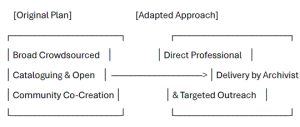 Direct Archivist Delivery: The project archivist is taking direct responsibility for finalizing core structural cataloguing, risk assessments, and preservation guidance rather than relying on decentralised community committees.
- Targeted One-on-One Engagement: Transitioning from open volunteer calls to targeted interviews with key record holders and long-standing community members to resolve critical history gaps.
- Funding & Handover Deliverables: Event data will serve as qualitative evidence for heritage funding applications (such as the National Lottery Heritage Fund). The archivist will deliver a practical Community Grant Tool and Storage & Risk Summaries before contract completion.
Attendees: Jonathan, Pip, Clare, Cornelia, Roger, Joy, Kathy, John, Judy, Sylvia, Lora, Sara, Arun, Janet, Liza, Rosie, Mark, Alex, Suzanne, Tim, Lydia, Willow
Photo Credits: Thank you to Mark Richards of Aurora Imaging for all the photos.



Leave A Comment