

The Archivist’s Journal: Attuning to the Journey
Phase Five: Winding Down, Facing Reality, and Carrying On
Hello again! If June was about holding space for hope, sending out our grant manifestations, and dreaming of what we might co-create, July brought us face-to-face with a much quieter, harder reality.
This was the month I had been building towards since I first arrived in February—the moment where we invited the entire Community to step into the room and shape our shared story together. I had hoped to write a post brimming with energy, surrounded by an ocean of sticky notes and shared laughter but as an archivist, my job is to record the truth of what happens, not just the idyllic version we hold in our meditations.
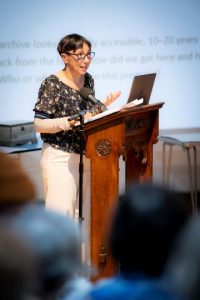
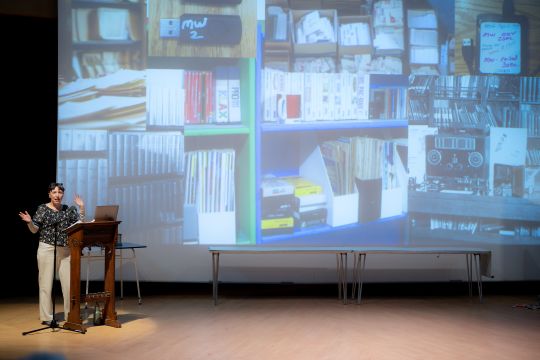
My presentation
UN-CAP-PED: A Quiet Afternoon in the Hall 🎪
On Sunday the 19th, we opened the doors to the Universal Hall for UN-CAP-PED: The Living Time CAPsule. I had set out tables, laid out facsimiles, created archivists’ ledgers and packs, and prepared the giant Living Memory Map, waiting to see the Hall fill.
In the end, only about 20 people from the Community turned up.
We played our way through the Archival Capsule Challenge, wrestling together with the very real, very human question of what we carry forward when the space to hold it all is finite. There was laughter, there was gentle disagreement, and there was a lot of thoughtful head-scratching as people weighed what truly matters against what simply takes up shelf space.
In the Artifact Encounter, small groups leaned over document facsimiles together, asking the harder questions about privacy, consent, and what it means to hold someone else’s story with care. It was humbling to watch the Community step so naturally into the role of ethical stewards of our own history.
-
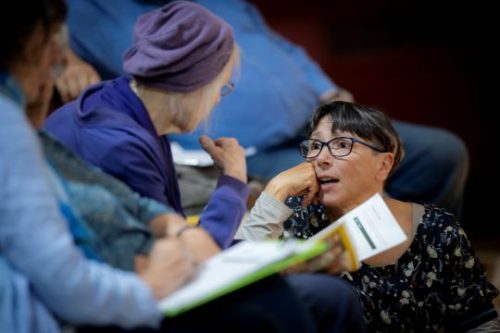
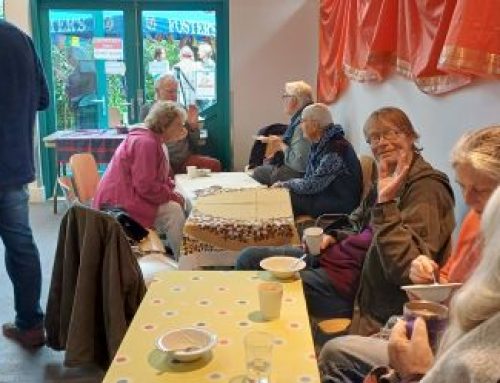
- Un-Cap-Ped in conversation
-
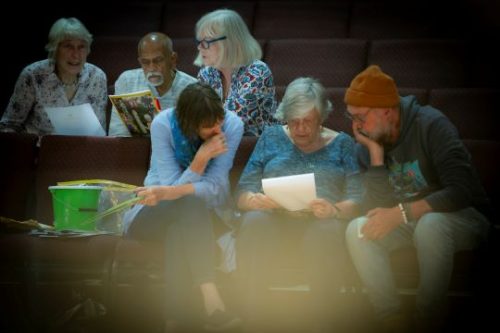
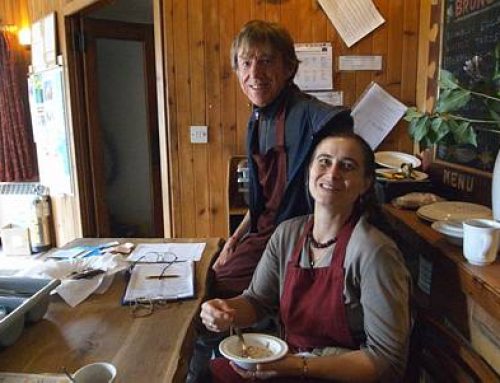
- Archive consultation
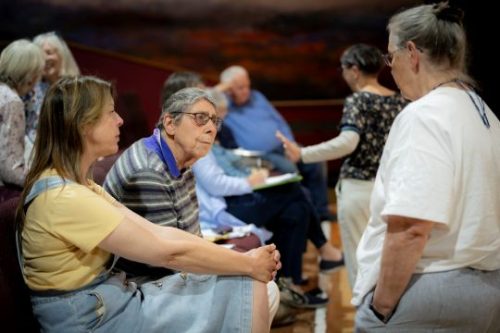
Those who came did their best to dive into the Archival Capsule Challenge and look over the document facsimiles that I had chosen to represent archival materials together. But as the afternoon wore on, the room grew noticeably sparser as some left long before the scheduled end of the event. Standing in that vast, echoey space watching people drift out early was, I won’t pretend otherwise, deeply disappointing.
The Living Memory Map, which I had envisioned covered edge-to-edge in handwriting and dates from generations of residents, remained mostly blank paper. It was a stark, sobering moment that brought the reality of where we are into sharp focus.
Rosie Balyuzi, our amazing graphic facilitator captured the afternoon:
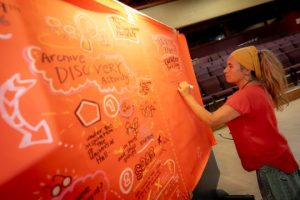
Click here for my full report of the consultation.
The Days After: Momentum, Not a Comedown 📋
The energy of the 19th didn’t fade as we packed away our sparse timeline. Over the following week I reached out personally to everyone who signed up to help, because momentum like that is precious and I didn’t want a single hand to slip through the cracks.
- The sign-up sheets from the day have become the beginnings of our new Archive governance strategy and will hopefully predict the Community involvement going forwards as we really need the Community to step up and help to carry on this project after the end of my contract.
- A Survey of Materials has gone out to everyone who couldn’t join us in the Hall, so no one’s family papers or memories get left off the map simply because of a diary clash. This information will populate the Archives Inventory — a living ledger tracking the wider ecosystem of records held by local organisations and in people’s own homes.
- Feedback slips from the day are being read and treasured and will feed directly into the formal co-creation report any funders will require.
It has been moving to watch this shift from a single afternoon into something that keeps growing on its own. That is exactly what a community archive is supposed to do.
Facing the Shift: From Co-Creation to Direct Delivery 📋
The main takeaway from the 19th is that the appetite for active, Community-wide co-creation simply isn’t where I hoped it would be. The reality I now face is clear; instead of finishing this project in deep, participatory conjunction with the wider community, I will have to finish the remaining work on my own.
I am adapting our approach to the inventory. While a fully crowd-sourced model isn’t feasible right now, the foundational cataloguing and structural decisions still need to happen. I am stepping up to complete this groundwork so I can leave the Community with a clear, sustainable action plan to follow once my contract finishes.
I am now beginning the process of starting to wind down this project. The initial, high-energy phase of trying to rally large-scale volunteer circles and mass participation is drawing to a close. Over these final stages, I will be seeking any remaining Community involvement on a purely direct, individual basis—reaching out one-on-one to specific keepers of papers or long-term members where essential information is needed to fill crucial gaps.
 Back at the Shelves: Progress with the Library 📚
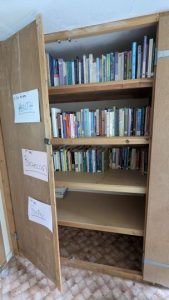
I want to take a moment to give a huge, heartfelt Thank You! to all the wonderful volunteers who have come along to help sort through our mountain of books. Your time, care, and hands-on energy in the bungalow have made a massive difference.
We have now moved into the next phase: alphabetising all the grouped books so that we can produce a complete, comprehensive inventory. Generating this full list is an essential stepping stone before we can begin figuring out which books to keep for our permanent collection and which to discard.
However, making those final decisions isn’t something that can happen in a vacuum—we are still in the process of shaping a formal Library Policy to guide these choices. To carry this policy forward and ensure it is executed thoughtfully, we need a dedicated Library Board to be established.
To help us navigate these next steps, we are holding a community consultation event on Sunday, August 16th in the Legacy building. Hosted as a Sunday Slot in collaboration with the NFA, this event will be a key opportunity to seek Community input on our library policy and future direction.
On the Horizon: Closing the Chapter 🧭
As we enter August and the final stretch of this project’s timeline, my focus shifts to wrapping up deliverables with the material we do have, rather than waiting on contributions that aren’t coming:
- Storage & Risk Summaries: Outlining essential preservation priorities and key risks for our physical and audiovisual collections to guide future care.
- Core Preservation Guidance: Providing a summary of storage conditions, priority items, and immediate conservation recommendations.
- Community Grant Tool: Compiling a tailored guide of potential grant applications—outlining key details, eligibility, and step-by-step deadlines—so the Community has a clear roadmap to secure external funding moving forward.
- Long-Term Governance: Pushing for a clear decision on the long-term custodial home for these records, ensuring the physical materials aren’t simply left to drift or disperse once my time here ends.
The rabbit hole runs deep, and taking on this phase alone is a heavier task than I pictured back in the Spring. Still, uncovering this history has been a real joy—it is fragile, complex, and worthy of our care, and it’s right here on the shelves. I’ll keep paddling along the edges of the loch until the job is done.
If you hold critical historical papers or feel moved to offer individual assistance during these final stages, please reach out directly.
With quiet hope and continued care,
— Lydia
Flow with Us: Mark your calendars for Sunday, August 16th in Legacy for our NFA Sunday Slot Library consultation!
If you hold vital historical records and would like to contribute to the survey or wish to offer targeted help during this final wind-down phase, please contact me via Contact Us.
***
Photo credit: all images by Mark Richard of Aurora Imaging


Leave A Comment