


This article was published in 2012 in Kindred Spirit Magazine.
The pioneering Findhorn Foundation community in Scotland is celebrating 50 years as a beacon of love and light that reaches the far corners of the globe. Geoff Dalglish reports.
Lighthouses seem somehow synonymous with my higher purpose whether I’m striding along the coast from one to another or trying to live a bigger life that beams love and light out into a world that often seems threatened by brooding storm clouds. In nearly 2,000 miles of walking with a message recently, my feet have criss-crossed Scotland from all points of the compass. I’ve been battered and exhilarated by high winds at the Ardnamurchan lighthouse perched on mainland Britain’s most westerly point; stood in awe alongside towering cliffs at the most northerly Dunnet Point lighthouse; and sheltered in a former lighthouse keeper’s cottage at Rattray Head, near Scotland’s eastern extremity. Ending my most recent walk across Spain on the legendary Camino, I gratefully filled my lungs with fresh sea air beneath a lighthouse at the tip of a rocky promontory jutting into a wild, windswept Atlantic ocean.
But nowhere do I experience the lighthouse analogy more powerfully than at the Findhorn Foundation community in northern Scotland, whose legacy for a half century has been to serve as a beacon of illumination, touching lives around the world. As Neale Donald Walsch, author of the best-selling *Conversations with God* series, observed: ‘There is a unique energy here… it makes it easy for people to access a different level of knowing, understanding and experiencing of some of the higher truths of life and how it is.’ Here people are encouraged to always question, knowing that it is at the edge of our comfort zone that life begins. ‘Come to the edge,’ Walsch invites. ‘What Findhorn brings to the human spirit is the possibility of flying.’
Mystery School
Born in the Swinging Sixties, Findhorn is one of the world’s most enduring spiritual and ecological communities, but is the social experiment still working? I first visited three years ago to find out and like a boomerang I’ve returned again and again, each stay taking me deeper into my understanding of the possibilities of life and our interconnectedness with all of Gaia Earth’s lifeforms. It has been described as a greenhouse for spirituality, a mystery school, a laboratory for change, and even a steaming Atlantis rising from the ocean depths – but perhaps most popularly as that beacon of love and light in a troubled world.
Without doubt Findhorn is a force for positive change and new ways of living more lightly upon the Earth, the pioneering community having famously fostered a creative collaboration with the overlighting intelligence of the natural world which transformed a once barren dunescape into a modern-day Garden of Eden. The story of the Findhorn gardens is the stuff of myths and legends and was immortalised as far back as 1973 when a BBC TV documentary presented by Magnus Magnusson had the courage to explore the concept of communication and co-creation with subtle and unseen realms, including energies described as angels and devas. Around the same time a book entitled *The Magic of Findhorn* by Paul Hawken had a major impact and attracted visitors like moths to a flame, especially those from the United States. Clearly Hawken was something of a sceptic to begin with, although time spent with the fledgling community would change that as he came to know the power of the place. Something was happening here, something extraordinary that visiting soil and horticultural experts described as a mysterious Factor X that defied normal logical explanation.
Eco Community
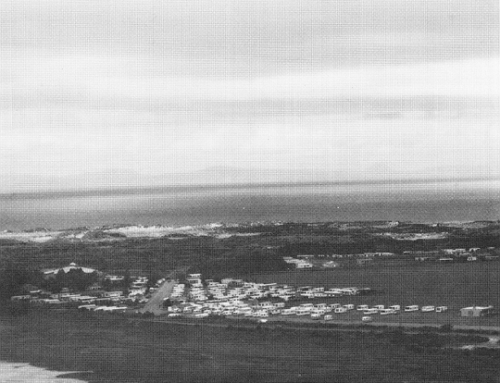
The origins of the now famous community couldn’t have been more inauspicious; former RAF squadron leader Peter Caddy and his wife Eileen, their three young boys and friend Dorothy Maclean arriving with a caravan in tow after he’d lost his job as a hotel manager. That was on 17 November 1962 and the three adults imagined they’d be at the Findhorn Bay Caravan Park for a few days at most. To be honest it was a bleak and inhospitable place consisting of sand dunes and prickly gorse bushes and in winter it was wearing its least welcoming face, Findhorn being further north than Moscow and parts of Alaska.
Fast forward 50 years and we find an oasis of green living with solar panels, whirling wind turbines that harness electricity, Eco homes, some fashioned from discarded whisky barrels, and The Living Machine, an ingenious natural and chemical-free process that uses plants and bacteria to convert human sewage into clear water that almost looks good enough to drink. The community has one of the lowest recorded ecological footprints in the developed world and has gained United Nations recognition, also seeding other communities around the world as a founder member of the Global Ecovillage Network. It has also gained widespread respect as a holistic centre of learning that includes courses in sustainability for University students.
-

- The Nature Sanctuary
-

- The iconic whisky barrel homes
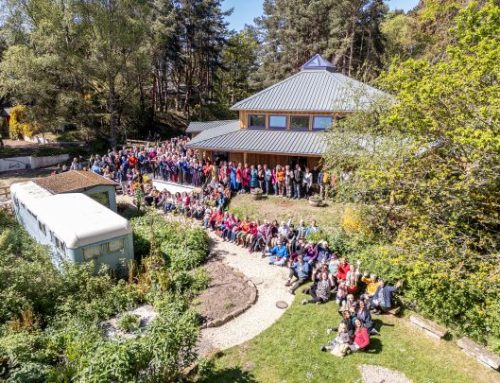
Each year it attracts thousands of visitors and seekers from around the globe, many attending an Experience Week as an introduction to another way of living and looking at the world. Some like me return again and again, while others put down deep roots and become an integral part of the new consciousness. What’s the attraction? For me it’s the indefinable energy of the place: that wonderful sense of well-being and joy that bubbles up at the most unexpected moments. People smile and laugh a lot, as well as having the courage to confront all the difficult questions. Who are we? Where are we going? Is there a way out of the mess Spaceship Earth finds itself in at the beginning of the 21st century? Can we build a new social paradigm where money and economic growth are not the primary motivators?
Spiritual Courses
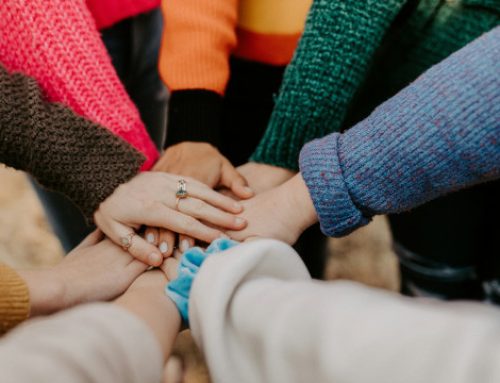
Increasingly I’ve felt the need to go deep within to find peace, and to acquire the tools to connect with the Divine and Findhorn has been a great help, also teaching me how to live more simply and sustainably. I’m also impressed with the power of the group processes. Almost all start with an ‘attunement’ where participants hold hands in a circle while one person says a few words, encouraging each person to be present in the moment and appreciate exactly where they are and what gifts the day or activity is bringing. This is a chance to connect with Spirit, the group and yourself. It’s a time when you forget about mobile phones, computers and deadlines and quietly go within. If your starting point is an open-hearted space where you deliberately connect with others in a circle, I believe you are wiser, more loving and more intuitive in whatever you do. In the beginning I suffered from a South African macho male syndrome, feeling awkward holding hands with other men. But within days it was the most natural thing in the world to hold hands with anyone and to dispense and receive spontaneous hugs. The gentle compassion of an attunement is one of the things I miss most when I’m back in the ‘real world’ which feels like a much harsher and more insensitive place.

John Willoner, Dorothy Maclean, Jonathan Caddy with the Original Caravan that is the nucleus of the Findhorn Community.
While the community has continually evolved, it remains founded on three fundamentals: going deep within to access the stillness and divine guidance that Eileen Caddy relied on in her daily meditations; co-creating with nature in the way that Dorothy Maclean demonstrated; and following the example of Peter Caddy who regarded work as love in action.
So what’s Findhorn really like?
It has taught me to see the world through new eyes and to appreciate that there is love and beauty wherever we choose to look. Once instead of rushing to start my day I sat in on an early morning Taize singing session and was moved almost to tears by the exquisite harmony of the voices. Later I strolled through a nearby wood where I delighted in the squirrels and woodpeckers going about their business. It was one of those days where you feel the love and joy rising up in you and lighting up your life with good intentions.

Growing in Cullerne Garden tunnel
Often I’ve met really inspiring people here, be they community residents or visiting guest speakers or workshop presenters. Two of my best days were spent with the Trees for Life project aimed at restoring the Caledonian Forest, but a heavy snowfall meant that instead of planting young trees, we collected seeds from the indigenous Scots pines that are so threatened, only one per cent of the original forests remaining. The passion and unwavering commitment of Alan Featherstone, founder of the project, is an inspirational call to arms and by the time you read this he’ll have planted his millionth tree. Another personal source of inspiration has been Satish Kumar, a Findhorn workshop host and the presenter of BBC2’s Earth Pilgrim programme, who insists: ‘As a pilgrim I discover the mystery, the magic, the meaning and the magnificence of life in every step I take, in every sound I hear and in every sight I see.’
It was after spending some days with him that I felt inspired to follow Mahatma Gandhi’s entreaty to ‘be the change you wish to see in the world.’ For me that has meant shedding most of my worldly possessions and basing myself at Findhorn in between walking with a message about treading lightly and lovingly upon the Earth. I know that we can each make a difference and need to if our children and their children are to inherit a world as magnificent as the one I was born into.
Long-time resident Angus Marland, who looks back on a 40-year-association with Findhorn after arriving as a 22-year-old wood carver and spiritual seeker, says: ‘The place is just as exciting and full of potential now as it was then. What is manifesting now is as important as it was in the late 1960s and early 1970s.’ Mari Hollander, a Findhorn trustee adds: ‘The community’s very existence feeds the imagination of what is possible. It’s a wee glimpse of what it might begin to look like if we aim to live in harmony with all life.’

Field of Dreams

An author, writer, and spiritual and ecological activist


Leave A Comment