


Click to view e-book
(Editor’s note: This chapter includes three other papers
- Overview of the World’s Main Religious Traditions by Alex Walker
- The Community and Christianity by Alex Walker
- The Christ and the Buddha by David Spangler
- and a Reading List which we have added at the end of this introduction.)
The New Age represents the emergence of a new world view rather than a new religion. As a world view it can have a spiritual or religious component, but by itself, the New Age is a vision of cultural possibilities rather than a set of beliefs about God or a way of relating humanity to the sacred.
Of course there are groups that identify with the New Age, such as at Findhorn, which are spiritual or religious in nature and which do have particular beliefs about God and practices of realising the presence of the sacred in everyday life, but such practices or beliefs might not be universally shared or agreed to by all the groups and individuals who otherwise share the New Age vision.
Likewise, there are other groups who see themselves as New Age who have no particular spiritual orientation at all, concentrating instead on technological or social issues, such as renewable forms of energy, environmental protection, new designs for housing, or alternative economic systems.
A person can believe in the New Age and be a Christian, a Muslim, a Jew, a Buddhist, a Pagan, an agnostic, or even an atheist. An individual does not have to believe in God to believe in a better future.
On the other hand, there is a value system which is generally emerging throughout the New Age movement and which to some extent defines the boundaries of that movement. This value system honours the interconnectedness of everything; is holistic in its perspective; values both the individual and the group; sees men and women as co-equals; is compassionate and co-operative; values nature for its own sake and not for its utilitarian value and therefore has a strong ecological ethic. It also tolerates paradox; is open to ambiguity; values human potential, imagination, and creativity; and accepts that there is more to reality and more to human consciousness than a materialist philosophy may admit.
I would not call this value system a religious one. It basically strives to see the world and all within it as a wholeness rather than as separate parts and calls us imaginatively to envision and create a culture that embodies that wholeness.
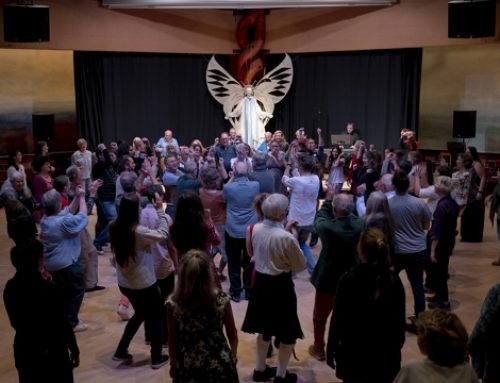
However, this value system is “spiritual” in that it claims that the materialist perspective is incomplete and that there is a non-physical or transpersonal side to reality which must be considered as well. Beyond this, though, it does not prescribe a particular way of believing about or interacting with that non-physical or non-ordinary reality. For example, acknowledging and working with nature spirits and angels, as the Findhorn Foundation does, may be part of a new cultural world view—a New Age—but it need not be; one could approach the same end by acknowledging that there is simply a little-understood energy within thought and emotion which has an impact on the environment because we are interconnected with that environment psychically as well as physically. Also, belief in the existence of non-physical or spiritual worlds and their inhabitants—or the mere exploration of such a possibility—is not necessarily a religious enterprise. It could be seen as a scientific or an artistic enterprise. It is seen as religious only because in our culture we have over time relegated any topics of that nature to the religious dimension, considering them to be supernatural and thus (like religion itself, in some ways) not part of the “real” world.
An additional challenge is that one word—spiritual—is used to describe two different things: the quality of being non-physical or non-material, and the quality of having religious or sacred value or of being connected to spirit. In pushing the boundaries of consciousness and interaction past the limits which current materialist western culture accepts—in other words, by exploring a non-material component to reality—the New Age seems also to be pushing a particular religious world view. By having a “spiritual” component to its world view, it can appear as if the New Age has a “religious” component to its world view. In a way this is like saying that when Columbus sailed west to prove the earth was round, he was actually on a religious journey and was espousing paganism because many pagan beliefs described heaven or a blessed state as being an island in the sea to the west. Columbus may well have seen what he was doing in religious or spiritual terms (though not necessarily according to a pagan tradition), but what he was actually doing was not a religious venture in itself.
This confusion can appear in other ways. Channelling is a major phenomenon in the New Age movement, and it is often seen as a dominant New Age religious or spiritual practice, by both outsiders and by New Agers. The channel becomes the new priest, dispensing wisdom and insight—for a fee—and allowing the believer to touch the presence of spiritual realms. However, channelling has nothing to do with spirituality, being simply a phenomenon of perception and communication. It may be appropriate for a media-saturated age that an act of communication itself becomes raised to the level of a religious epiphany, but it is a gross distortion of a spiritual practice. When a person is considered spiritually evolved simply because he or she can be a telephone between two levels of consciousness, the understanding of what constitutes spirituality has become twisted.
Equally distorting is the assumption that because a life-form is without a physical body and inhabits a non-material dimension it is consequently “spiritual” in the sense of being an embodiment of sacredness, compassion, wisdom, and truth. This is a profoundly dangerous assumption to make. Channelling may under some circumstances be a useful tool, and it certainly is encouraging people to reconsider the existence of non-physical realms, but to equate it with spirituality or with a spiritual practice only suggests how impoverished our language and ideas about spirituality have become.
Of course, as I said at the beginning, there are religious and spiritual (in the sense of being connected to spirit or the sacred) aspects within the New Age movement. The Findhorn Community is a good example of this, for it does not identify itself as a secular or technological community but as a spiritual one, and part of its work has been to demonstrate the reality and value of each person finding a personal communion with the God within. There are New Age groups that take on all the trappings of a church and behave as if they were the proponents of a new religion. Because such groups are often organised around a charismatic teacher or prophet and have definite codes of behaviour and doctrines of belief, they can take on the trappings of a cult.
However, in my own experience, the dominant religious or spiritual strain within the New Age movement has nothing to do with any leader or dogma; it is simply the desire of individuals to find a spiritual path in which they can relate in a direct, guilt-free, loving, and empowering way directly with the sacred without the need for an intermediating priesthood or clergy. Many, if not most, of the people I have met or known over thirty-five years of involvement with the New Age movement were exploring ways of knowing God directly and intimately. Their route might be circuitous and take them in and (hopefully) out of strange situations, including cults of one kind or another, but ultimately this was their goal: to discover within themselves their own spiritual nature and its union with the sacred as a personal experience and not just as a theory or teaching.
In a way, this is the path of the mystic or the shaman, and it can be highly individualistic, since each person’s relationship with the sacred is unique, intimate, and private. The phenomenon of increased interest in this path suggests that for many people, formal religious institutions and doctrines, particularly of a western variety, are not meeting their spiritual needs. It also conveys an implicit—and often explicit—criticism of western, particularly Christian, churches and religious life (though interestingly the majority of people I have known still see themselves as followers of the Christ but are seeking a new and more intimate way of knowing the Christ within their own hearts and of giving birth to the mystical Christ within). This criticism can itself be a source of friction between the New Age movement and formal religious institutions, though it can also be an inspiration for renewal within churches open to change.
The negative side to this is that, whereas a mystic or shaman pursues his or her individual and unique relationship with spirit and the sacred within a context of belonging to and serving a larger community, a seeker into the New Age may find himself or herself apart from such a context. Rather than transforming the personality while retaining its unique qualities, the spiritual path becomes shaped by that personality and its needs in idiosyncratic and sometimes ego-inflated ways. If the only reference a person has is whether a particular practice or teaching feels good and each person is his or her own prophet, then the stage is set for the possibility of usurpation of the spiritual process by the selfish and self-referencing aspects of the ego. A community or tradition can provide a context for critical self-reflection and quality control by providing guidelines of wisdom and discernment and also by demanding accountability. Because the average New Age seeker has often abandoned his or her tradition of origin, this context may not be present or available.
A tradition does not have to be a religious one, however, as long as it provides training in discipline and critical discernment and a larger community context that can inform and balance the individualistic aspects of spiritual development. It can be artistic or scientific, and in fact, I personally believe that science—or more appropriately, the methodology of science—is a primary tradition which will assist and inform the development of a New Age spirituality. The methodology of science has been practised within a materialist context, but there is no reason it—and the disciplines of observation and thinking which it promotes—cannot also be practised in a more holistic context that also includes a non-material reality; in the process, both science and spirituality would be redefined and re-imagined.
Inherent in the scientific method is the power of the individual to learn about the truth of creation for himself or herself through using rigorous and disciplined modes of observation, thinking, and discernment; in a spiritual context, this discipline and discernment would also extend to and include the training and use of such inner faculties as intuition, imagination, and attunement, leading to a spiritualised form of cognition. This development stands in contrast to approaches which ask individuals simply to believe and to follow—usually without question—someone else’s revelation, approaches common to many mainstream religious practices.
Unfortunately, New Age spirituality often fails to live up to this ideal of disciplined, spiritual cognition, nor does it live up to the ideals of compassion, surrender, or sacrifice found in mainstream religious traditions. Instead, it often seems to outsiders to be very self-referencing, focusing on self-development and one’s own well-being to the exclusion of others, and therefore devoid of compassion (the “it’s their karma, let them work it out” syndrome). It seems—and often is—mired in subjectivity, a mask for personal opinion and prejudice. Furthermore, many New Age spiritual groups and beliefs embody a fundamentalism just as intolerant and demanding as that of any mainstream religious denomination, and they can be just as insistent upon obedience and blind faith.
Another major criticism is the undiscerning way in which New Agers tend to eclectically mix and match elements from various religious paths such as Christianity, Buddhism, Hinduism, paganism, shamanism, native traditions, and so forth. The criticism is two-fold. The traditionalist sees elements of his or her religion taken out of context and used in ways that he or she does not approve of (and which actually may distort the original meaning and power of that element), and the resulting mixture can be grotesque and spiritually impotent, as symbols, taken out of context, lose their meaning and power or take on other meanings never intended. Secondly, this eclecticism can lack the organic integrity of a tradition that truly arises from a cultural context; it can lack coherence, like a collage of conflicting images put together because the artist liked each image individually but never considered how they might look or fit together as a whole. I once went into the sanctuary of a New Age centre where every conceivable image of the sacred, including photographs of the stars, the earth from space, and so forth, had been placed on the altar. The intent was probably to be universal and all-embracing, showing the many ways in which the sacred can manifest to human consciousness, but the effect was one of clutter, confusion, and a diffusion of energy and power. Just one symbol—or no symbols at all—would have been far more effective and powerful.
On the other hand, what the New Age offers is an arena for religious and spiritual experimentation and exploration, as well as in social, artistic, political, and economic fields, too. Not everything that arises from such a grand mixing together of elements is going to be beautiful, functional, useful, or healthy. Some of it will be silly, frivolous, or even toxic. But at the same time, there will emerge from this exploration new insights and combinations that will be holy, powerful, and transformative. It is these combinations that will give us hope for the future and insights with which to build a new world-vision and culture in which spirituality will be a living, creative, and healing presence in everyday life, the birthright of each individual born upon this planet.
Reading List
Kerry Brown and Martin Palmer (editors); The Essential Teachings of Islam; Rider; 1987
Michael Carrithers; The Buddha; Oxford University Press; 1983
Richard Causton; Nichiren Shoshu Buddhism; Rider; 1988
Teilhard de Chardin; The Phenomenon of Man; Fontana; 1969
The Divine Milieu; Harper & Row; 1960
Chogyam Trungpa; The Myth of Freedom and the Way of Meditation; Shambhala; 1976
Church of Scotland; Young People and the Media; Board of Social Responsibility report to the Church of Scotland General Assembly; 1993; especially Appendix C, Rev. Dr. John Drane’s ‘Coming to Terms with the New Age Movement’, which whilst detailing a strong critique of the New Age, also identifies key weaknesses in Church thinking e.g.
” We also have to grapple with the fact that we have often lived in a reductionist and materialistic way: our exploitation of the environment, our male chauvinism, or just our ordinary church life – in which we frequently major exclusively on believing the right things (rationally), without any real interest in direct experience of God. We could go on. But we need to move from mere analysis to action. Most unchurched people in Scotland today are more likely to construct their world view from aspects of the New Age outlook than from elements of mainstream Christianity.”
Ronald Ferguson; George MacLeod: Founder of the Iona Community; Collins; 1990. Required reading for anyone who believes that the Church of Scotland belongs in the Jurassic. Especially interesting are MacLeod’s struggles with the establishment of his day which echo many of our own difficulties. He also had his ‘miracle’ stories. See for example page 183.
“In September 1940, when the incendiary bombs were raining on London, it looked as if the re-building [of Iona Abbey] might have to be stopped because of lack of timber. Then the deck cargo of a Swedish ship, carrying wood from Canada, had to be jettisoned. The timber floated all the way to Mull, directly opposite Iona – all the right length. “Whenever I pray”, said the beleaguered Dr. MacLeod, “I find that the co-incidences multiply.”
Matthew Fox; Original Blessing; Bear and Co; 1983.
Guru Rinpoche; The Tibetan Book of the Dead: The Great Liberation Through Hearing in the Bardo; Shambhala, 1975. This incorporates a commentary by Francisca Fremantle and Chogyam Trungpa.
Manly P. Hall; The Mystical Christ; Philosophical Research Society Inc.; 1951
Heinrich Harrer; Seven Years in Tibet; Harper Collins; 1988
Herman Hesse; Siddhartha; Bantam; 1971
Christmas Humphreys; Zen: A Way of Life; English Universities Press; 1962
Anthony Judge; A Conference Towards Spiritual Concord as a Metaphor of Spiritual Concord; Union of International Associations; 1992. Tony, who is a Fellow of the Foundation, is an excellent contact for those interested in Inter-Faith Dialogue. Interestingly, he reports the Dalai Lama as having recently stated that attempts to imagine there is a single truth underlying all religions as ‘hypocrisy’.
Hazrat Inayat Khan; The Unity of Religious Ideals; Sufi Order Publications; 1979.
Eliphas Levi; Transcendental Magic; Rider; 1968.
Henry Renckens; The Religion of Israel; Sheed and Ward; 1967
David Spangler; The Christ Series; Findhorn Foundation Original Series Study Paper; 1972. See especially ‘A Letter to Graham’, which is a reply to a minister who had raised a question about David’s interpretation of the Christ.
Idries Shah; The Way of the Sufi; Pelican; 1968.
Gordon Strachan; The Bible: an Ecological Perspective; in Vance Martin and Mary Inglis (editors); Wilderness: The Way Ahead; Findhorn Press; 1984
Eric Voeglin; Science, Politics and Gnosticism; Gateway; 1968
Alan Watts; The Way of Zen; Pelican; 1957
R.C. Zaehner; Hinduism; Oxford University Press; 1966

I have been a teacher of subtle realities for sixty years. I am married with four children, all of whom live in the Pacific Northwest. I have a granddaughter and a grandson.






Leave A Comment