

1984 – My first trip to England and Scotland
That summer we went on an interrail trip through England and up into Scotland: my little sister, my mother and me. I was twelve years old and my sister was eight.
I remember London, the lions at Trafalgar Square and how they impressed me in the way they were meant to impress anyone seeing them for the first time. This was before I knew what they represented, and before I knew how this journey would come to affect my life.
I remember the excitement of going to Camden Market with its more punk version back then. My clothes were black jeans, a black T-shirt, pink pointy leather boots, and black makeup. I found two spiked bracelets, one pink and one black, and a pink spiked leather belt. I remember the feeling of wearing them, the smell of the leather, the sensation of taking them off and on. My mother didn’t like them, but she let me have them. I recall how important that experience of independence felt, choosing something outside her sphere of taste.
We went to Cornwall and Wales. In Cornwall, I remember walking out to St. Michael’s Mount, how beautiful it was, and how much I loved wandering around the castle. I have always loved old castles; I feel at home and safe in them. Perhaps it has to do with our family history – the garden architect, castle gardener, and art master Maximilian Körner (1742–1828) and his wife Katarina Maria Völker (1758–1823) from Pommern, who were employed at Viderups Castle in southern Sweden.
I’ve heard the story told so many times how their thirteen children went to the castle school and all became creative people; how one of them, Magnus Körner (1849–1864), became an academic drawing master at the University of Lund, and how the creative and artistic tradition has followed our family ever since.
When I was little, I often stayed with my grandmother and her last maid, in my grandparents’ apartment. They both told me those stories again and again. We would sit in the library, with Magnus Körner’s large world map drawn for the academy hanging on the wall in a beautiful frame. My grandmother would tell me about the family, how it all started, and how the traditions and manners were passed down. Over beautiful cups of coffee with cream and hard sugar, she taught me that manners, creativity, and a rich inner world doesn’t come easily. Inner listening requires focus; actions must be done consciously, with humour, class, and love. The stories we carry inside, she said, are reflected in what we create in the outer world.
I remember my grandfather’s enormous, dark, heavy writing desk with lion’s feet and the sense of seriousness in whatever he wrote there; the marble ashtray where his pipe once lay, the tall wall clock beside the desk, and the sound when it struck whole and half hours.
Life with my grandmother and her maid was full of drawing, painting, and building dollshouse furniture that perfectly copied the furniture in the apartment. There was space for stillness and contemplation between the stories told and the old books read aloud. I especially remember one, about an adventurous kitten in a bookshop who, by magic, ended up living with an eccentric bear in a castle. Sometimes we watched black-and-white films my grandfather had recorded of the six children, my grandmother, their friends, the maids, his big Buick Roadmaster, the summerhouse in Brottkärr, and all the fun and play.
Perhaps that’s why my mother took us to all the castles she could find both in Sweden and abroad. We read about them, she told us their stories, and then she let my sister and me explore them on our own while she walked around, thinking quietly by herself. I remember her carrying something inside – a mysterious sadness she could not quite grasp.
What I do know is that for all of us – my sister, my mother, and me – castles were a pause in time, a space in between, where the modern world and everyday life could not reach us. There, I felt the same stillness and room for contemplation as in my grandparents’ house. Reading the signs on the walls became storytelling in my inner world. It was a space we shared; a silent, unspoken understanding of why we needed to be there together, just for a while sometimes.
Findhorn
After Cornwall, Penzance, Land’s End, the Isle of Wight, Dover and Brighton, we took the train to Glasgow, and further on to Aberdeen and then to Forres. My mother had heard a conversation in a film about the Findhorn Foundation, and that’s where she was taking us. I think there were shuttle buses to Cluny and the Park, as I remember. We stayed in the Park. To me a feeling of familiarity and of home was present from the first moment.
When I was four months old, my mother, who was twenty-one when I was born, moved to a community with her friends in Sweden. My first years in life were divided between living in a community, my grandmother’s house, and with my dad and my dog. This was before my mother met my sister’s father, a man who adopted me. They moved into a house together and then my sister was born.
The community in Sweden where she lived with me consisted of students in journalism, psychology, music and politics. They were all politically and culturally active and engaged, and they played live music at night, talking, laughing, cooking, and taking care of the community together. I remember these people taking care of me; I remember all the sounds and the smells of community living, laughs, people playing music, talking to each other, and the sound of clanking pans and pots in a communal kitchen. My mother then took me from my community home — without explanation to me — and moved into a house with her new man and into a societal norm where I felt loss, grief, and longing for my warm, motley family life that was my safety inside, and that I had taken for granted and loved.
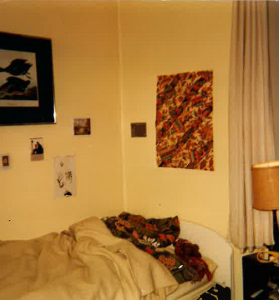
my room in Cluny
When we arrived at Findhorn the first time, I found myself having a strong and obvious feeling of coming back home. The friendly people, the work in the gardens – I remember touching the plants with my hands, the texture and the smells of the herbs, the stillness and the experience of the gardens – cooking in the community kitchen together and the taste of eating the food everyone had cooked, as we sat together in a big family way. Inside me I still hear the sounds, the laughter and the clanking of cans, knives cutting vegetables and the sizzling of frying pans, and how beautiful the food turned out and how good it tasted. I remember the sacred circle dancing, the singing, and making friends with the other children there — running around, sitting, talking, and just contemplating together outside amidst the sound of people’s small talk. I remember the happy atmosphere, but also the seriousness of people sharing, giving each other group hugs and caring for each other. I recognised the similarities in the situation from my first years in life and the feeling of safety in a big, warm family environment where people wanted to be there for each other and co-operate.
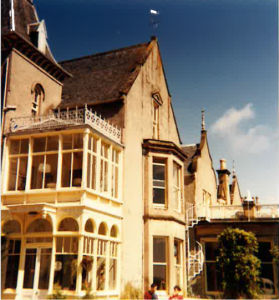
As a child living in a community, it felt safe, warm, and also liberating and free — a situation where one could be at peace with space and nature, yet close to people who cared when one needed them, and there was always someone who was inviting and happy to help with community chores. I quickly made myself at home in the community at Findhorn. I didn’t reflect much on why my mother took me and my sister to a “home place” in Scotland, but I do remember a warm feeling of gratitude, as if she understood how much I had been missing my community home. I remember Cluny as enormous, a castle with a community life inside, and, in many ways, it was so obviously perfectly right for me. It gave me the feeling, clarity and answer to what I had been seeking: a community in a castle from my inner child’s perspective. I recall my mother talking to people at Cluny about coming back and it did give me a sense of hope and at the same time the awareness that as a child I was dependent on her decisions.
She didn’t go back herself for years, but she did send me. I remember the summers going to Findhorn, travelling all by myself from Gothenburg, Sweden, by ferry to Newcastle or by train via Denmark, Germany, Rødby–Puttgarden and then a ferry to Newcastle. In Newcastle I found a hostel for the night and then I took the train to Forres and the shuttle bus up to Cluny to join the youth program.
My life back in Sweden was in many ways emotionally painful; I had many questions inside me about where I belonged in what I perceived as the normal ‘non-communal’ society and what my family really was in a norm-framed societal setting. The adults around me — my mother, my adoptive father — divorced, they had new relationships and we moved a lot. There was always a new house to live in and a new person taking care of me: my grandmother, my adoptive grandmother, my adoptive father’s new woman or her sister, my aunt, or me sleeping over at a friend’s house. Travelling to Scotland and finding my way to Findhorn was like a fairy tale to me both in a good and in a challenging way. I understood the seriousness in the feeling of being sent there to find peace within. At the same time, in an unspoken way, it was expected of me to find my own healing and life there, away from a childhood family situation that was already shattered in many ways. It was as if my mother had made a decision to send me to Findhorn hoping that the community would take care of me.
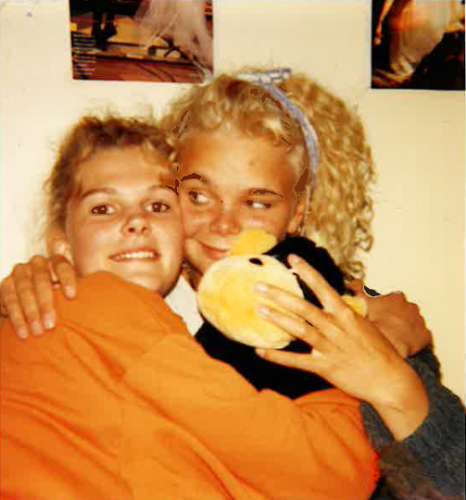
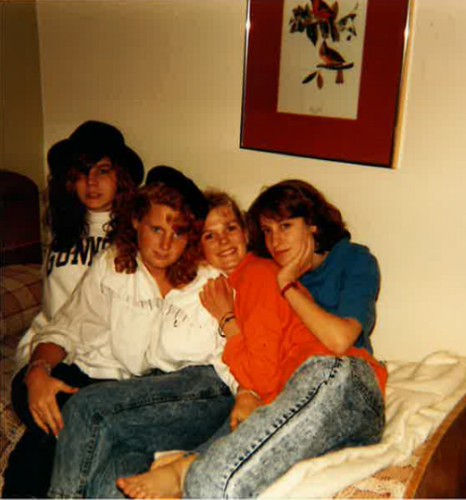
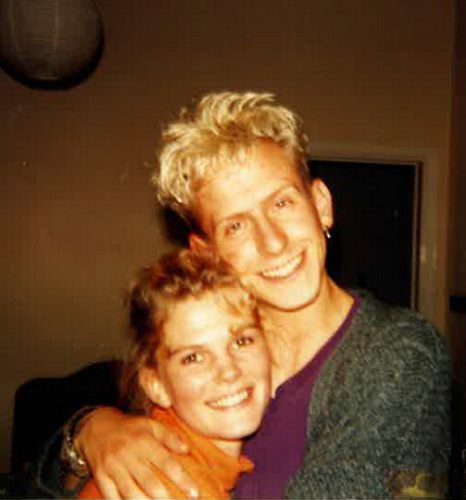
The community at Findhorn did take care of me, and the young people in the youth program became my community siblings and the adults my community parents in a community way. I had my bed in a room with others. I put my drawings and paintings on the wall around my bed and I especially remember my favourite brown sheets with big colourful orange and green flowers on them. We had sharings and were tuning in before ‘love in action’ in the mornings. This gave me the opportunity to learn how others felt that particular morning and how our group hugs gave strength throughout the day.
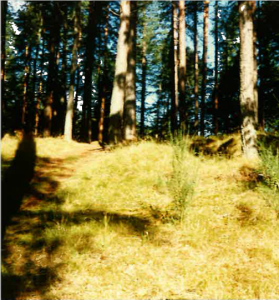
I remember giving love to the old beautiful big white bathtubs in the big bathrooms at Cluny, with the windows open and through the window came the smell of the pine-tree on the breeze while I cleaned the brass faucets on the bathtubs. I remember the cool feeling under my feet from the tile floor and the wonderful scent of cleanness when it was done. I really loved the bathtubs. I could lie in them having long hot baths with the windows open, contemplating my life and how much I loved being at Findhorn.
I do remember the soft carpets at Cluny and the round vacuum cleaners and that they all had names on them. And I did love the feeling of space in the rooms and the large windows where you could look out over the golf course and the forest.
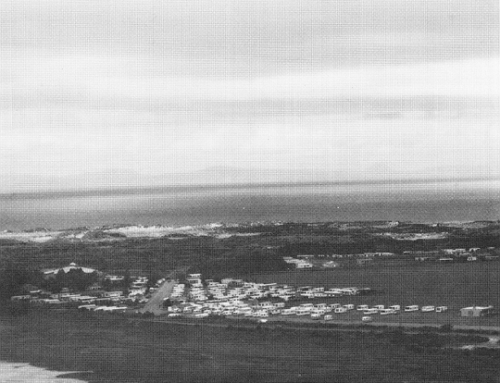
I also gave love to the bread baking in the communal kitchen together with the other people there. I remember a very kind man who told me about his decision to move to Findhorn and leave the norm-based life he had before. We took the shuttle bus to the Park for ‘love in action’ in the caravan park. I did ‘love in action’ with my friend Ana and her dad Jock in the apothecary caravan. It was a magical feeling being in the apothecary with all the natural herbs and medicines. Jock taught us about them. We felt seen, taken seriously, and I felt awe and gratitude for the healing forces of nature in the medicines. We laughed, worked, and did serious ‘love in action’ in happy ways. I did ‘love in action’ on the housebuilding of the first whisky barrel house and some other house-building projects. I remember how much I liked that the whisky barrel house was round and that the window was also round; and the smell of the wood. We did ‘love in action’ in the gardens both at Cluny and in the Park. We would sit on the grass in front of the family house or drink tea outside the communal kitchen, talking about life, laughing, and just enjoying being together.
-
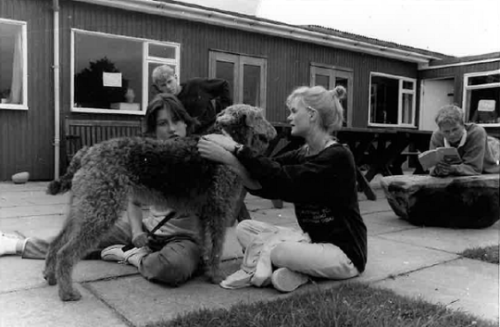
- in front of the CC
-
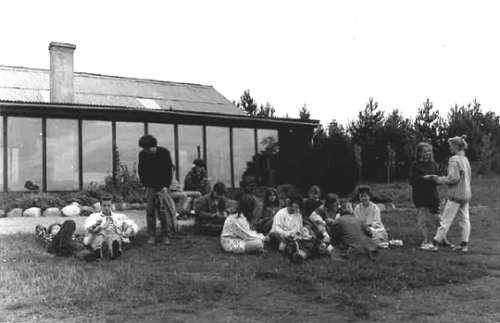
- outside the Familyhouse
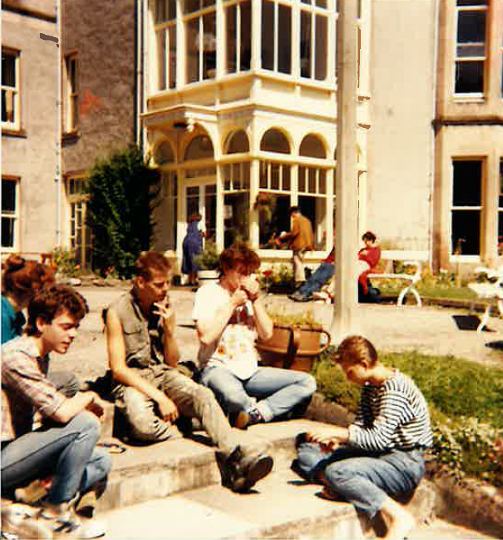
In the afternoons we had the most wonderful group activities at Cluny and in the Universal Hall in the Park. We went to the Findhorn River to hug the trees, lie down by the water to listen to the sound of the river, and meditate. At Cluny we had common art projects and joint awareness training in different forms. We also spent time outside the entrance of Cluny, sitting on the benches pressed against the castle wall or on the stone steps that led down into the garden. There we traded stories from our lives and shared our quiet experiences, getting to know each other in that gentle way that happens when you feel a sense of belonging in a moment that seems to exist in its own time.
We sang around campfires in the woods outside Cluny at night. When at the Park we ran on the sand dunes through the pine woods down to the ocean to swim. We all went walking in a big group down to Findhorn village to where one of the girls’ family lived in a warm, friendly house. Her name was Sara and her mother Liza. Sometimes we went to Forres or to Findhorn village at night to have some night fun. As young people, we felt it was exciting walking into pubs on a Friday or Saturday night, even though the most fun was always being together and going together back to Findhorn. There inside Cluny we lived our young people’s lives. We gathered in the rooms just chilling; often we went to Joy’s son Damien’s room to listen to music and talk, or we sat in the big dining room near the tall windows with the beautiful Scottish landscape outside.
I did feel strongly, during those years, that my mother was considering finding a way for me to stay and live at Findhorn in the community, with her and my sister eventually coming there as well. I remember wondering if there was a school in Forres that I could attend. I had so many questions inside me that never came out in words; they stayed large and unanswered within me. There were a few times when I called my mother in Sweden myself to ask if I could stay in the community and if she and my sister could come to live with me. In the end, it didn’t happen, and I did go back to Sweden. After my last summer at Findhorn, I moved to New York, where my aunt lived, and enrolled in art school. While I was living in New York, my mother went back to Findhorn with my third little baby sister to play the Transformation Game, and during that time we didn’t have much contact.
I can’t say anything else other than that the Findhorn Foundation and the community with its people in many ways became part of my inner safety, a home and a family that I could bring with me when I went on exploring more of who I was in my adult life. There I felt accepted amongst people in a family way — a big warm star family — in a community built on values of inner listening, co-creation with nature, and love in action.
And now, many years later I still draw angel cards, read and contemplate Eileen Caddy’s words, channelled through the still, small voice within. After having lived in many countries, in different situations, having five children of my own and a solid university education in politics, human behaviour and pedagogy – which has been part of my journey to understand societies and people in this world — I did come back home to Findhorn to visit, and I did find the same soul and home, albeit changed, as life changes in the constant flow of existence.
I do feel the force of new leaves growing and a new story beginning.
The following is a collection of photographs I cherish from those times:
To browse through the album please use the < > arrows at the left and right of the window. For easier reading, use the buttons at the bottom of the window: use Zoom (the + and – buttons) or Toggle Fullscreen (the four arrows pointing outwards).
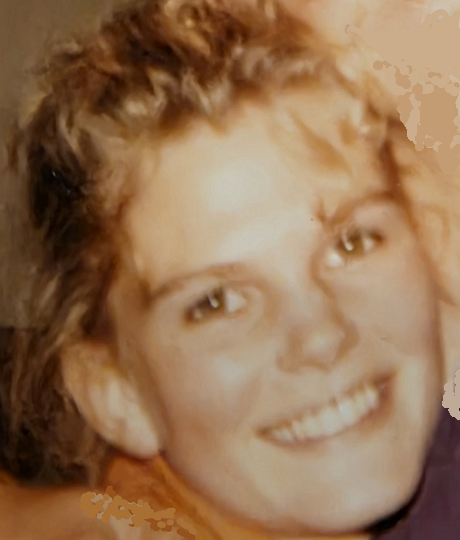
Living in the Community shaped my life. I lived in New York, Paris, Rio, and Lima, had my five children, and completed my university studies in anthropology, international relations, and pedagogy.


Leave A Comment