


Editor’s note: This amazing time-traveller’s view is Dick’s way of describing in 1982 his 5 year vision for the Cullerne Garden School. It was found in one of the folders in the Cullerne Gardeners’ meeting room in 2025. We thank Dick’s family for the permission to publish it here.
To give a feel for the historical handwritten document we provide a pdf to flip through. Underneath we are also offering a more readable form of the text.
***
To browse through the manuscript please use the < > arrows at the left and right of the window. For easier reading, use the buttons at the bottom of the window: use Zoom (the + and – buttons) or Toggle Fullscreen (the four arrows pointing outwards).
***
How, I was asked, will the school look in five years time? Do you agree with resident students? How self-contained can it become?
I felt like a man about to plant an acorn. How many branches will it have? How tall will it be in three years’ time? You get the idea, I hope. But, as with the acorn which I know will become an oak, I know something of the characteristics of the school.
Now if you try to determine the future development of an organic being, you must be very familiar with its life program and be able to make accurate predictions of environmental conditions that will affect growth. To track such a growing organism into the distant future is like climbing a tree and exploring all the branches at once – there are too many variables to permit a coherent sequential report. I have therefore decided to work another way and take a leap into the future. I shall paint a vision of the school at the end of 1987 and comment on its history from that perspective.
I am assisted in this venture by those angelic levels I attune to in my daily life – in fact, the idea to tackle this paper in this way came from that place.
I shall make many assumptions that support the vision. I do not claim they are prophecies, but I trust they will not prove to be utterly incorrect. So, here we go:-
Cullerne Report from 1987
General Site Conditions
There has been little change during the year. The main visual effect being the new ranch-style boundary fence along the main road to the Village and the first formal clipping of the windbreaks planted in 1979.
The grass areas replanted last year have developed well and hay production improved as predicted. The old chicken house was repainted and the roof demossed. This was partly cosmetic to improve the view from the road.
The shelterbelt on the north eastern boundary was cleared and thinned.
All buildings are up to date on routine maintenance but the first repaint of the new living accommodation over the old garage has proved to be a major job that must wait until the summer.
The access road, see ground plan, will be metalled during the spring and this will improve the communication facilities internally.
During the year general site maintenance was done by the student body, primarily with two main projects undertaken by special work teams of guests who were accommodated in the Summer House. This proved to be a successful venture, and another two-week workshop is planned for April 1988.
Sale of Produce
This prime aspect of the school showed an increase in volume of 15% over 1986 and netted a gross income of £85424. This, at 1980 value, would be £27,724 reflecting the 15% annual average inflation this decade. Direct sales showed a promising increase and was a major factor in the 15% volume increase. There was also an increase in commercial interest but it was decided to limit sales to garden shops since the experience of 1984 and ’85 when these interests adversely affected the quality of student training. The detailed list is simplified this year under broad headings; full details are available on the computer printout. Stock development is included with comparisons with last year.

This has been a good year for the direct sales side, especially the potted and bedding varieties. Trees and shrubs are doing well now our reputation for good stock is improving. Fruit remains a small aspect but there is a chance to try soft fruit in tunnels – -this will be developed into a project during 1988.
Eggs remain at the 1980 level and poultry sales merely reflect replacement of laying stock.
The reference back to the 1980 value allows for the average inflation of 15% but improved world economy should reduce this rate, and next year a 1985 baseline may be more useful.
Property
The completion of the sleeping accommodation during 1986 has allowed a much closer student body to emerge. This resulted in better use of manpower but increased work levels on non-horticultural aspects. These rooms have proved to be well-built and an asset both financially and socially.
The main house continues to be the heart of the working activity. Increased usage has increased overall running costs but the structural wear and tear is still within predicted rates. The value of the carpet, much disliked in 1980, has proved to be good. Replacement of most worn areas will be necessary by 1989.
The outhouses require regular attention, but there is no plan to replace any at this time.
The Summer House once again proved its use, both as accommodation for summer courses and as a study area during autumn and spring. It requires no attention yet.
The tool situation requires little comment – proper use and caring has paid off. There are still two spades, one fork and sundry small tools in use from the 1979 start.
Machine tools naturally have called for replacement. The machine cultivator was replaced and a new mower was bought. The new mini-tractor will be delivered early February 1988. This methane/hydrogen version was donated and can use all the present tool systems.
The library and study rooms have been upgraded to contain computer terminals – ‘Study room one’ has an outside terminal into the main international two-way system. The others are reception-only international, but two-way within the community. This additional facility was installed by donation. Software was included in the computer changeover and provided by the Community Data Service Dept. There has been no increase in capital properties during the year.
Research Projects
The policy of encouraging project work to discover valid procedures or to evaluate work done elsewhere so we may benefit from increasing knowledge, continues. During this year, two major projects were begun that will run for three years. These are being headed by staff members. Three short-term projects were completed by first-year students.
Project 1/8790 concerns the optimum use of combined solar heating/methane boosted soil heating using low-temperature water to enhance the production of covered crops year-round.
This year salads and sweet peppers were tested. Several varieties were used and marketing done through the local cooperative. Internal sales on an ad hoc basis allowed a return from the unpredicted cropping rates.
The first year disclosed some initial problems of soil temperature controls, especially during the changeover to methane booster during November and March. The first-year results have shown great promise and next year a second-year student will be taking over as project leader under supervision. Full details are available in the project report.
Project 2/8790 concerns the trial of a natural hybrid rootstock that appeared on a James Grieg apple tree. This is an intriguing trial for the rooted cutting occurred by accident when prunings were left beside a pile of sand and peat. The cutting rooted rapidly and displayed great vitality. Several more have been grown. Initial examination has shown the new plant to have a different genetic structure to either James Grieg or the stock it was on. A small grant has been obtained from Aberdeen University to try the stock with several varieties of grafted apple. One student will take this trial as her specialist subject. The project leader will be the director.
Project 1/87 and 2/87 concerned juice content and freezing quality, respectively, of carrots.
Project 53/87 was a one off, special project carried out by two first-year students who wished to attempt to quantify the effects, if any, of male and female attunement to simple crops. They selected similar crops and agreed certain parameters. The trial was not conclusive but the major effect appears to have been changes in the growers. The project report makes interesting reading and seems to point the way to further trials of this nature.
The long-term Project 4/8595 concerning the development of symbiotic relationship measurement techniques will present an interim report in June 1988. One interesting result so far has been the marked increase of nuts from trees growing in the guinea pig area. This effect, noticed last year, has been included in the formal trial.
Other long-term projects concerning marketing and general crop control have been suspended until the changeover to full computer monitoring of these areas is complete.
Study Courses
The basic academic study continues. New techniques are added as they appear. Recently, the Russian discovery that the mind appears to affect the development of clones, and their work to create “mind” shields, has been added as a special study area. The availability of small clone laboratories could lead to fieldwork in this area, and the course is aimed towards this aspect.
Spiritual studies maintain their popularity, especially those that lead to direct experience. The man, angel, plant, animal interface, both individual and group, retains its “top of the pops” image. The pattern emerging in this area seems to show that spiritual studies lead students to practical projects. They usually become so involved with the form-level activity that the inner levels are subconscious for a while. Later, the inner reality resurfaces as they become familiar and at one with the physical work. The policy that spiritual studies should be related to personal experience will continue.
A three-month short course in “Intensive Organic Horticulture” is planned for May through July 1988. This will be organised by a staff member in cooperation with the John Allen Institute of Technology. This course will count as field study and part of a degree course in “Organic Living Systems”. There will be a cooperation also with the Foundation’s Education Committee since other aspects available in the community will be required.
The ongoing “Gardening in Morayshire” course for members of local gardening societies is still popular, and this year will admit two professional gardeners from Moray District Council.
Personnel
There has been no change in personnel policy. Students are accepted by both the director, staff and student body after a preliminary trial period. The need for commitment to what is a very hard educative experience requires maturity and clarity of purpose prior to admission. Past experience has shown that a very selective screening of prospective students is vital to the stability of the group. Students will still be accepted at any time. This does leave us short of personnel occasionally but the type of student encouraged tends to join at their own right time, and this parameter is accepted.
The staff members are now all ex-students and, to ensure a good inflow of new ideas, it is proposed to start a visiting fellowship program. To this end, and as a pilot program, a staff member from the RHS Trial Gardens in England will spend four months on the staff during 1988.
Since the completion of the resident student accommodation over the old garage block, the school has become very self-contained. Students are encouraged to spend some time with other gardens of the Community and to involve themselves in other general activities.
The required ‘working hours’ remain 60 hours a week, plus some special project hours. There is still considerable flexibility in the actual hours during pressure times. The working procedure that students agree extra time off with their personal supervisor seems to work. So far, only two students have been advised to terminate their stay through low turn up.
Contacts with ‘Outside’ Bodies
The working arrangements with Aberdeen University and the John Allen Institute continue as already stated.
Friendly relations with the local Department of Recreation have been helped by our gift to them of a ‘leaf compost system’ (see Project 3/8486 Final report).
The ‘Select Open Day’ saw some 200 representatives of bodies we invited attend. There were 20 inquiries from bodies we did not invite. A report has been prepared in response to requests for a conference on “The Development of economic, small Horticultural units”. This is especially concerned with management and training in cooperative, yet self-sufficient units.
The last year has shown such an increase in outside interest that it has often interfered with practical work. This area will be considered at the Planning Symposium in January. It is proposed to ask the Foundation to handle some inquiries when possible.
Contact with the local business community has increased since we joined the marketing co-op. One staff member has left us to join them, and there is a growing interest in our methods and opinions.
This whole area of communication is a potential asset to the credibility of the school but unless it is given its right priority it could easily swamp the primary purposes. Apart from asking the Foundation to take some of the load, it is proposed to initiate a study on the “Impact of Free Communication on Small Communities”. This will be carried out by the Education Department using Findhorn records and the Cullerne School as subjects.
Cooperation and support from the Foundation and other autonomous parts of the community continue to be a vital aspect of the school.
Soil Control and Improvement
The policy of improving the soil with materials found within the boundaries continues. The introduction of resident students and the methane digester unit has assisted this program.
Another factor is the start of the computer planning of crop rotation, which is permitting more accurate positioning of crops. We expect the results of Project 4/8595 on symbiotic relationships to help as well.
The program of increasing soil humus and nutrient content is a balance between theoretical calculations and practical measurements of the availability of materials.
Trace element control is better now. The general soil condition is improving.
Compost making, using both animal help (chickens mainly) and machine shredding, continues.
An interesting project is under consideration based on the use of ants developed by a genetic selection process that has encouraged them to build very large colonies and leave them annually. The resultant five-ton piles are rich in plant foods.
General cultivation is still mainly done by hand tools, especially around growing crops.
There have been problems of soil balance in the covered areas. These are being studied by the Inverness Horticultural Department. It is thought that uncovering an area for the winter months once every five years may solve the problem. This is being tried this winter. Tunnel 2 has been chosen for this test. Since this is a sponsored test, there is a small grant from the College of Inverness to cover loss of crops.
The arrival of the new ‘soil spectrum analyser’, donated by the International Soil Association, caused interest to the point of obsession. It must be admitted that being able to do a complete soil analysis—mineral, organic, water, trace elements—by using a pocket-sized sampler and getting readouts in 74 seconds is exciting. For example, I found out there were 10 parts per million of tin in my potting soil. Last week, one bright-eyed student, flushed with success, reported a find of gold – one part per 10 million – that is not going to bring the miners, I fancy. The little machine makes me wonder just how far this type of science can go. It can be a very useful tool and is now a prime helper in our work. We call it AUTOLYCOS (Greek, I think, for a “picker up of trifles.”)
Generally, the attitude to soil is very good and work, often hard physical work, is done with gusto!
Maintenance
As the number and complexities of various properties have increased, proper maintenance and stewardship has become a major aspect of the school’s activities.
Most routine work is still undertaken by the staff and student body; only major works are contracted out. The whole concept of maintenance and its place in organic life systems remains a major aspect of the Study Courses.
The cost of maintenance has not increased and we have noted that proper attitudes to maintenance have led to better care in use, thus prolonging the useful life of all artifacts.
There are not set courses on this area; students are introduced to maintenance as a basic element of life. This does lead to a few conflict situations, especially when new students still programmed to ‘throw away’ meet the ‘maintainers’. The subject is looked at formally in Staff Training sessions for third-year staff probationers.
Administration and Government
The policy of involvement at all levels is still functioning. The increasing complexity of disciplines makes it difficult for new students to make coherent comment on many aspects, but usually they are invited to join decision-making a little ahead of their ability to do so with conviction. The trust and stretching tendency of this system appears to help most people. They are naturally always involved in the results of their decisions. There is no authority without responsible involvement.
Generally, there are few policy decisions to make since it takes from one to ten years to go through one cycle. Day-to-day administration is shared by those able to do it and all are expected to advance their abilities.
The method that has proved most useful allows every person to select a set of roles, or share them, so that all aspects needed are covered by someone known to all the others – there is no distinction here between staff and student – the quality and depth of dedication is the same.
There are definite staff roles and definite student roles, many are shared. The sub-groupings that occur are those suitable for the task or reason for the group – most activities are better done in a group context, so there is a preponderance of groups – individual work is encouraged. Ideally, every member is assisted to head at least one hierarchical structure and to experience its growth, life and decay. This happens as opportunity occurs. This aspect of the school continues to develop, largely determined by the governance structure of the Foundation. The basic quality encouraged is Friendship – or ‘applied love’, closely followed by ‘applied intelligence’ or efficiency.
The system appears to be organic.
Use of materials and sources
The continuing policy of maximizing all resources continues and adds new techniques. The methane digester has naturally provided a major new resource. A full report on a one-year operation will be made next year – so far, it promises to provide about 30% of heating fuel for the sleeping quarters.
Wind power is still pumping enough water from the borehole to supply all irrigation needs.
The reclamation of scrap wood has provided the bulk of maintenance requirements.
The straw burner has proved a valuable backup to the oil systems, and the covered area has proved its worth. We were able to store 100 tons of straw bales that provided heat for the main buildings for four months during the ’86-’87 winter.
We still have need of ‘imported’ manure, but an ongoing contract has solved the problem of supply that bugged earlier years.
It has been suggested we obtain a ‘forager’ and collect green stuff from the verges around here, but the initial cost may not make this project viable unless we can contract to do this with the local authority. The extra compost material would maximize our output from existing facilities.
Generally, the improving attitude towards resource utilisation worldwide is helping us. There is little improvement expected during this year but it is intended to maintain the present standardff.
Flower and Ornamental Displays
The original pleasure garden around the house has been maintained. Several foliage plants have been added this year. During the coming spring, the proposed extension to the rock garden will be started. This will offer display areas for the new range of Alpine ornamentals we propose to add to the sales aspect in 1989.
The main demonstration area will be laid out during this year. The small pilot scheme started in ’84 has proved very successful, both from a training point of view and the sales it has produced. Sales of plants, of course, allows us to grow them for training.
The new area is chosen on the ground plan and measures some 70 by 30 feet. There is a 10 foot rise in the land that will permit a good rock area to be ‘naturalised’. The area will form the prime heath, alpine and dwarf conifer displays. It is planned to have it laid out and planted with initial stock by July 1988.
There are several flower display areas outside the main areas. These are to be used as in previous years. During ’87, it was discovered that these small areas had considerable impact on visitors. The general remarks showed appreciation for our attention to detail.
The ‘window-box’ gardening around the new sleeping area has proved very popular – this will continue in spare time.
Director’s Comments
This has been a successful year mainly due to the wonderful response of the staff to a new situation. The increased interest from ‘outside’ bodies has overloaded the administration system and diverted much of my attention from key areas that I have dealt with as standard practice. Thus, this year I have released control of turning policy into working practice where there has been some previous similar experience. There is, therefore, a basic change in the government system that requires greater ability from the staff – this will be reflected in changes to staff training.
Changeover to computer clerical services will reduce the workload when it becomes fully operational. During the next year there will be the gradual introduction of computer planning of crop selection and facility use. This will be approached slowly since a certain measure of intuitive input has been found necessary.
The ‘spiritual’ aspects of the school are not usually a feature of this report but the main reason for the increased interest this year appears to be linked with the inner work and angelic communion aspects. It goes without saying that the student program is entirely based on the spiritual realities and especially their manifestation through direct work with the forces of nature. The ongoing development of the Nature Reserve has once again brought up the “inner purpose of Cullerne”. There have been several ‘contacts’ with extraterrestrial beings and numerable UFO reports. Many interested people coming to see us for, allegedly, ‘vegetable’ reasons, have opened up to ask about the spiritual basis. This increased inner activity will be explored with the relevant Foundation groups to explore areas of detailed cooperation.
During this year there has been greatly improved cooperation with Cluny Hill and the Newbold Centre. This has been encouraged very informally. Experience of past years has shown that a friendly, almost disorganised system provides the correct approach.
There has been comment, not always favourable, on the rather tough system I favour. The results are, I feel, enough to justify the means which are decidedly loving, although not always soft-loving. Nevertheless, we have decided to bend our rhythms to fit in with others ‘singing other tunes’. This comment is put in this report to formalise the informal situation.
The general site plan appears at Appendix 1, and Appendix 2 contains the historical review promised two years ago. During the next few months I have agreed to prepare a short course on the “angelic aspects of the School”. This is in response to requests from various groups studying the Foundation.
As we approach the end of the decade the energy changes, for the 1990s will gradually occupy the attention of futurists. In the gardens these changes are already having an effect ahead of their time. There will be a study group set up to look at these effects, made up of a cross-section of Foundation members.
It feels right to mention the difficulty of reporting on the year’s activity of a group of 14 people. These words have to carry so many facts that the feelings are often lost. The success so far has been more a product of friendship and sharing than techniques or science. The school is very hard work for everyone. Thank God, it is still fun!
Appendix 1
Editor’s Note: The copy of the document we have does not include the site map. The following site map is shown in Cullerne Prospectus 1982.

Appendix 2
to 1987 Cullerne Report
Brief History
The property was purchased from Captain A. Gibson in November 1978. Initially, it was earmarked to demonstrate an ‘Elegant Simplicity’ concept, but this became a ‘place for VIP guests’ concept, and the community generally refused to accept the idea or the house. These initial days were further complicated by the poor financial situation of the community. Cullerne was financed by a £50,000 bank loan—not much by today’s standards, but in 1979 this sum was equivalent to about £153,000 today. The old system of lending money meant the community had to pay nearly 20% interest annually on this amount. The land and outbuildings were used for horticulture from the beginning. During 1979, the pilot scheme established the idea of a school here.
In early 1980, the school was threatened with extinction for the community felt unable to support the house any longer. It was placed on the market. Many of the inner reasons for its retention were known but these were not accepted by the community. The impulse to improve ‘nature’ work did generate energy to keep the land if possible.
But things looked black during late winter of 1980. The refinancing of the property by another Trust allowed the Foundation to use its equity in other areas. The crisis had served to awaken both the Foundation and the need to plan the school further ahead. The school then moved ahead as an organ of the Foundation using property legally owned by another Trust. This itself set up a method that is, of course, widely used now.
The first few years until 1984 were ones of physical development mainly – the increase of vegetable areas and especially soil improvement used much of the work time.
The embryo bedding plant unit merely existed until the major expansion in 1985. It provided useful data for the expansion but had to remain second priority until the prime directive of the early days was met.
This directive involved creating and maintaining a self-reliant unit – as an organ of Findhorn
1980: saw the development of planning and manuring techniques. Some 1 ¾ acres were used for crops.
1981: Covered cropping began with a more developed course structure for students. The move at this time was strongly towards middle-to-low energy use as world energy problems increased. Output suffered a little and there was no volume increase that year.
Finance problems reared their ugly head once again but a very mild winter and a great body of students found the energy to attract enough to survive.
1982: The energy to survive carried on to create a stride forward. Cold tunnel work increased to the 1,440 square yards in use now, and the initial soil heating unit was used to try out a ‘hot’ crop.
Winter heat was still impossible, so the soil heating system was not really viable and it lapsed until ’86.
1983 and ’84: Were mainly the easy years, retrenchment and perfecting running procedures. Many study courses were tried out. Staff Training began formally in 1983 and took its present shape in 1984.
1985: The year of the energy breakthrough. Suddenly it seemed hydrogen/methane systems came up like mushrooms simply, it appears, because the cost of hydrogen as a fuel became 10% less than carbon fuels – like a seesaw the systems tipped. We had installed basic heat units in 1983-84 and were able to exploit the new fuels.
1985: The main event was the successful expansion of the bedding plant trade and the plan to reopen the heated vegetable area. This year also saw the go-ahead for the residential sleeping quarters and a methane general digester unit.
Last year we seemed to be tending a building site. It was difficult, and older staff members showed signs of ‘future shock’. Output was steady both in human and produce terms. Strangely, the turmoil and change attracted more inquiries for membership than before and we were given the Scholarship to pay for one student per year.
Over the years, there has been a steady increase in the value and quality of stock – quality has gone up generally to the present day.
Future
During the next two years, we shall finish the basic layout of the entire property and thus end an era. New policies will be required to meet a non-expansionist concept. Quality and maintenance can be improved and it is likely there will be some advanced staff training developed to permit them to start their own schools in other places.
The effect of changes in the world will naturally affect us. The energy needs are still outstripping supply but on a scale that does not threaten increasing wealth, merely the rate of wealth. We are gradually being exposed to more sophisticated machines on one side and deeper understandings on the other. It seems the problem has not changed, only the way it is presented. Our aim remains: to tend the land in tune with the essentials of Nature, to demonstrate how unified humanity can function in small groups to one end and to see that the methods are acceptably within the ‘ring-pass-not’ of the Christ!

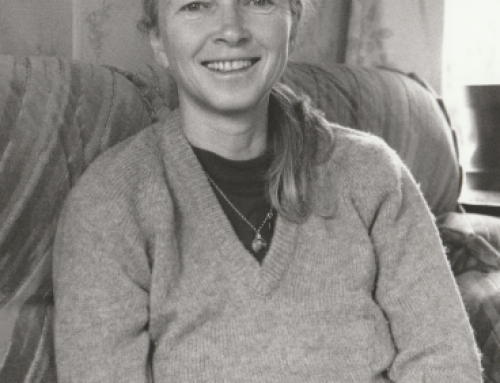
Born in 1936, RAF officer, met the Caddy whilst in Kinloss. In 1974 he joined the Findhorn Foundation, serving as General Secretary. In 1978 set up Cullerne Garden School.





Leave A Comment