


Editor’s Note: This is one of a series of documents concerning Rosicrucian philosophy – a philosophy that provided Peter Caddy with teachings, including a lecture series entitled “Soul Science“, that he was later to bring forward into the Community in the form of a series of lectures entitled “Foundations of Findhorn”. These were originally collected by Mike Scott and collated by Keith Armstrong. “Aureolis” was the spiritual name of [Dr] George Sullivan (1890-1942), who was Peter Caddy’s first spiritual teacher. Dr Sullivan was Supreme Magus of the Rosicrucian Order Crotona Fellowship (ROCF), a small initiatory school in the Western Mystery Tradition, which flourished in England from the 1920s to 40s. The ROCF was based first in Liverpool, then from 1935 in the Somerford district of Christchurch, Hampshire. Dr Sullivan was also an actor and playwright and established “the first Rosicrucian Theatre in England” at the Order’s base in Christchurch. The following paper, outlining the history, philosophy and activities of the ROCF, comprises information from several sources – we believe we have identified and credited all of them, but if you can provide additional attributions please let us know. A further reference list is given at the end. Minor updates and clarifications to the original material have been included where relevant.
Peter was a member of the ROCF from 1936 to 1947, leaving the Order when his marriage to fellow-member Nora ended. The teachings Peter received in the ROCF laid the foundation for his future life, and were put to use in the creation of the Findhorn community, becoming an integral part of the fabric of the community’s philosophy. The painting of St Germain which hangs on the wall of the sanctuary in the Park Building once belonged to Aureolis.
Peter continued to correspond with members of the ROCF until the early 1970s, though the group itself appears to have ceased to function as a vibrant concern in the 1950s.
Content of this article
- 1 A BRIEF HISTORY OF THE ROCF Mike Scott
- 2 AUREOLIS Peter Caddy (from In Perfect Timing)
- 3 NOTES ON THE PHILOSOPHY OF THE ROCF Jeremy Slocombe
- 4 EDUCATION IN THE CROTONA FELLOWSHIP Walter Forder (?) Managing Editor, Christchurch Times (included by Philip Heselton in Wiccan Roots)
- 5 MEMBERS OF THE CROTONA FELLOWSHIP Philip Heselton (from Wiccan Roots)
- 6 A CEREMONY AT THE GARDEN THEATRE Walter Forder (?) Managing Editor, Christchurch Times (included by Philip Heselton in Wiccan Roots)
Note that sections 4-6 above, which appeared in the original internal document on which this article is based, are omitted for copyright reasons. The sources for this information are as indicated above.
1. A BRIEF HISTORY OF THE ROCF
by Mike Scott
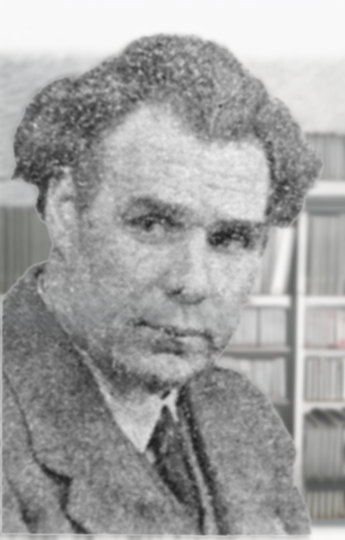
George Alexander Sullivan, 1890-1942 (Christchurch Times?)
‘Aureolis’ was born George Alexander Sullivan in Liverpool on 24th September 1890, and he formed an esoteric group The Order Of The Twelve as early as 1911. In a pamphlet published in 1926 he described his introduction to Rosicrucianism:
“I, George Alexander Sullivan, Founder and Head of the Rosicrucian Order Crotona Fellowship and the Rite of Egyptian Mysteries in which are incorporated the Occult teachings of the East and West, Declare that I have faithfully carried out the instructions given to me by my ancestor J.S. regarding the establishment of an Occult Society in which the Rosicrucian Teachings might be taught to those willing to undertake such studies. Acting, therefore, on his instructions, I founded the Order of the Twelve in the year 1911, on the pattern of the old Rosicrucian Fraternity in the nature of a Society with Secrets.” — “Rules“, 1926.
No information survives as to who the mysterious “J.S.” might have been. The Order of the Twelve was disbanded with the onset of the First World War, during which Sullivan is said to have spent time as a prisoner of war in Germany. After the war, in 1920, and back in Liverpool, he formed the Rosicrucian Order Crotona Fellowship (ROCF), named after the Italian town of Crotona, site of the mystery school of the 6th century BC philosopher Pythagoras. Pythagoras is an important figure in the roots of the Western mystery tradition, and by using the name Crotona, Dr Sullivan surely sought to claim philosophical lineage and emulate his school.

Rosicrucian Fellowship emblem (after Max Heindel, modified by Gabriel Falcon, public domain)
The ROCF published many pamphlets in the 1920s and ’30s. By 1925 the Order had printed 132 lectures for use by members, mostly written by Sullivan, and from 1925-28 he produced a periodical pamphlet, The Rosicrucian Gazette. The Order’s logo, as illustrated on its pamphlets, shows a rose-wreathed cross set against a brilliant five-pointed star. The design is identical to the emblem of the Rosicrucian Fellowship, founded in 1909 by Max Heindel (1865-1919) in California, USA, which appears to have had an influence on ROCF.
Sullivan was also a poet and a playwright, using the name Muser for his poetic work, and Alex Mathews for his drama and journalism. His plays included: Henry VIII Parts I & II, Pythagoras, Mind Undying, Out Of The Depths, The Window Of Hudson’s Pagoda, As Ye Sow, The Master Beyond and The Demon Monk. He used the name Aureolis for his spiritual writings. ‘Aureolis’ or ‘Aureolus’ was the middle name of the Renaissance occultist Paracelcus.
The Order met in Liverpool and London, and in 1935 moved to Christchurch. A member named Catherine Chalk allowed the Order to build their meeting hall, known as the Ashrama Hall, on the lands around her house Meadow Way, on Somerford Road, Christchurch. This was completed around 1936 and was described in the Christchurch Times as “a miniature and intimate theatre, completely fitted with stage scenery, and an auditorium provided with its tip-up seating, and comfortable auditorium.”
In the Ashrama Hall were held the Order’s meetings, rituals, meditations and ceremonies, as well as dramatic performances.
Sullivan moved into Meadow Way when Catherine Chalk moved to a smaller, adjoining property in late 1935. Several members of the Order then moved into bungalows in the area around the Ashrama Hall, foreshadowing the similar process at the 1960s-era Findhorn Community, when supporters and community members purchased bungalows situated adjacent to the Caddy caravan, the original garden and the Sanctuary. Peter Caddy would have well remembered the physical structure of Sullivan’s Rosicrucian base in Christchurch, and it is easy to believe it had at least a subconscious influence on the development of the Findhorn site.
In the Ashrama was a large stained plaque decorated with Rosicrucian symbols and a list of names, which some have speculated were previous incarnations of Sullivan. These include: Christian Rosenkreutz, Cornelius Agrippa, Viscount Verulam (Francis Bacon), Paracelsus, Dr John Dee, Jakob Boehme, Raymond Lully, St Germain, Cagliostro and Rudolf Steiner. As Steiner lived from 1861 -1925, and was in incarnation at the same time as Sullivan, the claim that these were all his previous incarnations seems somewhat unrealistic. It would appear more likely that the list is a lineage of bearers of the secret wisdom, and/or souls guiding the Order from the inner planes. It should also be noted that it was suggested by Peter Caddy that Sullivan was the reincarnation of Francis Bacon, who himself is said to have been an earlier incarnation of the Comte de St Germain.
In 1938, a further building was erected on the Order’s grounds. This was the Garden Theatre, heralded by the Order as ‘The First Rosicrucian Theatre in England’, and it was adjacent to, though larger than the Ashrama Hall. It staged many of Sullivan’s plays as well as works by Shakespeare and other dramatists, but it was not a success with the local population, and closed in 1940.
Sullivan died on 3rd June 1942, having successfully forecast the year of his death. His death certificate listed the causes as Angina Pectoris, Coronary Heart Thrombosis and Myocardial degeneration. He is buried in Christchurch Cemetery. The Christchurch Times of 13th June reported:
“At the Cemetery gates a long procession was formed of members and friends of the Order, the members in their robes of red and white or brown, and led by the banner of the Order. An impressive service at the graveside concluded with the members filing past and dropping rose petals into the grave.”
Sullivan’s grave displays the Rosicrucian symbol of a cross set against a five pointed star, and bears the legend: “From Life Unto Death – From Death to Immortality”.
Sullivan’s place as Supreme Magus was taken by Walter Brodrick-Bullock, who had been introduced to the Order by Peter Caddy. Bullock appears not to have exercised the same charismatic or inspirational leadership as Dr Sullivan, and the Order declined in the 1950s, after moving its base to Southampton.
2. AUREOLIS
by Peter Caddy
Edited from chapter 2 of Peter’s autobiography, In Perfect Timing
At the age of nineteen I met Dr Sullivan in London and it was to change my life. Dr Sullivan was a big man with a shock of brown hair who exuded power and authority as well as gentleness and humility. I was particularly impressed by his great sense of humour – throughout my life I have found that joy and lightheartedness are the hallmarks of an advanced soul.
After answering his probing questions and meeting his inner scrutiny I must have passed muster, for I was invited to be initiated into the Order. Soon after I was initiated into the Francis Bacon Chapter Number 33 in London, and because the true Rosicrucian Order is a secret order I wasn’t even allowed to tell my fiancee, Nora, that I was a member. Fortunately, a few months later Nora too was initiated. We attended chapter meetings in London together and later at the headquarters in Christchurch.
Nora and I would go down to Christchurch at every opportunity, particularly during the annual two-week retreat, and it was a great privilege to be so close to one whom I considered to be a genuine Master living in our midst. He was a being of vast knowledge and seemed able to answer any question, but only if he felt it was right and appropriate to do so. He taught through lectures, drama, the church and Freemasonry, through fun and games, and by example. One had to remain alert during lectures and meetings so as to miss nothing, particularly the jokes. In spite of all his greatness, his wisdom and his love, he would appear to the average person as an ordinary human being. Doctor Sullivan was a humble person and I discovered that no job was too menial for him. He was the one who emptied the chemical toilets in his ashram.
When Dr Sullivan wrote and lectured, he often went back in time, recalling past incarnations. He could travel to anywhere he wanted on the inner planes. He was always examining our progress, whether he was there or not. Francis Bacon had written a code and cipher book for all the secret messages that had been hidden throughout the plays of Shakespeare. Dr Sullivan had that original book and I have seen it. He slept only three or four hours a night and seemed to function on several different levels of consciousness simultaneously. After World War II had broken out, he would let drop many interesting things, such as what Hitler was thinking at the time, and I was told that even British Intelligence used his psychic information.
On the other hand, one could enjoy an evening at the cinema with him, or a picnic to some historical place whose story he could ‘read’ from his inner connections. He said very little about himself; one had to get personal information through one’s own intuition. We would often play table tennis together, as he stressed the importance of coming back down to earth after his lectures. He maintained a careful balance in all aspects of his life.
Although Dr Sullivan added his power and the forces behind him to preventing World War II, war came and he knew that because of it, the work he had come to do could not be completed. He also knew that he was going to depart the physical world in 1942 – he reckoned he would be more useful operating on the ‘other side’ to combat the dark forces rolling across the world. Therefore, to hasten the impartation of his teachings, he held an intensive series of lectures, designed for the more senior members of the Order, in which Nora and I were allowed to participate. It was thrilling for me to receive the papers every two weeks through the post.
This series of lectures, called Soul Science – concerning positive thinking and the power of the individual to effect change in the world – became the single most important foundation for my future life. As I studied the principles they established, these became part of my subconscious mind. I learned that nothing was impossible; that through the power of positive thinking anything could be accomplished.
Dr Sullivan gave his blessings on my joining the Royal Air Force. He advised me that all would be well, providing I didn’t volunteer for anything. On what was to be our last meeting, he gave me a copy of his play Pythagoras and wrote at the front: “There was a Peter who was great. Follow him and succeed.”
Note. A further evocation of the identity of Dr Sullivan/Aureolis comes from a letter written by Peter to Anne Edwards on 25 Feb 1960: “Dr Sullivan was a vehicle prepared for Aureolis’ use, and was taken over by him [Aureolis] during the first world war. He [Aureolis] can create a vehicle on any level on which he wishes to manifest. He would manifest to some as the Comte de St Germain. To others, particularly those connected with Theosophy, as Prince Rakoczi or the Master R, and yet again to others as Francis Bacon and so on. They’re all, of course, one great soul manifesting in different forms. During his last life on earth [as Dr Sullivan] he retained the memory of all of his past lives. For example, the memory of the fact that Queen Elizabeth I never recognised him [as Francis Bacon] as her [illegitimate] son and so prevented him from completing his work in that age, when England would have had a Master upon the throne.”
3. NOTES ON THE PHILOSOPHY OF THE ROCF
Jeremy Slocombe
From a 1995 conference paper titled Peter Caddy, The Rosicrucians and the Foundations of the Findhorn Community
At his Outer Court acceptance before initiation into the Rosicrucian Order Crotona Fellowship in 1936, Peter Caddy swore an oath he kept for over fifty years; the oath of the “four esses”: Silence, Secrecy, Sincerity and Service.
In his Outer Court preparatory lessons, Peter was taught the following Rosicrucian charges:
1. Think well of everybody
2. Provoke nobody
3. Swear to, or curse nobody
4. Render good deeds (in any small way) to anybody
5. Remember that thoughts and deeds (both good and bad) are long lasting
6. Thy services and thoughts will be attuned with the Temple Services towards everybody.
(This refers to the meditation work of the Inner Temple, where adepts of the Order were continuously directing their energy to good, with certain periods for definite work. What this charge means is that one’s individual efforts of thought and deed, when in alignment with the intentions of the Order, will be magnified and strengthened, wherever one happens to be.)
In those areas of his studies that overlapped with Freemasonry, he learned that, symbolically, the gavel is a tool of the will, which is first used upon the self to knock off all those obstructions and excrescences that stop the stones of one’s own being fitting perfectly together, or those of a group.
Then there are the three sets of chisels to be employed under the force of that gavel; three to use on ourselves, three to use for others, and three of universal use.
The first three (to use on ourselves) are energy, perseverance and endurance (‘they are large and heavy chisels, they make our arms ache, they make our backs ache, they make our hearts ache, but we cannot to the work without them.’)
The three chisels for our work on others are ‘exquisitely fine and delicate’: tact, sympathy and goodwill.
The final set, of universal use, are a sense of humour, a sense of proportion, and a sense of beauty. Those who knew Peter Caddy may judge for themselves how skilfully he employed this tool kit during his lifetime, especially in the founding of the Findhorn Community.
FURTHER REFERENCE
SOUL SCIENCE (Foundations of Findhorn) AUREOLIS
The Soul Science series of lectures can be found here.
R.O.C.F. ARCHIVES AT THE UNIVERSITY OF SOUTHAMPTON
This archive includes 156 books, including antiquarian works, which were owned by the Order, plus over 200 ROCF pamphlets written by Dr Sullivan. They are held at the University of Southampton’s Hartley Library. The address is: Special Collections, Hartley Library, University of Southampton, Highfield, Southampton SO17 1BJ. Email: libenqs@soton.ac.uk. Website: www.library.soton.ac.uk/hl/index.shtml
R.O.C.F. ARCHIVES AT THE BRITISH LIBRARY, LONDON
This archive contains miscellaneous leaflets and pamphlets published by the ROCF, 1923-1939. The catalogue numbers of the Crotona Fellowship archives are: HMNTS 4786.h.21. and HMNTS W.P.3145. They are part of the Integrated Catalogues section, and may be accessed at: Reading Rooms, British Library, St Pancras, 96 Euston Rd, London NW1 2DB. Telephone: 0207 412 7332. Website: www.bl.uk
IN PERFECT TIMING (1996, Findhorn Press) PETER CADDY
Chapter 2, Food For Thought, includes the account given in Part 2 above, with additional material. There are further references to Aureolis and his teachings later in the book.
DEVELOPMENT OF A DRAMA TROUPE (1971, Findhorn study paper)
A transmission or “channelling” received from a non-physical entity identifying itself as Aureolis, received through David Spangler on 16 July 1971, on the subject of the development of drama in the Findhorn community, distributed within the community as a study paper.
PETER CADDY, THE ROSICRUCIANS AND THE FOUNDATIONS OF THE FINDHORN COMMUNITY (1995, privately printed paper) JEREMY SLOCOMBE
This four page paper by the late Jeremy Slocombe, who collaborated with Peter Caddy in the writing of In Perfect Timing, contains the information given in section 3 above, plus additional material. Some of its content is reproduced in chapter 2 of In Perfect Timing.
WICCAN ROOTS (2000, Capall Bann) PHILIP HESELTON
Chapters 4-6 contain a wealth of well researched information about Dr Sullivan and the ROCF with photographs, drawings, synopses of several of Sullivan’s plays, and even maps showing the layout of the ROCF campus at Christchurch. The book is a history of modern Wiccan pioneer Gerald Gardner who was briefly associated with the ROCF. This book is currently out of print.
CHILDREN OF THE NEW AGE (2002, Routledge) STEVEN S. SUTCLIFFE
Pages 41 to 45 contain an account of Dr Sullivan, the ROCF and Peter Caddy’s membership, with much factual detail. The book also includes sections on the Findhorn founders, Sheena Govan, and the community.
GERALD GARDNER: WITCH (1960, Octagon) J.L. BRACELIN
Contains colourful accounts of Dr Sullivan, some of which are quoted in Wiccan Roots.
THE SECRET TEACHINGS OF ALL AGES (1928, 1988, Philosophical Research Society) MANLY P. HALL This encyclopaedia-sized book contains several chapters on Rosicrucianism, Francis Bacon, the Comte De St Germain and other connected subjects. Chapters of interest to the reader of the present file may include:
The Life And Philosophy Of Pythagoras Page LXV (65)
The Fraternity Of The Rose-Cross Page CXXXVII (137)
Rosicrucian Doctrines And Tenets Page CXLI (141)
The Chemical Marriage Page CLXI (161)
Bacon, Shakspere And The Rosicrucians Page CLXV (165)
Freemasonic Symbolism Page CLXXIII (173)
The Mysteries And Their Emissaries Page CXCVII (197)

Creative director of Canberra’s largest ad agency at 19! After following the ‘hippy trail’ he brought us his serious witty wisdom via plays and skits, finally ‘ghost-writing’ Peter’s autobiography…



Leave A Comment