

This article was previously published in One Earth magazine Issue No.06 Spring 1992.
***
Once a year the members of the Findhorn Foundation get together for a time, usually a week, of sharing with each other and conducting a general stocktaking exercise that puts the past year; current issues and plans for the coming year into perspective. This year it was felt that there was a lot to be looked at and so it was decided to extend the conference to three weeks beginning in January.
The stage had been set for the possibility of some fruitful meetings by the Community Planetary Game (of Transformation) played for a week in December and during which different aspects of community life were played out, issues were raised and awareness expanded.
The internal Conference this year included some members of the wider community – associates, builders, employees of the companies that constitute New Findhorn Directions and the decisions about whether to include them and the extent to which they could participate in themselves pin-pointed many issues faced by individuals within the community and by the community as a whole.
During the three weeks there were presentations from each of the different ‘wings’ of the Foundation designed to update and educate the rest of the community there was time for personal sharing; and there were some decision making processes including the selection of a new Foundation focaliser. In short, the conference was a rich and varied time for the whole community.
Rather than try to capture the entire conference and put it in a box, we have decided instead to give four different views of the conference in the words of four of the key figures in the community. Patrick Nash is focaliser of the Development Wing, that part of the Foundation that is concerned with the physical bricks and mortar development and planning of the community and ‘planetary village’. Jill Brierley is an associate and was selected by associates last year to be their ambassador to the Foundation, and has since grown with the job to become the Foundation’s Liaison Person – she stands in the middle and catches from both directions. Judy Buhler is a wise and capable person who has just been selected as the new Foundation focaliser, a job that she feels demands great co-ordinating skills, and Loren Stewart is the new Education Wing focaliser who will try to help that wing with the process of clarification and redefinition which it has begun.
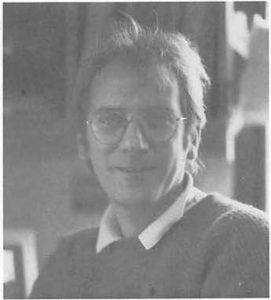 Patrick Nash, Focaliser, Development Wing
We are creating an environment that is sustainable and can genuinely be a point of inspiration for a new way of living on the planet.
“We had a series of three meetings around Development Wing. The first one was a half hour of general information and a sharing of where we are at this moment, and it was very useful. ln the second meeting John Talbott gave a history of the development of the Caravan Park with slides and humour. It was a story that I know quite well, but many people don’t know or are still learning new parts of it. But the key meeting for the Development Wing was during the final week of the conference. The first half of the morning was spent restating, in a clear way, our vision for the planetary village and why we want to do it. That was a very inspiring moment and for many people the penny dropped – it’s not just to replace junky old caravans!
“Essentially we are trying to create a human ecology which is sustainable spiritually, culturally, economically and ecologically. Therefore the emergence of the planetary village-which in our minds is a geographically located event, a real village-is different from a ‘wider community’. lt is what it is and will exist on the site of the Caravan Park and closely associated properties. ln a sense we are taking the essential vision of the Foundation and its earliest roots and putting it into practice in a way that is relevant into the future.
“We are creating an environment, a place in which to live and work that is sustainable and can genuinely be a point of inspiration for a new way of living on the planet. Currently we have some aspects of that, but by no means all. What was important was that everyone at the meeting ‘got it’ in their own way. We had an opportunity to choose whether the vision is still current and everyone stood up to support at vision. Then we talked about the practicalities, some of the routes we have to go down to achieve that vision, and that is where we still have some controversy.
“At the moment the physical planning includes a further two wind generators, a solar aquatic sewage plant which we will be constructing this year, many more solar panels on both existing and new buildings, more housing for members, public buildings, and retail and commercial structures. This year we will finish the south side of the Bag End cluster of housing for members and finish what we have begun on the village green – the guest lodge and the youth project building. We will also have a plan up and running to replace some of the long-let caravans on the Caravan Park with permanent buildings.
“Many of the things that were said at the conference have been said before. Hopefully, slowly, most of the community will understand that if the Foundation wants to build, it is going to have to borrow money for it, because we are not creating the sort of money we need out of our cash flow. We want to create more than a house a year, which is all that our cashflow will allow us to do. It has also been made clear to me that borrowing is not going to do the whole job-it will only take care of part of the Foundation’s need. We have to seriously get into capitalizing our development.
“There are two routes we can take. The first is to try and raise donations, which is probably not the best way to go about it at the present time because there is a world-wide recession. We have in the past, in a limited way, done some fairly successful fundraising and sponsorship, but that route is not likely to provide enough. The days of million pound donation to organizations such as this are long gone-and might never have existed. They are more in the realm of fantasy than reality.
“What we are looking al now is setting up a company and share flotation. Elements of what already exists, in terms of ecological development and some of the business aspects that are already in the community, plus others that do not yet exist, can be combined and floated as a company, thereby raising a large chunk of capital lo do the commercial development. There are various ways in which that will benefit the community as a whole. One, it would create a further diversity of economic activity which will increase our economic sustainability. The more diverse we can make ourselves, the better. Also, there are opportunities that we are ignoring, as an organization, which can be capitalized upon. For instance, if the Foundation could afford to build half the houses it needs, it could then rent the rest indefinitely from a company that has built the other half. This is what we plan to do.
“A number of people have a hard time understanding this, and not everyone thinks it is a good idea. My personal opinion is that we have misunderstandings about the nature of business in general – most of us have a bad impression of business and investments. l accept that; I have those impressions too. If we can’t transform the way we work with business, in the same way we have transformed how we work with everything else, then we are not living up to a potential we have. I passionately believe that we have the possibility of a major new approach into the realm of ethical investment which has not yet been tapped in this country: We need to tap ethical investment in the ‘mainstream’ investment market as well as the slightly alternative’ investment market.
“There are a number of people who seriously object to this strategy because to them it threatens what the Foundation is about. I think it is a healthy situation when mainstream society is looking more and more like us, and when we, who have been representing the alternative, are becoming more like the mainstream. But not everyone here sees the situation in that way.”
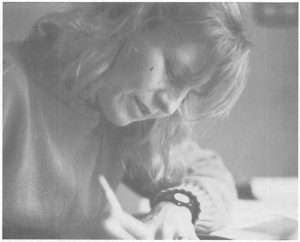 Jill Brierley Foundation – Wider Community Liaison
…it felt like the open community were waiting to see how the Foundation is going to respond. We don’t have anything we need to do or can do until their boundaries and their direction are clear.
“The presentation on the planetary village was a key one for many of the non-members. The village is why we came here and chose not to be members of the Foundation. On some level a call went out for us to come and help it to be created using the guiding principles that were already present here. All of us who came are training ourselves to hold the impulse of that vision and have been trying to find a way to relate to the Foundation: we have been working in departments and supporting it and meanwhile becoming educated to its impulse – experiencing a type of orientation.
“During the conference the question of the Foundation’s relationship to the associates never came up for discussion by the Education Wing; they never got that far. In the associates’ own meetings no major issues came up and the overall feeling was one of waiting, holding the space to see what is going to come and feeling like it is in our hands.
“Do we as human beings get this planetary village off the ground, in which case there is a whole blue print set out with which we will automatically gracefully flow. If we don’t, we may as well all leave because there is no place for the open community to interact on a long-term basis as associates with the Foundation. We just can’t go on indefinitely. My sense is that it is a transition time, and a kind of people training time, getting ready to move into the planetary village. That is why nothing major came out of the conference for the open community:
“Most of the conference focused on Education Wing. There was an idea expressed that the educational trust [the Findhorn Foundation] is like a university, and the planetary village will need the university, or a cross between the university and a monastery in the middle of the village. It is where we will have the essential holding of the spiritual energy and education of the people who come here. People can learn to get through their ‘stuff ‘ and become empowered, and then go out and put spirit into practice. The world they will step out into is this planetary village.
“The village needs to get its economic base together, and its physical, ecological base, and over the past five years this has been happening. The public limited company that will be formed has the potential of setting up a whole economic structure. lt needs the blessing of the monastery and the university; it needs them to say they are willing and welcoming it. It doesn’t need their actual participation on a physical level to make it happen – it’s not their job. The associates here at the moment are a base of 140 people who do not want to hold the membership structure, but who do want to make a livelihood through a new way, a new form, and as the village grows and grows, these people will help meet the thousands of people who will come here.
“To me, it felt like the open community were waiting to see how the Foundation is going to respond. We don’t have anything we need to do or can do until their boundaries and their direction is clear. At the moment I do not believe their direction are clear. I don’t think they have made a clear decision whether they are going to go one hundred per cent for the planetary village or if they are going to draw back into what they were.
“Part of what needs to change is the education of new members who are coming into the Foundation. The orientation programme in the last two or three years has not educated new members around the subject of the planetary village – the vision got lost and it was not part of the consciousness for membership. So the question is, are we going to change that? If we do not, it will be very hard to ground the planetary village.
“Running alongside the developments that have taken place here over the last five years, has been a general undercurrent of a major shift in personal human consciousness; everyone is being affected. Things are moving very fast and I believe that this coming year is going to be phenomenal here: It will either be that we fall flat on our faces and go bust because we have not got our act together or we will absolutely fly and the planetary village will take off. We are a little microcosm reflecting the world. We make choices every day and if we get together and fly we will be helping to resolve the issues of separation we see around the world: black-white, east-west, rich-poor.
To me, that was what the internal conference was about – it was a real opening to look at where our consciousness is, where we are. We are being asked to take it through the process on the personal physical level and move it up to the next level where we are coming from a very still place inside. It feels as though at a community level we are in a ‘pause’ situation at the moment, but on an individual level everyone is moving and developing.”
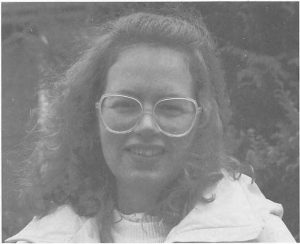 Judy Buhler-McAllister, Findhorn Foundation, Focaliser
I feel that over the years we were often ruled by what I have called ‘the tyranny of niceness’. That morning the tyranny of niceness was definitely not present! And we all benefited.
“For me, the highlight of the conference was the night I was selected as focaliser. There is a part of me that still has not fully integrated how incredibly graceful that process was – everyone together one hundred per cent. On a personal level l am still having trouble registering that amount of support for me and integrating attitudes and pictures that I have about myself.
“It was great to see the community make a decision without having to talk about it a lot, without polarizing into camps and positions. I think that is a major accomplishment. Sometimes we get moments like these when we experience how it can be, and then we go back to
how it is and have lo work our way towards that moment again. I feel that happened throughout the conference. There were two or three graceful moments like that and other times when we were totally al the other end, really struggling with oppositions and personal agendas. It was illuminating to see the range that we work from because it highlights what needs to change and what the benefit is if we make the change.
“There was a lot of inner work during the conference, a lot of time during which we all meditated together. That helped. There were things that were being held and let go of on a different level, beyond the psychological, and so the playing out of emotions did not have to happen with such intensity. Taking things inside accelerates the speed at which we go through a process from beginning to end and so we are beginning to move through things even more gracefully and quickly, not getting stuck in the feelings around things – but not denying or negating the feelings either. We are working on a different level.
“There was one session when Craig Gibsone took the floor and we began to name feelings, beyond just the nice ones. It was all very honest and very real. There was fear, despair and a whole range of human expression that we tend to label ‘not nice’ and try to express in ways that are ‘acceptable’. Somehow we cracked through it because there was a level of maturity where people could own their own feelings, name and claim them. It was probably the most alive session of the conference-people’s energy was really flowing and moving. I feel that over the years we were often ruled by what I have called ‘the tyranny of niceness’. That morning the tyranny of niceness was definitely not present! And we all benefited.
“That laid the groundwork for a deeper level of truth telling. The Community Planetary Game had presented moments where people were encouraged to speak their truth – not as if it is the truth, but as what is true for them at that moment and this session of the conference took it another level deeper and expanded the space of truth telling. I think that is a theme that is going to move through the larger collective during the coming year; it challenges us all as individuals. It took us four years to integrate the lessons from the first Community Planetary Game and I’m assuming this one will not be totally assimilated and ‘grokked’ all in one year, either.
“At one point I had a memorable image of how education fits into our larger collective. I watched the evolution of an ecosystem from a very basic four element system through to incredible intricacies and I felt that that is what we are as a community. We are a very complicated ecosystem, within which there is increasing specialization – different things are evolving to occupy various specialized niches in the system.
“What class of species is the Foundation? What are the niches it is occupying and what does it really need to specialize in because it is good at those things? How do we encourage the other parts of the system to specialize even further in what they are good at and how do we maintain an image of ourselves as a part of that ecosystem?
“Suddenly I saw the issue of separation with which we all dealing from a whole different perspective. I saw that we are individuals and on one level it makes perfect sense because there needs to be a delineation of responsibilities or occupations. If I can look at our situation from the perspective of an ecosystem, then it doesn’t have the negative connotations that the word ‘separation’ usually implies. It is just specialization and diversification within the system and it is really healthy! Biologists say that the more varied an ecosystem is, the healthier it is and the better is its ability to sustain itself, or survive various catastrophes – it is more adaptable. It was an intense five minutes of images and I realize I have not yet fully begun to explore the symbols.
“I had moments during meetings when I felt a bit overwhelmed, wondering what I should do next, but thankfully I have not had moments of fear. I feel like I have spent a lot of time over the last few years learning about the ‘I don’t know’ space, learning to be comfortable not knowing what to do or say, and at the same time not moving into fear. The ‘I don’t know’ space is the empty space into which angels come, and insight comes, or a new direction comes. Someone once. said, in my early years here,
The I don’t know’
space is the empty space
into which angels come…
that this place was about learning how to deal with change and that there was not a more valuable lesson or ability that we could have as human beings – the ability to sit with change and not freak out and not run away. The level of change on the planet is incredible and it is only going to accelerate, so if more of us learn to live with that state of flux all the time, then there will be more of us who can become anchor points for others. Living here we constantly have to deal with personal change, changes in the environment, people moving in and out-there is no place that does not change except inside, our relationship to spirit. That is the only thing that does not change: it evolves, but it is the only constant.
“I have heard people comment about how nice it is that there is finally a woman focalising the Foundation. Other people have expressed that it is great that someone who is also a ‘mom’ is the focaliser. I think it brings a different perspective into the job and I suppose that has been true for each different focaliser; they each brought something different into the job and the job changed with each one.
“On the night I was selected I shared an image that came to me of a stage-coach driver and a conductor. I see my job as a listening role, trying to create harmony, trying to get the team of horses all moving in the same direction at basically the same speed. It is a place of engendering cooperation and communication between the various parts of the body, encouraging the more silent bits of the orchestra to up the volume, helping the noisier ones to settle down a little bit so the others can be heard. I asked in meditation ‘What kind of focaliser do we need now?’ because people were talking about different archetypes: the priest-king, the leader, the scout. I know I’m not the scout who goes out and trail-blazes, but I think I could be a very good stage-coach driver and a reasonably good conductor.
“Part of what I would like to have achieved when I finish with the job is that the Foundation will have a clearer sense of its own identity within the planetary village. We were a community, then we became a Foundation and then we became a community, now a parting of the ways within. the system needs to happen. For a long time ‘Foundation’ and ‘Community’ were synonymous – it was hard to know where one ended and where one began. I think the next cycle is the Foundation defining itself, differentiating itself within the system of a larger collective. My challenge is to learn to say things like that in ways that do not engender fears of separation.”
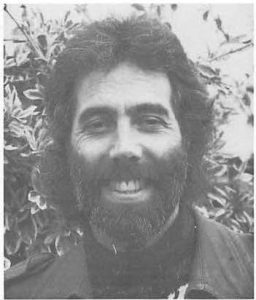 Loren Stewart, Education Wing, Focaliser
…labels are okay but what is not okay is the values that we assign to them.
It seems to me that we all have been drawn to the great vision that the Findhorn Foundation represents – all been drawn for the same reasons. Our only difference is in how we live it out. There are so many ways to say it, but we have come here to create a better planet, to find the God within, to make heaven manifest on earth. The question is, which part do I play in that? And the same is true of Education Wing. What part does it play?
“The community did not start out as an educational centre, we only took on that aspect when we received charitable status and became a foundation. Now we find we need to ask: What is education? During the conference we made lists of what we think education is and is not. It is a hard task because we also know that life is education.
“We need to look at what ‘formal’ education is: for example, is it workshops and experience weeks? In the end education is a circular thing because working in the departments here is also education – it is the grounding of the experience.
“We do not even like the name ‘Education Wing’ because we actually see education as the body and the rest of what we do as the wings. But it really doesn’t matter – it is just playing with semantics and labels. One of the things that came through clearly during the conference was that labels are okay but what is not okay is the values that we assign to them.
“Some people think the Foundation is Education Wing. I think it is our task to clearly define what part of us education is and to turn that into formal education – call il a university or a college, but design and develop our workshops from that aspect. Some programmes will be feeding our wider community and others will be for the people who come here specifically for some form of esoteric study. All the rest of our activities, beyond formal education, is what we have to start dealing with, and I think it is my job to help that clarification along, as an interim focaliser.
“For me, living education comprises all the work that we do and it might not totally be in the province of the Foundation – it might partially be held by the wider community and that is a situation that feels threatening to some members of the Foundation.
“The next step that emerged for us from the conference is to hold four more days of meetings over the next few months. We also developed more sub-groups to look at the issues – so you can see there is still much confusion. What emerged clearly is that Education Wing needs to change its structure and I think our forms need to shift to clearly delineate formal education.
“We have different groups of people who as a collective run our departments; we have guests, members (both staff and student), and our associates. How can we best help them to be a functioning organism? It has always been my dream that we will form cooperatives and that they will be made up of individuals from all ‘categories’–0ur neighbourhood, our community, our Foundation. A good example of that happening already is the Moray Steiner School. A staff member of the Foundation works there, the parents are mostly associates, there are some local people also, and it is a good working model.
“Living education is where the blending of the Community and Foundation can happen best at this time. It can also happen in formal education, as in fact it already is because there are non-members who are focalising workshops.
“Another thing that became very clear is that we need to have a Community Orientation Programme; in other words, a single entry door into the community that everyone can step through, and after having done that, then decide where they want to go within the community.
“Everyone needs some education in basic principles if they want to work in New Findhorn Directions’ businesses, or in the Development Wing, or in any part of our education through living. We could design the orientation programme so that we don’t have to ‘re-invent the wheel’ and my first job is to make it a reality.
“People come here, and no matter what form or shape it takes, they go through a process of transformation just by being here. They need some tools to deal with that process – if only spiritual practice. Spiritual practice is what makes you strong, it is how to get through our transformation. It was a major theme of the internal conference and we really have to go inside more, spend more time doing spiritual practice. Our angels for the year are ‘Obedience’ and ‘Responsibility – to me this means much more inner work. *

Inspired by CommUnity, a group of NFA volunteers, manages this website. Hearing each others stories, and learning about the history of this community can help us all to find more cohesion and a sense of belonging. Read more.<



Leave A Comment