


Click to view e-book
My first day as a visitor I was asked to work in the kitchen since I owned a natural foods store in West Virginia and knew how to prepare nutritious meals. I decided I would prepare a traditional miso soup as one of the two lunch soups. When finished, I placed it on the warming ring in the hatch just before 12 and community co-founder Peter Caddy was there one minute early as always.
I had not yet been introduced and as I looked at him through the steam rising from the soup, I said: ‘Peter, I’ve made a proper miso soup for you today.’ He glanced up, with his clear blue eyes piercing the steam, and said: ‘I don’t consider miso proper.’ He quickly but carefully ladled up the cream of potato soup and departed.
A few months later I returned to Findhorn and after a week, in the black of the early winter evening, I finished working in the garden and was headed to dinner. As I approached Peter’s office I saw a light on inside. I still had not met him. As I walked past the door I felt ‘an invisible hand’ pull me towards the office. I opened the door without knocking. He looked up from his desk, with his glasses framed by the small desk light, and said ‘Yes?’ Out of my mouth came words I didn’t realise I actually said: ‘I think I’m supposed to stay here.’

‘Of course you are,’ he said. ‘Go to my bungalow right now and Eileen will be expecting you.’
I was assigned to live in the Original Caravan, and within six months was focalising the garden and working in Peter’s pocket, hanging out in Eileen’s kitchen and part of Findhorn’s ‘one incredible family’.
Incidentally, it was an excellent miso soup, and my next 10 years a very proper Findhorn experience.
All the strands of my life converged when I came to Findhorn, and the experience catalysed all my life after that.
Before I left with my wife Kate, son Farren and daughter Felicia, I was very fulfilled with my work and family. But I thought it was best to frame in my mind what it would take – the conditions, criteria, whatever – for me to leave.
Among other things this frame included a chance for meaningful work in the environmental field anywhere, where I could test what I had learned at Findhorn while building something new and uniquely focused.
All the things on that list were ticked within 18 months and I was headed back to the US to restart an organisation that global conservationist Ian Player had established and that had gone dormant for a few years.
Ian had visited Findhorn and it was he that convinced me to convene the 3rd World Wilderness Congress there in 1983. He also said that I was an American and needed to ‘go back to your own country’. Ian said: ‘There’s no budget, you’ll have to raise everything, but that’s good. You can do what you want to do. And I’ll come from South Africa once a year to help you raise it.’ Sounded good to me.
My experience was that I was a former child of the sixties, with all that entailed, stepping into a field for which I had no professional training. It was clear to me that I could not wear my history on my sleeve. I would have been pigeon-holed and sidelined. So for over 20 years I hardly ever mentioned Findhorn to professional colleagues, did not revisit and participated very minimally with the early list of ‘extended members’.
When possible, convenient and necessary, I reached out to the Lorians and others. Once, when I had a long transit at Heathrow on my way from Africa to the US, William Bloom came all the way to the airport to find me and said: ‘I sensed that you may be lonely. Let’s talk.’ Such was the stuff of the Findhorn network.
As my work progressed so did my experiment with applying what I learned at Findhorn to the global nature conservation sector. Amazing and helpful people were drawn to work together, many of them never having heard of Findhorn, expanding a new family of associates, friends and colleagues. I also slowly began to draw in people from Findhorn to be demonstrations of important qualities and work, such as Alan Watson Featherstone, Michael Shaw and Geoff Dalglish, the pilgrim who walked across Europe to arrive at the 10th World Wilderness Congress in Spain.This period was some 30 years of creating unusual but much needed solutions while raising a family and building a lean organisation that has a global agenda with a budget that no one considered feasible. I gradually gained confidence and slowly emerged from the ‘spiritual closet’. That process continues.
It’s about trusting in Life, believing in Love, and getting on with it.
I needed to constantly use the essential tools – the power of love, integrity, belief in our subtle allies, and hard work – to overcome obstacles. A bit of humour also works miracles! These tools are essential to a world in great need of transformation. It is especially true that how people treat each other is as important to social transformation as it is essential to how we can transform our relationship with nature.
Humankind has dug itself a very deep, dangerous and dysfunctional hole in our relationship with nature. If we use the essential tools well, we can dig our way out of that hole and create the world that all of us and nature want, need and deserve.
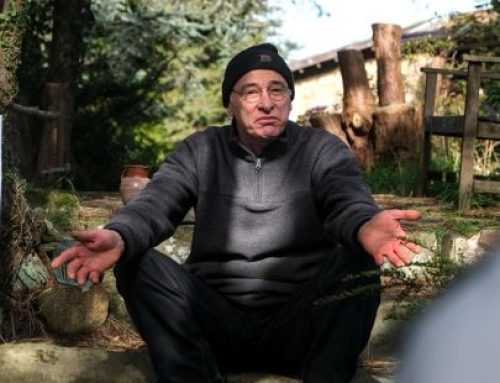
Vance Martin
President, the Wild Foundation + former Findhorn core team member
from United States
First Findhorn visit » 1974

An author, writer, and spiritual and ecological activist


Leave A Comment