

This article was previously published in One Earth magazine Issue No.2 Winter/Spring 1991
Intuitive Leadership: Inner Listening for Outer Action by Evan Renaerts
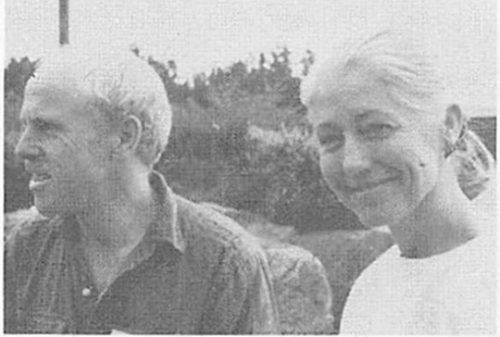
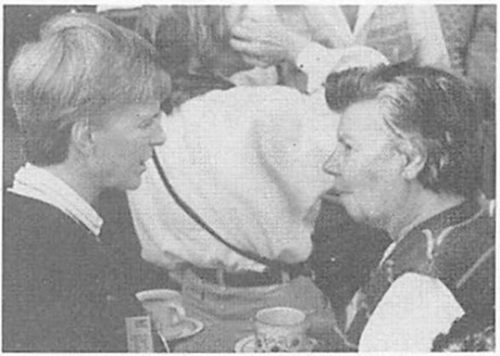
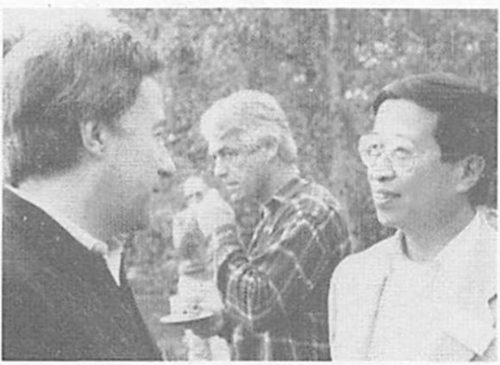
Last autumn (October 20–27) the Findhorn Foundation hosted an international conference on the topic of intuitive leadership. Participants attended from all over the world; significant is the fact that 70% of them had not previously visited the Findhorn Foundation.
This conference attracted ‘mainstream’ businesspeople—concerned about the planet and looking for ways in which they could help.
Sitting in the Universal Hall at the Findhorn Foundation with 220 other people looking forward to a week of exploring intuitive leadership and asking questions, my first two obvious questions are: What is leadership, and what is intuition?
The answer to the first question seems to be that each of us is a leader, and good leadership equals good followership—the ability to follow guidance which comes through our intuition. The second question, What is intuition?, generates still more questions about our perception of time, the survival of our species and planet, and about our purpose in life. This will not be a week of just sitting and talking. These questions will be explored with the help of the very techniques we need to learn in order to develop our own intuition.
Jan Backelin, conference co-presenter, leads a meditation: “Close your eyes and go inside… Take a moment to get centred… Now ask yourself, am I willing to let go of past and future?… Am I willing to let go of judgement and expectations?… Sit with these questions… What comes up?… Do you feel angry, frightened, confused?… What would it mean to release past and future?… Judgements and expectations?… Is it possible to live like this?” Sitting with eyes open now, people are shuffling in their seats and clearing their throats. Some are able to say yes to letting go, some say no, many are unsure.
Why work on letting go of past and future? If you’ve even looked at a book on personal growth or at one of the Eastern metaphysical teachings you will have encountered the “be here now” approach to life. Living in this moment of here and now is not a new concept. Yes, we know about it, but we don’t live it. All our beliefs, ideas, methods, theories, and philosophies are built on our past experience. In his opening remarks Jan Backelin suggested, “Perhaps we are our past.”
“A healed mind does not plan…”
A Course in Miracles
We know that the past doesn’t exist except in our memory, yet our present is filtered through our past and we see “what is” through “what has been.” What about where we are going? All of our hopes and fears, dreams and visions pertain to the future. Our present, this moment in time, is devoted to planning and controlling what the future will look like.
We make investments, take out insurance, and make long- and short-term plans — all aimed at creating a future we can recognize. Recently many of us have discovered visioning or creative visualization. We use these techniques to bring into our lives all manner of good things: lovers, homes, careers, good health — even parking spaces. Sometimes they work very well, sometimes not at all, but the one underlying belief for all of them is that this present moment is not okay.
For all our efforts, the best we’ve been able to do is to perceive a future that is no more than a modified past. There is only one way we will ever create a future quite unlike the past, and that is to honestly live in the here and now. We, humankind, need to decide that this is what we intend to do and then set about learning how to do it.
That the decision to be here now is vital was brought home to the conference by Peter Russell. The planet is in big trouble. That is not news to anyone and it is not something that can conveniently be forgotten either. A radical shift in our consciousness is required if any of us are to survive. (Peter recounted: if you want to save the Earth, just convince humanity to commit suicide tonight — the Earth will heal itself once we’re gone.)
We talk about saving our planet when what concerns us more is “saving our own selves.” The best efforts of our consciousness and leadership over thousands of years have brought us to where we are now, and to save the Earth — and our own lives with it — will require something completely new. A premise of the conference was that “something completely new is trying to come through.” This seems especially true in the realms of business and leadership.
Leadership under the old paradigm is seen as top-down: a ladder, totem pole, or pyramid with the boss, parent, or God-figure on top. All those not on top are subordinates relegated to following instructions. Leadership under the new paradigm is envisioned as a free form wherein leadership floats — taken by whoever feels most able to give guidance on a particular issue. This model requires those involved to go within, to practice inner listening, and to use their intuition.
Management consultant Vic Pinedo described how many employees in large corporations are interested in a new type of leadership. What stops them taking their interest further is fear of the changes involved and the belief that they are powerless to effect them. He described two levels of intuition he encountered: immature intuition, where flashes and visions don’t appear to serve any purpose in the individual’s life; and mature intuition, where an inner knowing or guidance (however it is received or experienced) is directly related to an individual’s life purpose. To make the transition into new leadership, it is imperative to develop the individual’s mature intuition and life purpose.
“CFCs, which we now know are catalysts for destruction of the Earth’s ozone layer, were invented and developed ‘because they were safe’.”
Above and Below the Belt
Caroline Myss, an intuitive healer, author, and former publisher, gave participants the most comprehensive account of what intuition is and isn’t, and the role it can play in creating a new type of leadership and way of living.
In Myss’s model, intuition is divided into two general categories: below the belt and above the belt. These divisions correspond directly to the seven major chakra points. The chakras, she says, can be described as mini-computers—centres that encircle the body at seven key points and whose function is to record and transmit information. Chakras one, two, and three are below the belt and process information directly related to survival. All business concerns and worldly interests are connected to these chakras. The purely physical level of intuition is also tied to these centres—the when-to-duck-or-jump kind of knowing. Chakras four, five, six, and seven are above the belt and deal with love, expression, higher reasoning, and life purpose. It is through these centres that we access our higher selves and commune with our psychological and spiritual levels of intuition—the which-path-serves-the-greatest-good kind of knowing.
Until very recently, the majority of leaders in all walks of life have functioned primarily from below the belt. Fundamental to this level is what Caroline termed the second‑chakra fear of rape: fear of being violated financially, of losing self‑esteem, or of losing what matters most in life. Those who operate in this mode can never truly rise above survival issues. Negotiations, board meetings, and personal interactions are all played out against this backdrop, blocking the clear flow of our inner knowing and whatever stands between us and our life’s purpose.
“Intuition is always raining down on us; it’s just that we go about with our umbrellas up.” — Jagdish Parikh
Ingredients necessary to the development of our intuitive skills are willingness and discipline; with these, everything is possible. Eileen Caddy (co‑founder of the Findhorn Foundation) told participants how she learned to trust her guidance through a discipline of daily meditations. More than a quarter century of this practice has taught Eileen two reliable ways of assessing guidance: act on it and see what happens; and (most important) true intuition or guidance always comes from a place of love and always brings forth love.
The tools and techniques for developing intuition are a mix of old and new. Meditation — virtually any type, so long as it is practised regularly. Silence, inner and outer: walk, sit, or work in silence; stop and be silent for a moment before making big decisions — this works well alone or in groups. Intuitive writing: first enter a meditative state to connect with the inner voice; while in that state, allow yourself to write down whatever comes through you (Eileen Caddy uses this method to record her guidance). The Game of Transformation, a tool frequently used at the Findhorn Foundation, in its own unique way simulates life situations and gives players first-hand experience of working with inner knowing — a chance to discover that within each of us is an accurate and practical understanding of what we most need to learn or let go of.
Throughout the conference week, participants had ample opportunity to practice these tools and techniques in the many small workshops led by Foundation members, faculty, and participants alike. Game of Transformation facilitators also devised a way for all 220 participants to have a group experience of the game.
The Leadership Game
The Leadership Game was developed especially for the conference and was played on a life-size board on the floor of the Universal Hall. Play took place throughout the entire Hall complex and the adjoining Park Building. Instead of individual players, groups of seven participants were formed. These groups then developed and stated clearly their particular playing purpose as the game began.
In looking at our game purpose, our group linked intuition with the quality of being childlike. We felt that children more naturally follow their intuition. From this came our purpose: “We intend to play” — really to play like little children. None of us were sure how to do this and our game started out jerky. We began on the physical level, and each roll of the die affected our life. Landing on an insight square brought awareness; landing on a setback square brought pain. At first we tried to force play to happen; we planned and manipulated our moves to produce play. The result was anything but spontaneous and playful.
Gradually, as a group, we stopped trying to make things happen. We agreed to keep our purpose clear and at the forefront of our awareness and simply allow the game to develop as it would. Our group learned to dance with what life—the game—was bringing us. Playing, really playing, had finally started.
One of the other groups drew the “World Crisis” card and all 220 players were called into the auditorium of the Universal Hall where the lights were out and all was in darkness. A facilitator led us into a meditation: “What would it be like to find yourself in a world crisis? What would it look like for the planet? How would it affect all that you love? What about your family, your children, your parents, your friends? What would it look like? Experience being in this world crisis.”
People wept; some were angry. My own emotions were raging. Some wept from fear, frustration, and the senselessness of it all. Another meditation led us out of the crisis and back to the world as we know it, and our game resumed. The experience of the crisis cannot be forgotten.
By mid-afternoon our group was living its purpose. We had found a way to make whatever the game brought us an excuse to play, a reason to play. We had made living an effortless, playful experience, stepping away from our cultural inheritance and seeking a new way in life.
The game ended in the early evening, and after the dinner break there was a general sharing in the Hall — a chance to express in some way what we had learned from the game.
Our group walked out to stand before all the conference participants, each of us holding a musical instrument; none of us were musicians. One of the group began tapping a drum, a cymbal joined in, and so it went around the circle. We were creating music — joyously, freely, intuitively — creating and playing out of the clarity of our purpose.
“The gods don’t care if you’re a publisher, physician, or mechanic. Their only concern is that your spirit learns what it incarnated to learn.”
Prior to the 1960s, the question of a life’s purpose was more a monastic idea than a public one. For most people the path was clearly laid out: education, career, marriage, and children. Today, more and more of us are turning away from our cultural inheritance and seeking a new way in life.
In response, bookstores are filled with titles on self‑help, spiritual growth, and motivation. Every city hosts multitudes of workshops on visualizing and affirming, on breakthroughs, and on being our personal best. Everyone is searching for the meaning of life and/or their life’s purpose.
This search for purpose is transforming people’s lives, and with it a new type of leader and a new kind of leadership has begun to emerge. This emergence gave rise to the Intuitive Leadership conference and to other enquiries like it.
Independent businesswomen and businessmen, corporate representatives, management consultants, and business trainers from Britain and Europe, the Americas, South Africa, Australia, and New Zealand were drawn to this conference. Some were there to stay on top of “the latest trend”; the majority came because they felt a force for change moving through the business world—a force that was also transforming their personal lives.
“The quality of life is determined by the questions we ask.”
On the last day of the conference, during the final plenary session, Jan Backelin led us in a meditation. This time he asked us to go inside to see what questions we wanted to take away from the conference. Most of us had come looking for answers, and some answers had been found. It is answers, though, that have bound us to rigid, inflexible courses of action which have brought the planet and us to where we are now.
To live in this moment is to live in a perpetual state of openness—an open question with no ready preconceived ideas about where it is all going. To live in this moment is to trust our own intuitive leadership and be led by inner intuition.*
Update from the author – April 2026.
My 3 plus years at Findhorn were so transformational; I learned to accept that I was a spiritual person, discovered a meditative path that has taken me deeper while at the same time stripping away layers of unhelpful beliefs and pretenses. And of course, I met and married Kate Sutherland and we are still together and still growing together all of these 36 years later.I stay in contact with a few old Findhorn friends (Kate with her CAP group) and I see some of them when I journey back to the UK.
Wishing you all the best.

Inspired by CommUnity, a group of NFA volunteers, manages this website. Hearing each others stories, and learning about the history of this community can help us all to find more cohesion and a sense of belonging. Read more.<




Leave A Comment