


The history of a community volunteer group learning about death and dying themselves and then offering their support to others.
In 1998 the Findhorn Foundation held a conference ‘Conscious Living-Conscious Dying’. After the conference the group which had been involved with the organisation of this event was inspired to continue the work by forming a group which was named ‘Alanna’ a Celtic name which means ‘ the beauty of the Soul shining through the physical form’. The main aim of Alanna initially being to support people in the community with life threatening illness and accompany people through their dying process.
The keynote speaker at the conference, Phyllida Anam-Aire from N. Ireland, decided to live in the area for a while and she became part of Alanna offering her huge experience gained by working with Elizabeth Kubler -Ross and using her own Celtic ways of being with the dying. Over the years Phyllida led many workshops for Alanna member s and the general public helping them to look at their own issues around death and dying such as unexpressed grief and anger and unfinished business with both the living and those who have left their physical body. It was regarded as very important for members to work on themselves if they wished to care for people who were dying.
Alanna’s First Experience of Palliative Care
Not long after the formation of Alanna, Maya, a woman in the community who was dying of cancer said she would like to die in Minton House, a large privately owned bed and breakfast house, magnificently sited overlooking Findhorn Bay. Minton House welcomed community events and celebrations and the owner who happpened to be an Alanna member agreed to this request. Alanna members with the help of District and Marie Curie nurses cared for Maya 24 hours a day for 2 weeks. This experience proved to be very challenging, exhausting and rewarding and we all learned an enormous amount. Maya wanted her grown-up children to be with her but not care for her. They were able to visit and complete a lot of unfinished business with their mother and much healing took place before they said their final ‘Good-byes’
Being in a private home rather than a hospital or other institution Maya was able to move through her dying process as she wished. She loved the sea and asked to be carried down to the bay where she dipped her hands in the waves and collected shells and seaweed. She loved nature and this was reflected in the various bits and pieces from the natural world which littered her room and her bed.
Her body hurt but she requested a proper bath. A group of women lifted her in a sheet and lowered her into a deep, scented bath which was surrounded by lit candles. As they gently bathed her they sang and laughed together. One morning she announced that she wanted a gathering of her friends (specifically named)that night and that they were to bring poems, songs and dances. This took place around her bed and then she said her piece. With a sudden burst of forthright energy she told us in no uncertain terms how we should live our lives and cut through the tyranny of ‘niceness’ and be real and honest. She herself during her last days was very clear and honest about what she wanted and who should be present in her room. People she didn’t want were asked to leave and had to learn that this often happened when a person is dying and not to be offended.
When Maya died 3 of us laid out her body. The first time 2 of us had ever done this. We approached this with some trepidation but it proved to be a privilege. The Alanna members who had cared for Maya held a meditation in her honour and spent time sharing experiences of Maya. Phyllida led a celebratory service of Maya’s life, her son drove her to a country churchyard burial ground and Phyllida conducted a short service which was attended by family and friends including children.
It was a very empowering experience to be with someone through their dying process to the end of their journey and all who took part found it to be a heart- opening, enriching, sometimes scary and sometimes a ‘messy and unpleasant experience. As well as caring we learned that the carers also need support and out of this experience we started a women’s group that has continued to this day.
Our friend Phyllida had connections with the Derry Well Women organisation in Belfast and said that it would be wonderful if a group of women could come to Findhorn for a respite week. We loved the idea and decided to fund raise and offer 6 women a respite holiday. Names were drawn out of a hat and 6 women, all who had experienced cancer and the trauma of the ‘Troubles’, duly arrived. Alanna called on the support of the wider community and the response was immediate with people offering nurturing therapies, art sessions, rituals and ceremonies , house visits, outings and much more. On one occasion the local Quaker group asked to be involved and organised a lovely day where the women were invited out to lunch in a Quaker home then had afternoon tea in the garden with another Quaker family. It was an immensely joyous and laughter filled week in the company of these indomitable Irish women. It was so successful that we repeated these weeks over a number of years and the women took on the responsibility of doing their own fund raising after the first year.
It had long been Alanna’s dream to have a local green burial site and in recent years this has happened through the generosity of a land owning group who gifted a site. Alanna members were involved in the creation of the facility and are part of the green burial management committee. www.findhornhinterland.org (for further details)
Over the past decade Alanna has continued to offer workshops and support. During this time the community has grown in experience and skill and there are a number of people who are trained Interfaith ministers who can hold funerals and life celebrations and assist in all areas of death and dying. It feels as if the community has ‘come of age’ in this area and many beautiful celebrations of death have been held. Last year Alanna decided to release its name and form but continue its work through a wider body which is the Community Care Circle.
(story written in 2012)

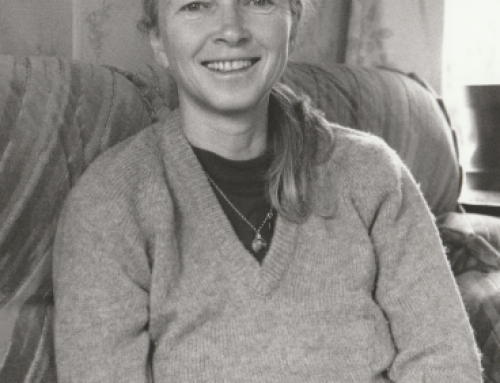
Born in England, emigrated to Australia age 8; career in primary school education. Took early retirement as headteacher, moved to the Community. Enjoying a supportive role in many aspects of Community



Leave A Comment