


(Draft Proposal presented to the Community in March 2016 – a pdf of the presentation to the Community is at the bottom of this post)
Introduction letter by the Community Change Working Group
Dear Community,
In front of you, you have the Findhorn Community Change Working Group’s proposal for what the next steps of community-wide collaboration and governance in the Findhorn Community could look like. It is the fruit of our sensing, listening, and explorations during the past nine months, as well as of the work and ideas of people that came before us and supported us along the way. For us, it is clear that what we suggest in this proposal is an intermediate step on a longer and ongoing journey of community evolution. We have aimed to clearly build on what we have to go where we want to be, avoiding the invention or imposition of complicated ideas or procedures. Much of this proposal is thus based on things that are already happening in the community, often attempting to make what is there more transparent, acknowledged or visible. Other things, however, are suggested in response to gaps, needs or tensions we have heard and felt expressed in the field. We have also added roles, tasks and functions that we think will support creativity, synergy and self-organisation in the whole community by making information about responsibilities, roles, decision-making and activities more clear, accessible and transparent.
All in all, what we offer you is our suggestions and an invitation to a deepening and increasingly concrete dialogue of how we as a community can provide community-wide systems and forums for efficient, effective and transparent co-creative self-governance in line with the community’s core values and for the benefit of the whole as well as its many and diverse parts. To facilitate that, the next step in the development of this proposal is a longer consultation phase. During this period, running from now until September, a dedicated working group will connect with, hear and dialogue with the people, groups and organisations of the community. The feedback will be integrated into an evolving proposal shaped by our collective intelligence and sense of what is possible, in line with the deeper impulse of our community, and safe enough to try.
In our vision of the next step of community governance, organisations, and in many ways also individuals, are encouraged to continue finding and evolving their own place in the community, define what their purpose is and how that relates to the whole, and collaborate with others when it furthers their aims and those of the community. For us, it is important that collaboration happens in ways that fit the scale, purpose and form of the project in question. Some things are best dealt with informally between two organisations, while others could benefit from community-wide collaboration and formal decision-making. Similarly, some activities are best held by ad-hoc informal groups gathering around a common interest, while others are more beneficially carried by formal bodies, cooperatives, companies or nonprofits. Our hope is for our community to continually evolve towards the flexibility, transparency, attunement, wisdom and trust needed for self-organisation and a flourishing co-creative culture.
Some of you might recognise elements of sociocratic values and circle structures in what we propose, and several of you have asked us – what about Sociocracy? Our answer is that we have integrated some of the wisdom of Sociocracy into our proposal, but feel that a full scale adoption of a single governance system is too large a step right now. If the community as a whole in the future decided to use a system like Sociocracy or Holacracy, we believe the structure we propose is easily adaptable to them. It is also designed to facilitate exactly the type of community-wide decision-making that would allow us as a whole community to make a decision like that. Also, there is nothing in what we suggest that hinders circles, subgroups or organisations to adopt Sociocracy or similar systems if they so wish. With that, and without further ado, let us briefly introduce an overview of what we propose, followed by a more detailed description of the different parts and their function within the whole.
In community,
Adele Napier, Anna Kovasna, Dürten Lau, Francine Rietberg & Tobias Ellingsen – The Community Change Working Group
Proposal: A new model of co-creative, community-wide self-governance for the Findhorn Community
Overview
What we propose is a new configuration of interlinked circles in the community, and an associated restructuring of flows of information, resources and decision-making.
The changes can be summarised as:
- Separating two functions currently held within the NFA into
- An Individual Member’s’ Organisation
- Systems and forums for efficient and transparent cross-organisational coordination, collaboration and decision-making serving the purpose of the whole of the Findhorn Community
And introducing the following circles and functions:
- A new Stakeholder Organisation Circle that makes clearer the role of organisations actively involved in maintaining and running day to day activities and services in the community
- A new Associated Organisations circle for those organisations wishing to be associated with the community without being directly responsible for day-to-day running of common services and assets
- A new Individual Members’ Organisation inheriting and developing the already well-functioning NFA services, forums and meeting points for individual community members
- A new Coordination Circle serving as a platform for transparent collaboration, addressing community-wide issues, and holding the vision, wellbeing and direction of the whole of the Findhorn Community in focus.
Defining the elements
Coordination Circle
This is a circle responsible for holding the overall vision, wellbeing and direction of the whole of the Findhorn Community at heart, and of addressing and coordinating those issues that benefit from community-wide coordination. It acts as a formal body and forum capable of transparently and efficiently coordinating decision-making involving multiple community stakeholders.
The Coordination Circle is made up of 2 people each from the Individual Members’ Association, the Stakeholder Organisation Circle, and a few specific organisations (yet to be defined) that in themselves hold or are responsible for particularly large parts of services and infrastructure in the community. Two such organisations that we suggest as members of the circle are the Findhorn Foundation and the Title Holder’s Association. The question of membership is a big one, and you can read more about our thought in the appendix Key Questions, Conversations and Suggestions at the end of this document. One person from each organisation acts as a downlink, responsible for informing their organisation about activities in the Coordination Circle. The second acts as an uplink, responsible for carrying the voices and perspectives of their organisation into the activities of the Coordination Circle. Both have full membership and decision-making rights. It is also possible for more people to be invited to circle meetings according to the needs created by each issue addressed. Below, in figure one, you see a diagram of the proposed Coordination Circle, and the circles connected with it.
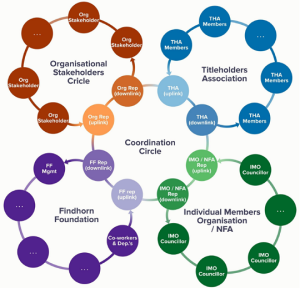
Figure 1. Diagram of proposed Coordination Circle and circles connected with it
The Coordination Circle is organisationally ‘light’, and only meets as needed to develop strategies, proposals and plans for coordinated responses to collective issues. While it has the power to make decisions about the provisioning of services where community-wide coordination is beneficial, as well as propose financing for them, the actual services are generally not operated by the Coordination Circle, but by an organisation or circle in the community. One example is a community-wide peacekeeping service. There, the Coordination Circle would be responsible for making sure such a service exists, including how it is collaboratively financed. It would also have the power to formulate community-wide agreements to actually use it. The service itself, however, could be provided by for example the Findhorn Foundation’s Spiritual and Personal Development department, or by an independent circle of skilled facilitators.
Many things do not need or benefit from community wide coordination, but are better carried out, planned and held in other, more nimble ways. The Coordination Circle exists to address those areas where community-wide / multi-stakeholder coordination or decision-making is necessary. It is intended as a tool for flexible and efficient self-organisation, not a central body always deciding everything on behalf of the community. To further facilitate self-organisation and engagement, the Coordination Circle is also responsible for providing easily accessible up to date information about its own activities as well as the different organisations of the community, their responsibilities and what they make decisions about.
It is our hope that by bridging the boundaries of separate organisations to find co-creative solutions to common issues, this circle facilitates a flow of information, ideas and resources that allows the community to become more coherent, efficient and purposeful as a whole.
Vision, Mission and Aims of the Coordination Circle
- Vision
The Findhorn Community is a center of light with clear, coherent and empowering governance structures. The Findhorn community acts as a model and experiment for societal change and spiritual, sustainable, co-creative living. The people of the Findhorn community are engaged, connected and inspired. - Mission
The Findhorn Community Coordination Circle proactively experiments with transparent, effective, efficient and flexible village-level governance to benefit and further the purpose of the whole Findhorn Community. It:- Ensures that decisions made on behalf of the whole community are in line with and benefit the community’s purpose
- Embraces attunement, inner listening and co-creation with the whole of life as core aspects of governance and decision-making
- Provides a transparent, effective and equitable forum for multi-stakeholder collaboration and formulation of overall strategic direction and policy in matters that concern the whole of the Findhorn Community
- Provides a platform for teamwork and intersection between different community stakeholders
- Identifies and harnesses the power of synergies and win-win situations involving multiple community stakeholders
- Enables efficient, timely, wise and supported common decisions within the community
Facilitates the coordination of key community functions - Upholds the standards, ethics, common ground and purpose of the whole community
- Facilitates self-organisation, peer-to-peer solutions, distributed leadership and active community citizenship
- Aims
The Coordination Circle- Suggests strategic directions and provides coordination and planning for the long-term development of the Findhorn Community
- Addresses matters that concern most of or the whole of the Findhorn Community and decides on, coordinates implementation of, and evaluates related plans and policies as needed
- Provides plans for multi-stakeholder financing for community wide projects and issues, as needed.
- Ensures that all members have access to clear, up-to-date information about the community as a whole as well as its different parts, their roles, rights and responsibilities
- Ensures the existence of a community-wide peacekeeping service, conflict resolution method and complaints procedure
- Provides easily accessible information about, and ways to engage in, the decisions of the coordination circle.
- Acts as a point of connection for regional actors and represents the community as a whole in regional networks and bodies.
- Ensures the provision of community education aimed at supporting a sense of a common vision and coherent whole as well as active community citizenship, self-organisation and efficient landing and fruition of ideas and initiatives.
List of suggested topics that would benefit from attention of the CoCi
This is a list of topics that the CCWG has identified as currently not addressed in a coordinated way across organisations today, and that may benefit from being addressed by a Coordination Circle. Some of these are also outlined in vision, mission and aims outlined above:
- Facilitating the formulation and adoption of a common vision, mission and aims or purpose of the whole community, for the whole community to stand behind and gather around
- The question of what we call ourselves as a whole community
- Putting in place a common peacekeeping method through which conflict between individuals and organisations is addressed in a way that builds community rather than undermines it.
- Ways of holding each other accountable to community agreements and decisions
Park-related issues like Park development plan; traffic and parking; safety (gatekeeping & fire awareness) - A clear and common presentation and identity of the community in the world, (that doesn’t just represent one organisation within the community) – and unified web-presence online.
The CoCi could also coordinate how we as a community collectively address issues such as:
- Care for the elderly
- Availability of affordable and/or community owned housing
- Support for families
- Special Care
- Community Education
- Identifying areas of development that would possibly bring the community closer to living its purpose, such as becoming a carbon negative community; strengthening the local economy; or lobbying Moray council to change its rules for green building and water treatment.
Organisational Stakeholder Circle
This circle gathers organisations whose operations more directly concern the running of the Findhorn Community. You could say that they are not only based within the community, but that in addition, their activities are primarily directed inwards, to the community itself. One example of such an organisation is NFD, which cares for and coordinates many services relating to the physical infrastructure of the Park. Another example is Ekopia, which actively works with and finances several community projects and businesses. Similarly, PET acts as focal point for the funding and delivery of community projects relating to sustainability in different dimensions.
Because of the nature of what these organisations do, most of them already collaborate and work together in different ways today. The suggestion to have an Organisational Stakeholder Circle builds on and aims to both strengthen and bring into focus these already well-functioning, efficient and needs-based network connections. What it adds, is a clear, transparent and more formal forum for coordination and decision-making, for when member organisations deem it desirable. We also propose that members of the circle formally contract to adhere to a set of shared values, ethics and agreements reflecting those of the community and the common ground, and support each other to remain accountable to them.
Importantly, the circle is also the forum in which member organisations coordinate their voice and activities in matters relating to the Coordination Circle, where they have 2 full, decision-making members. One of these members of the Coordination Circle could be a new so called Organisational Listener Convener, elected and financed by the circle to facilitate the coordination of its activities and collaboration with other community bodies, including individual members. However, the role and benefits of having such an LC need ample further discussion.
Our hope is that having this circle in the long run will increase both people’s awareness of the vital work carried out by these organisations, and the number of mutual win-win situations, synergies and efficient coworking of the organisations themselves, and through them the community as a whole. During our conversations in the past months, several organisations have indeed expressed an interest in having a forum for overarching coordination and decision-making, as long as it does not add layers of inefficiency or unnecessary procedure. Today, the overarching organisational home of these organisations is the largely inactive NFA Forum of Organisations. We feel the FoO suffers from trying to include too many actors whose interests and needs are too diverse for the body to be relevant for its members. The Stakeholder Organisation Circle instead gather only those organisations that have operations that because of their direct focus on the community naturally intersect or are of more direct relevance to each other, and that already work together in diverse ways. We feel it also more clearly recognises these organisations, their contributions and the vital work they do for the day to day functioning of our community.
In short
- Members:
- Organisations whose operations directly concern the running of the Findhorn Community
- Role:
- Provide a platform for coordination, when and as needed, between member organisations
- Provide a forum for coordination and decision-making, when and as needed, for member organisations’ in matters relating to the Coordination Circle
- Strengthen the profile and highlight the contributions of member organisations to the community
- Rights
- Two seats on the Coordination Circle and full decision-making rights in all Coordination Circle matters
- All rights of an associated organisation
- Responsibilities
- Signing contract to adhere to agreements such as eg. code of conduct, common ground, etc, and agreeing to be committed to the community’s peacekeeping service
- Electing two representatives to the Coordination Circle
- Communicating and coordinating with their representatives on the Coordination Circle as needed
- Potentially – Finance and elect the organisational Listener Convener
- Stay in contact with organisational listener convener about current developments / topics in their organisation.
- Organisational Listener Convener?
The organisational Listener Convener stays up to date with the current issues in the different organisations and is available to assist in building agreements between organisations. The LC also represents the organisations in the coordination circle. The LC can convene meetings between subsets of organisations to input into coordination circle proposals or to foster collaboration around specific topics.
Associated Organisations Circle
This circle gathers organisations who are based in or closely affiliated with the Findhorn Community, but whose operations do not directly concern the running of the community. These are organisations that, although local and linked with the community, engage mainly with activities that are directed outwards, to customers and stakeholders in the local region or wider world. These organisation have important roles to play when it comes to providing local employment, showing the way for local entrepreneurs, turning the values of the community into manifest reality and concrete projects, and spreading the light of our community to wider and perhaps unexpected circles. One example is Ecologia Youth Trust, working with children and young people around the world who have been abandoned, orphaned, made vulnerable by poverty and disease or who are living with HIV/AIDS. Another is Aromantic, providing organic and natural skincare and ingredients, recipes and courses to make skin, hair and beauty care products. While these organisations have some common interests, such as the availability of local offices, increasing marketing skills or developing ethical business standards in line with community values, there are not necessarily many natural points of intersection or collaboration in their everyday operations. Of course, some circle members have more interests in common than others, and are free to associate and cooperate in whichever way serves them. One already existing example of such collaboration is Findhorn Holistic Health Practitioners, a group of independent practitioners with a shared code of ethics working together in mutually supportive ways.
The Associated Organisations Circle aims to provide these organisations with a clear link to the Findhorn Community, and a forum through which they can communicate, collaborate, develop common standards, organise peer-to-peer learning etc. as and when they want to, for those who want to participate. Membership in the circle would be dictated by location and adherence to a common set of values reflecting those of the community, and members are invited to develop methods to support themselves and each other to live up to those values. Members of the circle also have a right to call on the community’s peacekeeping service. This circle does not have fixed representatives or decision-making rights in the Coordination Circle, and also have less responsibilities, financially and otherwise, than members of the Stakeholder Organisation Circle.
In short
- Membership
- Any organisation in the catchment area can apply (probably same as current NFA catchment area)
- Circle membership based on adherence to certain set criteria such as value compatibility
- Rights
- Inclusion in community map and listed on website
- May represent themselves as officially associated with the community (use of community name & logo if one is decided upon)
- Inclusion in community telephone directory
- Access to community peacekeeping service
- Responsibilities
- Provide up to date information about organisation and contact person
- Pay an annual registration fee set by policy
- Adhere to the values and agreements of the circle
Individual Members’ Organisation and IMO circle
This circle is grounded in an active and collaborative community citizens’ association providing forums, networks and services to its members. The citizen’s association, or Individual Members’ Organisation, supports both the collective and its members to realise their potential in the co-creation of a thriving, vibrant community. The association could be a re-purposing of the NFA under the same or a different name, or a completely new organisation. It would still have at least one and potentially two full time Listener Conveners, or possibly one Listener Convenor and one full time director or coordinator of services. The final configuration would be decided in collaboration with the NFA as well as the members of the new Organisational Stakeholder Circle, which potentially would finance one additional, organisational, LC.
The IMO circle is the specific part of the whole association that coordinates its activities and organises its representation on the Coordination Circle. As such, is made up of a subset of the whole association, and has two representatives on the Coordination Circle. The IMO circle could be something like today’s NFA council, a circle of area focalisers or a members’ forum. Part of its responsibility is to organise the representation of the IMO on the Coordination Circle, and find creative and beneficial way of ensuring that the experiences, voices, initiative, needs, energy and wisdom of the individual members’ collective are actively present in its work.
This overall IMO is in essence an evolution of the part of the NFA that today concerns membership, belonging, activities and services for individual NFA members. As such, it is likely to continue many of the activities held by the NFA today. Examples of activities could be:
- Sunday Slots
- Cultural events and social activities (eg. community sharings, BBQs)
- Community meetings and consultations
- Rituals (eg. solstice spiral, community meditations)
- Rainbow Bridge
- General Office (also on behalf of other organisations)
- Pastoral care / listening to needs, ideas, concerns of its members
- Social inclusion programs
- Outreach and information to members
- Being an accessible focus point for the birth of new initiatives
This reshaping of the current functions of the NFA addresses an existing tension about the current ambiguity of the NFA’s role – is the NFA today an umbrella organisation somehow encompassing and organising the others, or is it a sister organisation engaging the others as an equal partner? Our sense is that while the NFA today does a great job of being an individual members’ organisation, the intention for it to also be an umbrella was never realised in a fully functional way. We believe that separating the current functions if the NFA into an explicit individual members citizen’s organisation and an independent community-wide forum for organisational collaboration – the Coordination Circle – will support the community as a whole.
At the same time, this reshaping is the biggest change suggested in this proposal, and has far-reaching implications for the NFA as an organisation. There are many details that need to be worked out together with the NFA; the nature of this organisation, its membership criteria, rights and responsibilities will only be made clear through an in-depth consultation process. Suffice to say, that many of its criteria and activities will build on what the NFA does today.
Next Steps – the Consultation Phase
You have now read the CCWG proposal for new structures for collaboration and decision-making in the Findhorn Community. We hope you have found it clear, inspiring and interesting. As you can see, while it gives suggestions and general directions, there are still questions and details that need to be further developed – together with those that they concern. Thus, as we said in the beginning of this document, the next step is a consultation process in which the collective intelligence of our community refines and reshapes this proposal into an actual and agreed pathway forward. To support us with that, we have a new CCWG, with new members, new roles, new tasks and an extended mandate. To ensure continuity and enable the group to continue work from day one, all but one of the current CCWG will remain in the group throughout the consultation phase. Additional people will also be invited to join. It is our intention that some of the members of this extended group will then carry on holding the work throughout the implementation phase, thus ensuring efficient transitions and enough continuity throughout the process. Below, you find the Mandate of the CCWG During the Consultation Phase
- To engage in a consultation process around the proposal developed by the CCWG, that gathers feedback from major community stakeholders
- To refine the proposal according to the processes, dialogue and feedback gathered throughout the consultation process
- To facilitate buy-in and support from the community and necessary organisations
- To deliver a clear and concrete implementation plan
- To hold or coordinate the process of deciding for or against implementing the proposal
- To coordinate a community ritual aimed at stepping into the future together, as one community, leaving old divisions and hurts behind as we continue to grow and evolve as a collective
- To do this by the end of September 2016
Appendix
Key questions, conversations, suggestions
Membership in CoCi?
How does membership work on the Coordination Circle, who gets to be members, how many members, is it fixed or are people brought in for specific topics?
- Members with decision-making rights – One fixed member from each organisation/body, possibly the downlink. One representative from each organisation/body with flexibility to respond to specific needs and issues, where the representative can vary depending on what is on the agenda.
- Invitees: People can always be invited or given access to CoCi meetings as experts, observers, silent observers etc.
- Organisations or circles with clear and ongoing responsibilities or operations that affect a majority of the community’s members
- Overall, we strive for fairness in the relationship between decision-making rights and responsibilities, including financial, ie. how much an organisation or body contributes to the upkeep and running of common or communally used services and assets. The more responsibility, the more likely it is that the organisation should have a voice on the CoCi. Organisations can be invited to take on more responsibilities if they want deeper involvement.
Is this a coordinating body for the Park, or for the community?
How do we draw boundaries, socially or geographically? The Park plays an important role as a centre of activity and the place where our community most strongly comes into manifest, physical reality. At the same time, the community is clearly larger and more fluid than the Park as a separate settlement. Some of these questions would be answered through specifying the membership criteria of the IMO, which naturally will include and engage a larger community than simply Park residents. The same goes for membership criteria in the Stakeholder Organisation and Associated Organisation circles, but the question remains – Do we include:
- Only organisations whose operations directly concern the Park?
- Only organisations whose operations directly concern the community or some aspect thereof?
- Those organisation plus those who have a physical presence in the park and thus are stakeholders when it comes to things like parking,?
- All organisations who somehow consider themselves affiliated with the community?
Our sense is that CoCi is primarily a body for category a) and b), and that category c) is included indirectly since their offices most likely either are rented from someone in THA, eg. the FF or Ekopia, meaning their needs and voices have fora for reaching the CoCi.
It is not clear to us whether to give organisations who only fit into category d) decision-making rights in the CoCi. They fulfill a community function in providing employment, contributing to the aliveness of our social ecosystem and being a voice for entrepreneurs and their needs, and as such also hold a vital piece of the whole. If they are fixed members of CoCi, it will not be as separate organisations, but as a circle with a coordinator and a representatives, like the others. It is possible that the role and level of engagement of this group will grow, in which case their role can also shift.
Power-relationship between CoCi and individual organisations?
There is a scale of how much power is invested in CoCi, from being a body with zero decision-making power, to being a body with full rights to decide and enforce common policy. Our sense is that at this stage, it is a body tasked with deciding on and recommending policy in dialogue with member organisations, but that it is up to member organisations to adopt and implement such policies. How this can work out is still to be worked out, but it clearly impedes the purpose of the CoCi if its decisions can simply be ignored.
It is clear to us, however, the the CoCi has no direct power over other organisations’ operations. It decides on policy, that member organisations implement, meaning it is the member organisations themselves who decide how and if operations need to shift with the adoption of a policy, and what the most efficient and beneficial way of doing so is.
Another questions is what to do with decisions that potentially affect the budgets of member organisations, and to what extent the CoCi can make such decisions.
Where do the Listener Convenors sit?
In the original proposal, today’s LCs are split into one individual members’ LC and one organisational LC, with an added staff role of Director of Services in the IMO. There is a strong preference in the current LCs, however, to keep the LCs together and connected to the IMO. The placement and role of the LCs has big implications for finances, resource availability and the running of the IMO, CoCI and Stakeholder Organisation Circle.
- In the Individual Membership Organisation
Pros: LCs clearly together and linked in a team. Easier financial shift compared to today since bulk of financing LCs currently come from individual membership organisations and Rainbow Bridge subscriptions. IMO need some kind of director, if it is not the LC/s, then who? LCs clearly linked to needs and movements of the membership body. Still possible to serve both function of looking inwards towards members, and looking outwards to engagement, coordination and representation in other community bodies and gatherings.
Cons: Not new enough for status quo to shift. LCs potentially lacking overview of and relationship to whole. LCs less explicitly involved with organisations and their work. Nobody paid full-time to keep overall vision at the forefront. The existing unclarity if NFA is an umbrella organisation or not may remain.
Effects: Less financial commitment for organisations. LCs clearly representatives of IM. Most likely eliminates the need for a director of services in the IMO, and instead creates a need for some additional function/role to be held in the CoCi or Backbone. - In the CoCi backbone organisation
Pros: LCs clearly together and linked in a team. LCs clearly connected to and working for the overall village vision. LCs able to serve in a wider, coordinating role. LCs clearly connected to umbrella body rather than part of the community. CoCi has clear leadership and people who become natural points of connection with wider region etc.
Cons: CoCi and backbone might start swelling into something larger and heavier than intended. Creates need for direction and leadership in IMO. Risk that LCs become more like ‘bosses’ of the community – above other CoCi representatives. LCs potentially less explicitly connected with individual members, although responsibilities can still be specified in role descriptions. Leaves the IMO basically without a head/operations leader, and thus potentially increases the workload/changes the role of the proposed IMO SD.
Effect: IMO and orgs jointly finance LCs/the coci backbone organisation. Possible to place LCs together with staff supporting CoCi purpose and activities of LCs – like secretary general and other functions as needed. LCs roles more connected to VMA of CoCi. - One LC in IMO, one LC organisational
Pros: Looks elegant. Gives clear focus. Involves organisations more clearly, potentially giving them more voice and cohesion. Could bring in more professionalism.
Cons: Not clear how organisations would benefit from having an LC, or if they would benefit enough to warrant quadrupling their financial contribution towards the role. Risk of separation and loss of fluidity in how functions of LCs are divided between the two people. Risk of less connection between / representation of individual members and organisations. - Employing a third LC who regardless of placement is mainly responsible for and connected to the organisations
Pros: More hands on deck. No loss in LCs focus on individual members’ activities and needs
Cons: Higher cost for the community
Effect: The needs this addresses could possibly also be addressed by creating the new position of Services Director for the IMO – finances likely only enough for either 3rd LC or IMO SD.
What are the support and admin needs of the relevant bodies, and how can they be met?
Basically, the LCs need an organisational home, and there is a need for administrative roles and support that also need to land somewhere. Today, these mainly sit within the NFA. There is also a sense the additional support staff would free the LCs up to do more actual listening-convening. How this is organised and financed will change, and what it will look like depends on how tasks, responsibilities and finances are shared between the IMO and a potential CoCi Backbone organisation. It also depends on how roles and functions are divided between LCs (2 or 3) and paid staff like the proposed IMO SD.
A backbone organisation is essentially a body providing the support-functions needed to facilitate the coordination activities of the decision-making coordinating body. There is an overarching and important question here of whether the CoCi needs or ought to have a supporting admin body like that, or whether it can do without, trusting the existing staff in each organisation to support and engage with its work in fruitful ways. Whether or not there is a backbone changes the characteristic of the CoCi.
We are mostly concerned with the CoCi and the IMO and their needs, since bodies like the FF and THA are existing organisations with support systems in place, and the proposed circle of organisations is a much more loosely affiliated body most likely not needing much more than occasional minute-taking. Here is a draft outline of functions and roles we can imagine:
Administrative and staff needs IMO (not counting the LCs)
- Accountant
- Administrator
- A full-time director and developer of services (depending on choice between this and 3rd LC)
to deal with- Membership database
- Meals system
- Phone directory
- Coordination of GO Volunteers
- Answering routine questions?
- Point of contact for the IMO
Administrative staff needs of the CoCi (not counting actual members of CoCi)
- A secretary general with organisational savvy, experience and skills in project management to support and ongoingly oversee the coordination activities, implementations and groups initiated by CoCi?
- Someone to keep a central directory of easily accessible information, policies, agendas, decisions and minutes from CoCi as well as other community organisations
- Someone who makes sure information about the community and its different parts is accurate, up to date and easily accessible to community members, including the community map.
- Someone to answer questions ongoingly?
- A chair – hired for specific skillset – to plan and chair meetings, keep some overview, etc.
Financing?
There is, of course, an overall need to finance the different functions suggested in this proposal. Our answer to many of the questions above will affect exactly how the flow of finances will be configured, of course in relation to in which organisations we place certain roles, and how we decide that others should or should not contribute to certain functions.
If there is a backbone organisation, financial resources will need to be directed there. If not, we need to make sure that there is adequate support for necessary functions to be carried out elsewhere, within the other organisations.
The biggest cost involved in this proposal is personnel. This includes 2 elected officials, the LCs, and roughly 4 full-time equivalents for staff and administration of the IMO and CoCi Backbone plus the current rotating role of editing and layouting for the RB – making it a total of 6. Today, the number of full time equivalents working for the NFA is 3.15; 2 LCs, 0.8 admin and accounting, and 0.35 RB layout and design.
With the current level of NFA payment for LCs (which we used as a template in these calculations), the cost for one full-time equivalent is £11.972,5. Let’s say 12 k shall we? This means the community together would need to contribute 12k x 6 = £72.000 per year, in order to pay its officials and staff. That is £34.200 more than the £37.800 currently spent on staff.
To relate that to something, the total income of the NFA for 2015/2016 was around £74.000, with a total profit of a whooping £8.
What combination of elected positions (listener conveners) and hired persons is appropriate?
In fulfilling many of the functions outlined in this document, there is a choice to be made between hiring a person with a specific skill-set to perform the role or to fill the role with the time of an elected (and paid) person such as a listener convener. Both options have pros and cons. Actually, many of these pros and cons can be mitigated or balanced by clever procedures and processes, such as actually only electing people who are fit for roles, that in turn have clear enough role descriptions to make that possible. Or to make sure that anyone elected to a role is supported to quickly receive any training or support needed to skill up where needed. Still, it is good to have some awareness of what elected vs. hired roles facilitate.
Hired Person
Pros
- Easier to ensure a qualified and professional person filling a role as applicants are more explicitly hired based on skillset and experience (this could also be the case for elected roles with clear descriptions, but in practice it is not)
- Can provide stability, as the role is not up for election every few years
- Usually clearly expected to take directions from elected officials
Cons
- It is hard to fire people, which can lead to people staying on in key roles when the organisation would benefit from change
- Accumulation of knowledge and power in administrative rather than elected roles
Elected person
Pros
- Elected by and ideally thus also supported by the membership body
- Prevents concentration of knowledge and power in one person, at least if there is a maximum term
- Ensures changeover of people, that can bring new perspectives and skillsets into roles, helping organisational development
Cons
- Can in practice be elected without having skills and experience relevant to the role.
- Can lead to the lumping together of too many tasks into one role held by someone not qualified for all of it.
- Can lead to instability as there is a turnover of people determined by the maximum term.
Powerpoint Presentation of the Proposal at the Community Meeting
Please click here for a Summary of the Community Change Working Group Process 2015/16.

Inspired by CommUnity, a group of NFA volunteers, manages this website. Hearing each others stories, and learning about the history of this community can help us all to find more cohesion and a sense of belonging. Read more.<




Leave A Comment