


 My journey began at a New Age church in Florida where I bought the book The Magic of Findhorn. I was just starting a sabbatical from my post as library director in Riviera Beach, Florida, and was going to Britain. After London and the South, I went to Edinburgh and ‘being so close’ (by American standards) to Findhorn, I called up to see if there was a space in Experience Week.
That was in November 1978. During my Experience Week, I stayed at Cluny Hill and didn’t see much of the Park but I had a sense that was where I wanted to be. I was attracted to the Community but being a member would have been too confining. I could not serve in any department. I felt I had to be out in nature and basically I could not have other people telling me what to do. So, Findhorn was wonderful, and I loved Scotland, but the Findhorn Foundation was not for me.
Returning for the Garden School
 As part of the conditions for the sabbatical, I had to work another year upon my return. Just as that time was up, I was sent a brochure for the Findhorn Garden School and thought, “This is perfect.” It was a year-long program, it was outdoors, and it allowed me to be in Findhorn the way I wanted to be. I applied, was accepted and arrived in March 1981 at the Spring Equinox.
Working in Cullerne Gardens, though, was tougher than I expected. I thought I was in good shape from carrying piles of books around, but the physical labour was intense, as was the weather. I remember our first job was pulling up these massive broccoli plants. It had snowed earlier, the ground was frozen and they didn’t want to come out. They were also incredibly heavy. Coming from Florida, I found the cold difficult to cope with.
Life at Cullerne
The Garden School felt separate from the Foundation, which was a surprise to me. I wanted to be in the Park, so I shared a caravan in Pineridge rather than staying in Cullerne House. It was right across from where the Bartons lived.
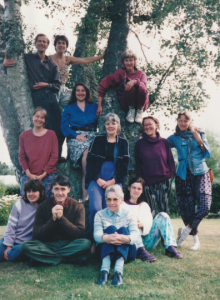
In the Garden School, the staff were quite hands-on. There was Dick and Fred Barton, Vance Martin, Michael Lindfield, Hugh Ferrar, and later Marty Carroll. Marty was wonderful. As the woman on the team she was meant to handle all the students’ emotional problems or complaints. She was also incredibly handy. I remember her walking along the roofline of Cullerne House to do some repairs, and also while painting the windows.
Working with Fred
Because of the cold, I kept catching colds. Eventually, Dick suggested I work in the glasshouse with Fred. Fred was a bit of a legend, a fifth-generation gardener with specialised tools and a lot of knowledge. He had never had anyone work in the glasshouse with him because he was “too fussy,” but we hit it off immediately.
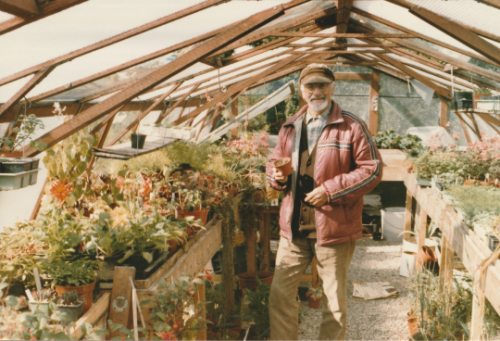
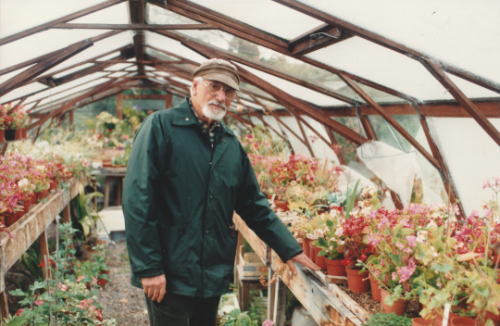
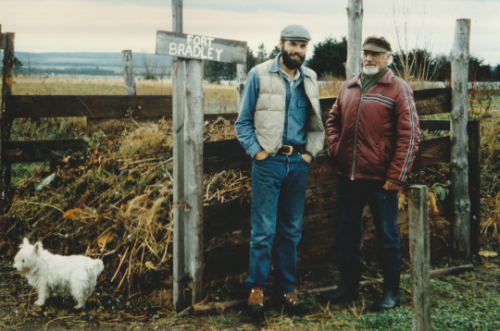
He taught me everything: the Latin names of the plants, how to propagate, and how to care for the Glass and the Alpine Houses. By April, he started sending his dog, a little white Westie named Bryn, across the road to get me in the morning. Bryn would put her front feet on the step and bark twice and I’d go out and get in Fred’s little sports car to drive to Cullerne.
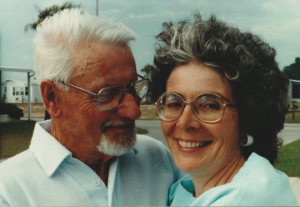
Eventually, our relationship became more personal. Rumours went around the Foundation about a teacher seeing a student, but nobody dared approach Fred about it. By November, I moved in with him, and my status shifted from a “student” to something more undefined. We married in 1983. He was 34 years older than me and I adored him.
Changes in the Community and at Cullerne
The atmosphere in the early 1980s, before the purchase of the Caravan Park, seemed a little grim to me. People were wearing mainly black, or “soldiery” colours (camouflage) and didn’t seem very friendly. There seemed to be a lot of pressure and some members left. As Garden School students we were not quite as welcome as Foundation guests.
After a year or two at Cullerne, some students felt they were being used as labour rather than receiving an education. When everything fell apart in 1984, it happened so fast. Dick always said, if he were asked to leave management, he would, and he did. After he left, Fred and I had a sense that the “lunatics were taking over the asylum.” I remember seeing people trying to rake the lawn with a hay rake or fixing flowering baskets with chickweed. Some people were happy Dick was gone, but not everyone really knew what they were doing. There were times when we thought about leaving but as we were deeply attached to Cullerne, we stuck it out and things got better.
The House Garden and the Pond
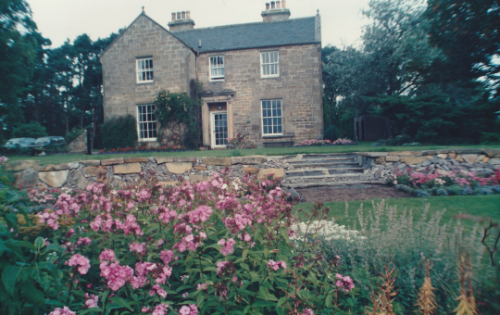
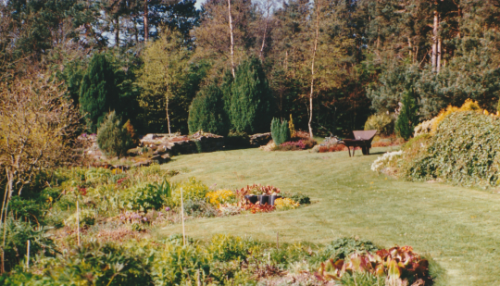
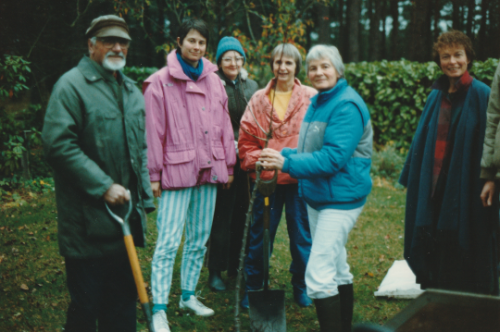
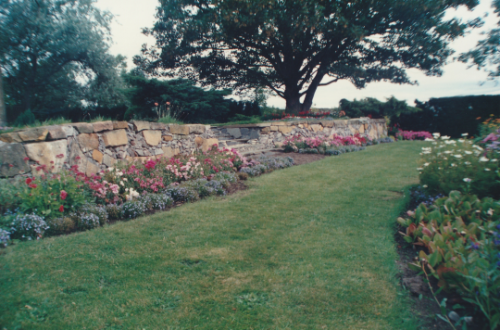
I worked in a number of areas, herbs, dried flowers and then, my favourite, the Cullerne House Garden with its big flower border, Alpine Garden and rhododendrons. I took a small group of guests as helpers.
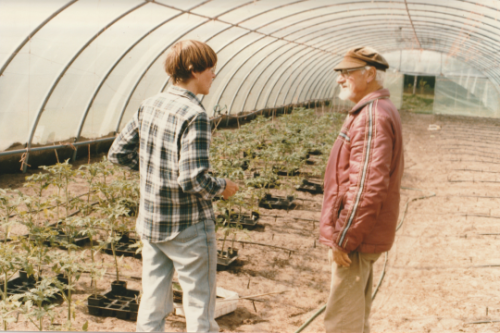
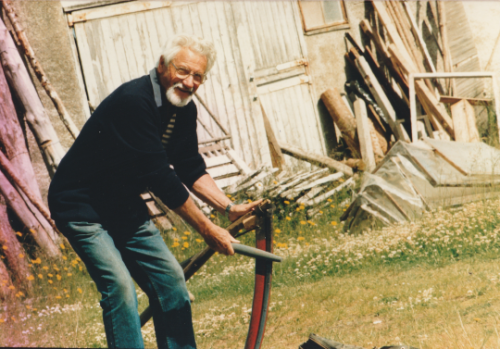
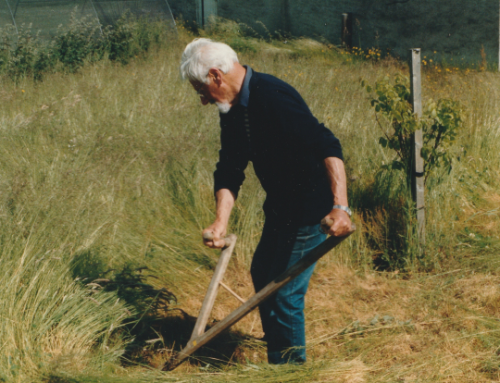
Fred continued as consultant to everybody and became obsessed with building a Japanese-style ornamental pond. To be honest, I wished he hadn’t done it. It went on forever and there were so many problems. For instance, the liner was put in wrong by a group project and had to be dug out, and redone. He spent so much of his time working on it alone and it was hard work.
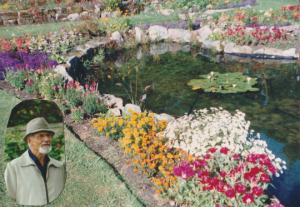
Despite the difficulties and the politics of the Foundation, I got exactly what I came for: a deep, thorough garden education. Working alongside Fred, caring for the plants, and being out in the Scottish air, was the way I was meant to be here.
After Fred died in 1993 I continued to work in Cullerne. Altogether I worked there 13 years, pretty much 5 days a week, 6 hours a day, 11 of those years with Fred.
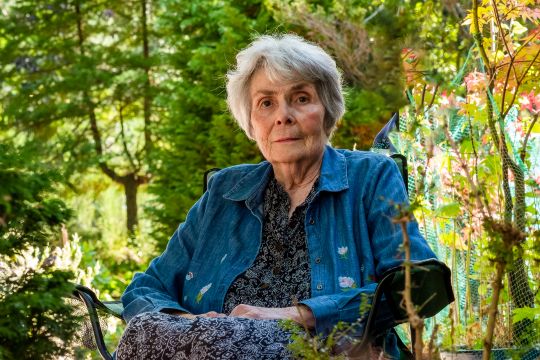
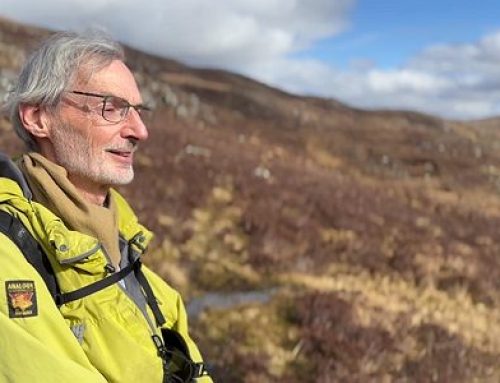
Grew up in Michigan, BA English & MS Library Science University of Michigan. 1983 married Fred Barton. Since 2004, BA Fine Arts Moray College, very engaged with painting,


Leave A Comment