


An Anthology by David Spangler
Author’s Note 2023: Vision of Findhorn – Anthology is a collection of essays and lectures arising out of my work as a co-director of the Findhorn Foundation Community during the years 1970-1973. In these, I sought to articulate the spiritual vision and energy behind Findhorn as I then understood them.
When you read these essays, you need to keep in mind the time and place in which they were created and the people they were intended to serve. That was fifty years ago. If I were writing these essays now, the language would be different (no more would I use “man” or “mankind” to represent all of humanity, for instance) and from a perspective of greater insight and understanding, I would likely express some of the content differently. However, the basic ideas presented in this book are as true and valuable today as they were fifty years ago.
There is a spiritual underpinning to our physical world and embodied lives, and there continues today as strongly as in the past an outreach from the spiritual realms to infuse human understanding with a presence of love and a sense of the interconnectedness and wholeness of the world, an interconnectedness that includes the invisible realms of spirit. The Findhorn community and Foundation emerged as a dynamic expression of this outreach, and that work continues today.
The spirit and vision of Findhorn has spread across the globe, planting seeds of change, even while the Foundation itself is changing into something new. The impulse to awaken within humanity awareness of the sacredness of all things continues unabated. It is that impulse that the essays in Anthology seek to celebrate; that is the spirit that infuses this little book even though its language may be outdated. The essays and lectures it contains came out of love: a love for Findhorn, a love for the Earth, and most of all, a love for the wondrous and sacred spirit within each of us that seeks expression in the world.
David Spangler
Issaquah, WA 2023
Our thanks to the Findhorn Foundation for the permission to reproduce the book on this website – as facsimile in form of a pdf flipbook, as well as text below (the chapters expand as you click on the arrow on the left).
To browse through the book please use the arrows at the bottom left of the window, use Zoom or Toggle Fullscreen for easier reading.
Introduction
This book brings together some of the shorter writings of David Spangler dealing with the Findhorn Foundation. Its aim is to give a more comprehensive view of his perspective on the community and his understanding of its vision and purpose.
The following sections have already been printed separately and are still available as booklets: The Vision of Findhorn in World Transformation; The New Age; Attunement; Manifestation; and. New Age Energies and New Age Laws.
The Essential Vision and The Universality of Findhorn were given as lectures at conferences in London but were never printed. The Quest for Wholeness was prepared as a broadcast talk but was never used. Community and Wholeness is a shortened version of an article printed in the Findhorn News in 1973.
We hope that this book will not only help you to understand the Findhorn Community and its planetary role, but even more that it may give you a vision of the New Age and of the part which you can play in its birth.
We hope too that it may give you a new vision of your own life and of your true identity, and so bring into your life a new joy, a sense of purpose, and a realization of harmony with all life.
***
Most of the following material represents information shared by David Spangler with the Findhorn Community during the years of 1970—1973. As such, it represents a stage in the growth of consciousness of both the community and of David. It was given in response to specific needs or questions existing within Findhorn during those years, and it was intended to be a foundation for further exploration and understanding. In no fashion does it represent a final statement on any of the principles mentioned. It is a particular reflection in time and space of the Universal and has value not only in its particularity but in its use as a guide into that Universal, within which specific words, phrases and teachings must give way to the experience of the truth of Being and Reality. If this material assists you as such a guide, then it fulfils its purpose; it will have taken you beyond itself. If not, then perhaps it may still serve as an indication of where your guide may be by providing you with an experience of where it is not.
Findhorn Publications
Chapter One: The Vision of Findhorn in World Transformation
 We are living in a time of world transformation. However one examines world affairs, whether from a scientific, a technological, an economic, a political, a cultural or a religious viewpoint, accelerated change is upon us and a new world is emerging.
In places this emergence follows smoothly along the lines of development established in the past; in other places, transformation is characterized by conflict between the old and the new. Revolution and evolution now march side by side through human affairs as mankind enters what many philosophers, scientists and social thinkers are calling the most significant and radical change in the human condition since the development of agriculture and civilization in the late stone age.
Whether this change can be accomplished in relative peace and creativity or whether it plunges us into increasing confusion and chaos depends on how clearly we can unfold from within ourselves the wisdom, the stability, the harmony and the vision to cope with the new age that is upon us. We can retreat from the future in fear and resistance or we can rise to meet it with understanding and become its master by mastering ourselves, releasing the best within us in creative blending with the present moment.
Man has always grown and unfolded the best within him when he has been inspired by noble vision, particularly when that vision has clarified his own nature and its relationship with the rest of creation. When such vision has been lost, then chaos, confusion, fear and lack of direction result and truly, as it is written, ‘the people perish.’
Yet visions and ideals alone are not sufficient. They must be put into practice and shown to be realistic, attainable visions and ideals which assist man practically and creatively to embrace and use wisely the processes of growth and change.
To embody a vision and give it meaningful substance is an invaluable service in the world today. This is the service being provided by the Findhorn community in northern Scotland. It is a centre where the vision of the future into which man is rapidly advancing is very real, where the vision is held of what man is unfolding into and of what he must do to make that unfoldment a balanced and creative one. It is a centre highly attuned to the principles underlying the transformation of the world into a new age of consciousness and expression. Although many centres have this vision of a new age and of the change in man’s consciousness now being revealed, the primary role of Findhorn is to prove the reality of this vision. It is a centre where principles are lived and shown to be workable and practical through daily demonstration in the lives and affairs of the people of the community.
The major difficulty in the world today is that each individual tends to follow and manifest his own personal will (and consequently, each nation its national will), often irrespective of the good of the whole, the result being conflict and disharmony. Yet, the universe is essentially a wholeness, infilled by the one life and harmony of God, his will being the spirit of that wholeness in action. That life and will live in each of us; if we attune to them and unveil them in our actions, then harmony and wholeness are created within us and about us.
That is the principle. Findhorn is founded on the demonstration of the reality and practicality of that principle. All that Findhorn has achieved and manifested first comes from the process of becoming still, going within and attuning to the inner centre of being where God’s will and life are known and then implementing God’s will through outer action. In fact, all that is done at Findhorn is ultimately intended to demonstrate the power, the beauty, the abundance and the freedom of a life that is lived in harmony and oneness with God within the individual and within all things.
The idea of the wholeness of all life is an important spiritual principle. At Findhorn, it is demonstrated through the cooperation with the nature forces and the creation of a garden of exceptional beauty and productivity growing in an otherwise inhospitable oceanside climate of sandy, gravelly soil and harsh, drying winds. This principle of wholeness and the communion of all life is also manifested in the human kingdom by the fact that this centre is a community. People from many varied backgrounds are living and working together in love, cooperation and blending, like many instruments contributing their individual and unique sounds to the harmonious wholeness of an orchestra. The interrelating of the human and nature kingdoms enriches both as well, creating a greater sense of community and oneness with all life, of ecological responsibility and joy; for man, though seemingly separate within his culture and civilization, is still a child of Nature and attuned to its rhythms. He cannot escape being part of Earth’s ecology.
Another principle upon which Findhorn is based is the realization that man is entering a new age, a new cycle of creative expression and growth of consciousness. The institutions and life styles of the past often do not provide sufficiently creative and progressive solutions to the increasing problems of modern society. New life styles, new consciousness, new patterns of problem¬solving and creativity must be pioneered and developed, especially to help the young, who are seeking new directions. The spirit of the new is seeking expression; where it is denied or distorted, revolution and conflict erupt, as they do where the new is feared simply because it is unknown. In some fashion, the consciousness that is creating the changes and unfolding the new age must be given expression within balanced and creative centres so that the frightening aura of the unknown is stripped from it and man can see the emergence of new forms and structures of manifestation on which he can base his hopes and dreams for the future. In other words, the vision must be clarified and brought into reality through living demonstration.
At Findhorn, this is being brought about by providing opportunities and outlets for the unfoldment and delineation of the new vision and consciousness through community living, through work in arts and crafts, in drama, music, dance, education and other activities. In realization that the new age of man represents the release of hidden inner potentials and an expansion of consciousness, the development of the individual and the heightening of his talents and abilities are encouraged. All of these activities are followed, not for their own sake alone, but as channels through which the expanding spirit of man can express itself and unfold directions of growth for the new culture and new civilization, directions that can be helpful and practical to men everywhere in adjusting positively and progressively to the changes of world transformation.
The essence of this transformation is seen as being a spiritual one, as the word ‘spiritual’ implies the whole nature of man’s consciousness and being as an expression of a universal life. This entails a fundamental alteration of man’s definition of his own nature and the nature of creation, in order to allow for the recognition of laws of being, action and creativity transcending material limitations. Findhorn is a centre for demonstrating, in concrete and practical form, the reality, the nature and the outworking of these spiritual laws and principles. It is not primarily a garden or agricultural centre, nor a community nor an arts and crafts centre nor a place for the development of the performing arts. These are the secondary manifestations that derive from the primary purpose. It is a centre where vision inspires action and action is based upon inner attunement to God, to his life and will, and to the dynamic motion of his spirit and wholeness. As this breaks through into greater creative manifestation throughout the world, it reveals a new age, a new world for man in harmony with all life.
It is important that the proper perspective be gained of the role and value of Findhorn and its work in assisting world transformation, for Findhorn and its work do not stand alone. This community is not an isolated expression, a minor quest for utopia amidst turmoil and confusion. To understand Findhorn and why it has come into being, as well as the vision that it seeks to make plain through its manifestations, is to understand the nature, the extent and the power of the movement of expanded human consciousness, a movement into a new age, now active throughout the world. Findhorn is a particular expression of a universal unfoldment of unprecedented significance, for all over the world there are centres and individuals working to bring down into demonstration the powerful and positive creativity of man’s higher spiritual consciousness, seeing in that consciousness and its oneness with the universal life of God, the only source of creative solutions to pressing human problems.
This is a planetary movement of consciousness, inspiring a universal outlook both horizontally in promoting the realization of the brotherhood and oneness of all humanity, and vertically in proving that spiritual consciousness is not a synonym for vague, imprecise and impractical thinking. Rather it is an indication of man’s next leap of evolution into a level of thought and awareness filled with the power and creativity of the wholeness of life and therefore fully capable of handling the complexities of modern life through its own integrated harmony and wisdom. This movement is the consciousness of universal world harmony active within individuals and between individuals, within nations and between nations, within humanity and nature and between humanity and nature, within matter and spirit and between matter and spirit.
For years, the centres and individuals which have spearheaded this birth of new consciousness amongst humanity have often been isolated. Now they are increasingly linking up and sharing their strengths, aided by the growth of modern technology in rapid travel and global communications. Centres such as Findhorn, which are attuned to universality, become points of focus around which these links can coalesce and become stabilized. Individuals who visit Findhorn or receive its literature become tuned in to this broadening vision and work. Through these links and the vision of the whole plan of revelation and transformation active upon the planet which the individual thus receives, he is made more encouragingly aware of how this new consciousness is unfolding about him and how he can live that unfoldment within himself. He is aided in adding his own contribution of cooperation and harmony to the whole by transforming his own consciousness, the primary level on which world transformation and renewal must be accomplished.
From the life of the individual arises the life of the group and the nation; therefore, the work must be done on the fundamental level of individual vision, understanding and action. Then, through the linking of such integrated and transformed individuals, a universal foundation of shared inspired consciousness is formed, a movement that unveils itself as an organic expression of expanding human life, not as a political programme conceived by governments. Such a movement, born of the very essence of being human and hence needing to unfold greater rhythms of life and fulfilment, has the power of evolution, not revolution, behind it. By adding the power of a demonstrated vision, the power of achievement and tangible manifestation of the reality and effectiveness of living in harmony with spiritual law, Findhorn strengthens this movement, sometimes called the ‘New Age movement,’ and becomes a cornerstone of the universal foundation of new, inspired consciousness.
The community at Findhorn is based on the principle of following God’s guidance and demonstrating the abundance, beauty and harmony that result when this is done—but God is not seen as a force outside of man, a separated supernatural agent acting on the perimeters of human evolution to be supplicated and worshipped. He is seen as the spirit and reality of the inner and outer wholeness, the essence of life in all forms of creation, the pressure of that life toward greater and greater revelation and expression of itself from within outward; He is seen as the Beloved seeking union and oneness with mankind. The emphasis at Findhorn is on being and living the will and guidance of God; it is on breaking down barriers of intellectual and emotional separation, feelings of guilt and unworthiness, and images of the Divine that keep man from realizing his inherent divine potential. The vision is of man and God united in a oneness of will and action and love; through various activities, Findhorn seeks to promote this—to reveal and fulfil the godliness of the individual and the divinity of wholeness within group action and creativity.
Seeing the worship of God as being the very act of being his spirit in loving, practical, harmonious and creative action through work, art, education, self-fulfilment and community activity, there is nothing unbalanced, pious or mystically superior in this quest for godliness within the community. Action is the keyword. The balance must be demonstrated, the principles lived, the visions given substance; God is revealed through applying the qualities of his life within us to daily problems. Findhorn is definitely a working community. All who come add the contribution of their time and energy to community tasks that need to be done. There is time for meditation, for lectures and discussions, but the fruits of these periods must show forth in the quality of the life and its achievements. Work is seen as meditation in expression, a key to personal development and the liberation of inner potential. Work is the gift of the individual’s uniqueness to the rhythms of life, the opening of the doors of himself in giving that he might also receive.
Seen in this light, work at Findhorn takes on a wider meaning than is normally given to that word. Everything that reveals the divinity of the individual in action is work and at the same time is play and fun. It may be working in the garden, in the office, in the kitchen or the publishing department, or it may be creating in the fields of arts and crafts, drama, music, dance, writing, child care and education. Each individual is generally asked to do what he can do best or what he wishes to do within the needs of the community at that time. He is asked to infil his work with a sense of joy and harmony through realizing that his work is the outward revelation of his relationship of love and oneness with the rest of creation. Out of this spirit of work comes a spirit of fun, laughter and abundance, a realization of the inner festival of living, which often results in the celebration of day-long festivals of music, dance, drama and artistic displays, as well as occasional evenings of entertainment in the community centre.
The vision of Findhorn holds of man’s new estate of being is that man does not need to suffer, for he lives in the midst of God’s abundance. He can receive this abundance when he makes of himself a clear channel through which life can flow without restriction, freely being received and freely being given. All his needs, on all levels from material to spiritual, are perfectly met each moment when he has proven his ability to release what he has back to the whole when his need for it is fulfilled. Findhorn is not a commune where joint ownership is practised; God, the wholeness of life, is the only owner in creation. The consciousness which Findhorn seeks to demonstrate is that of the community and each individual who comprises it being a steward of abundance, rather than an owner, for to hold on and try to possess indicates a lack of trust that one’s needs will continue to be met perfectly in the future. If one truly lives in the consciousness of abundance, then there is no need to try to possess and accumulate. One treats the materials one is given by life with respect, love and understanding, as any steward would care for what is under his charge, ready to release them freely if need be; then one is open to manifesting abundance in one’s life.
This principle is well demonstrated at Findhorn. All that the community has in the way of buildings, equipment and land has been manifested through faith and through being open to God’s guidance and abundance. The community has little money in the bank at any given time, yet it freely and in full faith initiates building programmes, purchases equipment and living accommodation and goes about its activities of feeding and caring for the hundreds of visitors who come each year. Always needs are met. When a bill comes due or an expenditure arises, the money is there; it may come from donations for literature, from guests who have stayed for awhile or ‘out of the blue’ from anonymous donors. Materials may be given at a time when they are needed, and when certain skills or talents are required, the right personnel arrive as well. The members of the community do the work necessary both physically and spiritually to keep the doors of manifestation open; there is no sitting back and letting God do it all. Yet, as it is written, to those who are willing to give all in loving service to the whole, all is returned in increased abundance. To those who can put God—his life within us, the consciousness and action of his wholeness—above all else, then all else is added in overflowing measure. The vision of Jesus’ promise that man might have more abundant life is daily given reality at Findhorn.
Furthermore, what manifests does so in beauty and perfection, for this is also the vision that Findhorn holds out for the new age of mankind’s fulfilment: it is an age of order, beauty and perfection on all levels. Therefore, the community strives for spiritual and material perfection, which finds expression in the beauty of the garden and the comfort of the surroundings in which the people live and work. This is a far cry from the public stereotype of a spiritual centre as a place of austerity and privation and of the spiritual life as a path of suffering, sackcloth and hairshirts. All true spiritual centres and teachings proclaim the order, beauty and perfection of the universe and, obeying the maxim, ‘As above, so below,’ seek to manifest that perfection on Earth. At Findhorn, appreciation and right use of material things is an important part of its vision and the lessons it teaches; in this centre, it is demonstrated that man’s consciousness must change and be willing to accept both the joy and responsibility of abundance and beauty, not to seek to possess things or to allow one’s consciousness to be possessed by them, but to unfold the inner spirit of divine artistry in order to use the best of the physical, emotional and mental worlds to reveal the perfection inherent in material and earthly forms and expressions.
These, then, are some of the visions which Findhorn is offering through living demonstration to the world in this time of planetary transformation. They are visions of man’s inner splendour, of his potential for love and creativity beyond the scope of his past consciousness, limited as it has been by emotional and mental turmoil and conflict. They are in their wholeness, a vision of a new age dawning for man, as this splendour and these potentials are brought forward into expression. They constitute a vision of a world united in harmony and blessed with abundance, a world resting on a foundation of universal individual fulfilment and crowned with a humanity united in love and understanding with the wholeness of life, one with God.
Such a vision is neither the product nor the possession of any one centre or individual. It has been man’s dream for ages. Now we stand on the brink of that dream’s fulfilment. Findhorn is a centre where that dream is even now being given tangible manifestation in form, a place where people can come and experience for themselves the reality of the new age. That is its value, its significance, its contribution to world transformation. Those who do come and stay, especially the young people, will one day go forth as emissaries of this new age and new consciousness, spreading the reality of this vision over the earth and linking with people from other centres who are doing the same thing.
This vision is not a static programme. Those who leave Findhorn to take what they have unfolded from themselves for application in other centres or in the starting of new communities do not carry with them a carefully worked out manifesto for change. They will be the embodiment of a new consciousness through which the individual can fulfil each moment of his life wherever he is and bring out of that moment its inherent perfection. They will have learned at Findhorn of the existence and application of certain spiritual laws which underlie that consciousness and give it substance and strength. They will not be mouthpieces for a new revelation; they will be the new revelation in service, in action, in life.
There are visions but there are no blueprints for the new age; there are the spiritual laws and states of consciousness which create the transformations when they are attuned to and practised. Thus, Findhorn is not establishing blueprints for new age forms nor training people to represent a particular dogma. It is pioneering the revelation and demonstration of the laws and consciousness from which the new will organically unfold itself. It is helping people to realize within themselves the new age consciousness and to find oneness with God through their own actions and unique rhythms of life, that they may contribute their uniqueness to the building of a new world. In this fashion, the universal foundation of inspired individual consciousness is brought ever more into reality as the base on which is being built, from the transformations of the old world, a new culture of universal world harmony, a new civilization and a renewed humanity.
Chapter Two: The New Age
 A New Age Movement
Throughout the world men and women are feeling the currents of change, and know that the world which they have known is undergoing transformation.
What are the natures of these transformations? Many individuals and groups who are seeking to answer that question belong to what could loosely be called a new age movement. That is, they believe that man, and indeed all the earth, stand on the threshold of a new age, potentially a golden age in which many of the ills which now beset the world will be dealt with in creative and constructive ways, and will cease to plague the destiny of man. Such groups and individuals are seeking creatively to add their energies of life, of thought, of work to the revelation of such a new age.
Findhorn is such a group. It defines itself as being a centre for pioneering concepts in community living for the New Age, and a centre where human consciousness can be transformed.
What is meant by such a definition? What is this New Age about which many speak and towards which they direct their energies and their work? How does it affect us in our daily lives, in our families, and if we find that we are in sympathy with such ideals, what can we do to assist?
The Meaning of an Age
If we examine the phrase ‘New Age,’ we see that it implies two things: an age or period of time, and newness. First let us look at what is meant by an age. An age is a cycle of time which is characterized by a dominant quality. We have in history the stone age and the iron age; we have the age of reason, the classical age, the dark ages; and now we talk of moving out of the industrial age into the atomic age, the space age.
What constitutes the movement from one age to another? It may be the transformation of one characteristic of human experience. It may be the change of attitude. It may be the impact of an idea. For example, during the dark ages men believed that the earth was the centre of the universe. They believed that the sun and the stars revolved around the earth. But then Copernicus proved that this was not true, that in fact the earth revolved around the sun and the whole solar system revolved around a yet greater point deep in space. A simple idea, and yet it transformed the thinking of western culture and marked one of the beginnings of the scientific revolution.
The point I wish to make is that through man’s efforts, through his exploration into himself and into his universe, he discovers qualities, concepts, information, ideas which radically alter his previous systems of understanding and belief; and out of this alteration comes a change in the way in which he structures his world, the institutions that he builds, the values that he puts upon the things of his life.
These changes, whenever they have occurred and however frequently, initiate new ages.
The Meaning of Newness
It is incredible how in talking about a new age the consciousness of many people is stuck on the ‘age’ part and not very much on the ‘new’ part. They look upon it as a period of time into which we are entering, but miss the im¬plications of exactly what newness is.
Newness means just that: something without precedence, something without form, yet to be formulated or in the process of being formulated.
There are many things in the past that are valuable to us but their greater value will come in their translation from the forms in which they have been expressed into the forms of the future.
One of the challenges we have is to determine where the newness lies for the New Age and where the continuity exists. Are we here to have a total revolution? Can the individual cut himself off completely from all that has gone before and cast himself, as it were, naked upon the sands of the New Age? Can he close the door upon the past and say, ‘That is finished. This is the New Age?’ Or is there some aspect yet remaining, eternally valid, from the centuries that have marched beside us which is important and vital?
The answer to that question is, I feel, quite simple. The New Age is here now. Earth has entered a new phase of energy expression. It is important to realize that this new pattern of consciousness was not imposed from outside. The New Age is a result of education, a drawing out from within. It has always existed in essence, just as future ages yet to come now exist as unrealized potentials. There is no conflict with the past for the past is seen as the womb of the future.
The forms in which Life has expressed itself in the past may have to change, to expand in order to adapt to the expansion of that Life itself; but change of this nature is evolution, growth, not conflict, not opposition. Forms always change, but the essential Life within these forms goes on eternally, expanding itself into greater and greater expression of its intrinsic potentials and characteristics.
If we think of the New Age in terms of form; that is, what kinds of buildings will it entail, and how shall we travel, and what kinds of communities will there be, and what teachings in verbal terms, and what shall we call God, then we run the risk of bringing this creative potential down into the very consciousness that we are trying to move out of. Whereas we are right at this moment the living embodiment of all that was most worthwhile in the past. We are the past age and the New Age; our higher nature is both in one because it must be and is the manifestation of all that is timeless wisdom and eternal consciousness within God’s Light and Love.
The New Age God
The New Age is fundamentally a change of consciousness from one of isolation and separation to one of communion, attunement and wholeness. All things proceed from consciousness. The New Age is within us. It is not coming tomorrow; it is here now.
Every age is marked by one specific change from which all other changes flow. That is the change in man’s relationship to God. As he defines his relationship with his Creator, so is he impelled to define his relationship with his fellow men, with the earth from which he draws sustenance, and with the cosmos in which he dwells.
The New Age represents a change of man’s consciousness in his relationship to the Divine; in which he moves out of that consciousness in which he is separate from God, and moves into that consciousness in which he is united with him, and at one with him.
The Father principle, the Mother principle of God, represent that creative power which has given to us and offers to us our heritage. It is the master of the past, of all that has gone before, and it is the holder of the inspiration of the future, of all that may yet be; but in this very moment, this vital living moment, we come to grips with God the Beloved, with whom we can enter into a most sacred and creative communion. Freed from the forms of the past, but alive with the character and inspiration that has given us the strength, the courage and the wisdom, we now stand able to leave our Father’s house and enter the household of our Beloved, in which we create our own family of evolution.
From this definition of God all the things that will make up the New Age will flow, because we will have unshackled ourselves, unshackled God, released him from the images of the past and allowed his great will and great love and great imagination to have full play within us. The New Age is right now. We have entered it. The moment that we realize this promise and potential, we are in the New Age.
The New Age Man
To understand the New Age, to understand what we can do if we choose to assist its birth, to know how we can be creators of a new civilization, we must first know who we are and what we are. Certain basic concepts about the nature of man underlie the entire New Age movement and are also part of the fundamental philosophy behind places like Findhorn and the work which such centres seek to accomplish.
Therefore we ask ourselves this question, ‘What is man?’ And the answer to it will give greater understanding of why a place like Findhorn has come into existence, why there is upon the earth a New Age movement, a vision that calls to the sons of men and asks them to arise and give that vision form.
Because we are men we can best understand the New Age from the standpoint of man. It represents for humanity itself what could be called a ‘third birth.’
The first birth came when humanity itself came into being as an animal as a physical form, and through long ages struggled to survive and to perfect itself on that level.
The second birth came when man learned to feel, and to think, and to use the combinations of these levels to create civilization and culture. But he did so on the basis of the insights, the discoveries, the understandings that were available to him, through thinking, feeling and perceiving, limited to five senses and to the forms that the concrete world of time and space imposes.
The third birth is the birth into that formless state of the fourth level of the soul, the fourth dimension where man sees himself master of his world, not through domination and conquest, but through wisdom and understanding, through love, through service, through clear insight into the reality of what he is and what his world is.
We are now builders of a New Age. We are called upon to embark on a creative project, not to destroy, not to rebel, not to retreat, but to attune to the new life within us and release its creative impulse in cooperation with others in order to reveal the new heaven and build the new earth.
How? How to do this? The answers are within ourselves. Some help is given from time to time from sources outside us, but this is the age of man’s expansion into true Godlike creativity, in which he must learn the reality of God’s direction within himself. Man is a creative source. He is Divine Life unfolding itself. He is surrounded by that same Life moving within the evolution of the Whole, and to this he can attune for the inspiration he needs to build the new earth.
The Challenge of the New Age
Man has taken his world for granted. That has been a dominant idea of the old age; but now he is recognizing that the world cannot be taken for granted any more and that he must serve his world if it is to serve him. He must understand his world if he is to be understood himself; and he must help his world in all its parts to grow and blossom if man himself is to be fulfilled. This is a fundamental change in man’s consciousness. It is an indication of a new age consciousness.
What kind of world will the New Age bring into existence? A world based on these ideas: of man as an integral part of the world, not a separate part; of man as a part of wholeness, not as a separate part; of man as a being of energy sharing energy with all other beings, not as a separate isolated individual. The dominant idea that the New Age is bringing into being is wholeness; and the idea that is going out is separateness.
Imagine for yourselves what kind of world can be built by men and women who understand the wholeness of their nature, and who understand the use of goodwill, of love, of truth, of fearlessness, of clear insight and perception; to implement, to augment and to reveal that wholeness.
If you seek such a world, if you feel that it would be a dream come true, then know that dream lives within you, and you have the power yourself to understand and implement these ideas and to give them life in your life and with the people you know and meet, with whom you work, with whom you must deal.
What can one person do to change a world?
He can change himself. In fact, that is the greatest thing he can do and the only thing he can do. For out of self-change comes environmental change, and out of self-transformation comes transformed power to affect and to bless and to influence one’s environment.
Think, feel, act, overlighted by wholeness, by an understanding of goodwill and love and service, and you will come to know and to be the essence and form of the New Age.
Chapter Three: Attunement
 The Revelation of Oneness
We live in an age of revelation. In all areas of human experience, new concepts, ideas, understandings and techniques are thrusting themselves rapidly upon man’s consciousness, forcing him to re-evaluate his world-view, his conception of himself and his ways of behaviour.
Nowhere is this accelerated evolution more evident than in the fields of science where research into nuclear energy, for example, has reversed the old concept of a solid, material universe and has revealed that in fact nothing is solid, that all is a manifestation of unseen energy in motion and that this energy is linked in subtle ways throughout the universe into a unified field or a oneness.
Another area where advancing technology is creating potent revelation is in the communications field. Daily, new techniques of rapid and accurate transmission of information and experience are being researched and developed, creating a network of communications throughout the world that practically remove the barriers of time and distance between a person and other people or events happening elsewhere in the world.
Again, the effect of this is to reveal increasingly to men’s consciousnesses that we are living in one, interrelated world and not in separate and isolated nations, cities and homes. Thus, advanced scientific research reveals the existence of a oneness throughout the universe and modern communications bring the impact of oneness home to us in a personal, relevant way.
Oneness and Attunement
In all fields, the essential concept behind new revelation is oneness—the in-creasing recognition that all life, all creation is linked subtly and sometimes quite openly in indivisible and potent bonds of communion.
This realization is having an impact on other forms of communication— the reaching out of human consciousness beyond the restricted experience of the five senses to touch and communicate with other and vaster, higher dimensions of life and being.
Throughout the ages, man has sought to enrich his physical life through communion with such dimensions and to increase his power and well-being in so doing. Prayer and worship were early developed as techniques of communication and invocation with vaster realms of consciousness and life; later, especially in more recent years, there has been the revelation of the research into psychic manifestations of communication, such as mediumship, channelling and telepathy.
Now, with new revelation exploding about us, we can no longer deny to this special field of communication the recognition, realization and impact of oneness that are transforming other spheres of human activity. The revealed nature of the oneness of creation itself is unfolding for us a dramatic and natural technique for transcending our human level consciousness and communicating directly with vaster dimensions of being. We call this technique attunement.
What is Attunement?
To practice attunement, we begin with understanding the concept of oneness. This does not mean that everything is the same; it means that there is no real separation, that everything exists within a unified field of being. The microcosm that we represent within us duplicates in all its aspects the vaster realms of Life and Consciousness that apparently lie outside and beyond us in the macrocosm. To communicate with a level of Life apparently outside us, we simply discover and attune to its corresponding reality within us. We realize that there is no separation, that essentially we are one with that level and we accept that oneness as the reality.
We can draw an illustration of this from music. Middle C and its first harmonic, the next higher C note, are the same tonal quality but separated by an octave of energy. The two notes played in the same way possess equal amplitude but a different frequency of expression. The higher note is moving faster as a sound wave, hence we hear it as a higher pitched sound. Though most people can differentiate between middle C and its higher harmonics, such as high C, they are still the same note and occupy the same tonal position in the scale. Because of this, whenever one C is struck, the other C’s of higher octaves resonate in harmony and can be heard by one whose ear is sensitively trained.
So with the universe within us. In the microcosm of our individual being, we are harmonically related to all the macrocosm which represents higher octaves of what is within us. If we manifest a certain microcosmic quality, such as love, then there is a thrill of resonance throughout the universe of the love quality on all its levels of expression, on all the octaves of its being.
Attunement and Resonance
With this understanding, we can begin to practise attunement in our lives. With its practice, we find ourselves in increasing communication with higher and vaster realms of Life, both vertically in terms of higher frequency consciousness and horizontally in terms of physical life that surrounds us as fellow human beings and the lives within nature.
Unlike old style communication which is usually seen as a flow between two or more centres or people and which thereby maintains the concept of separation, attunement is communication through communion, through recognizing the reality of oneness that has always been there. There is no flow between—there is oneness with.
Attunement works on the principle of resonance which in turn depends on action and living manifestation.
Such phenomena as channelling and mediumship mainly depended on the ability to contact another level of Life as a separate thing outside the life of the psychic, just as prayer was communication with a God outside and separate from the individual life. This contact could be turned on or off when a message of help was or was not desired, much like using a telephone or a radio.
Attunement is entirely different. It requires the manifestation and expression within the life of the individual of the qualities to which he wishes to attune on less restricted levels of being and consciousness. It cannot be turned off. Oneness must be a living reality within oneself, not just an idea.
Attunement with Love
Let us suppose that I wish to contact the awareness of the limitless Love within creation. Using old methods of communication, I might try through meditation to contact some Being, whom I would consider separate from myself, who would represent this awareness to me.
Using attunement, a different approach entirely must be used. First, I realize that this awareness of limitless Love is not outside of me; it has a lower octave counterpart within me. I must find that counterpart and play it, like striking middle C in order to hear through resonance a higher C note. In other words, I must begin expressing on human levels a love released from limitations of prejudice, fear, hatred, separation. I must relate to the world around me as if all parts of it were my Beloved. I must see the reality of this love within me and in my life. I set the vibration of love resonating throughout my microcosmic life.
Then, in my moments of silence, I can rise on the currents of this resonance. I attract the higher octave counterparts of love to my awareness or, more accurately, by experiencing love in my microcosmic life I become sensitive to experiencing it in my macrocosmic life. The barriers of separation in my consciousness dissolve. There is no more within, no more without. There is only what I AM-the oneness of all.
Live this Attunement
By experiencing this in times of silence, I increase my sense of oneness during my times of outer activity until silence and activity, action and non-action, themselves become one and I live and move in complete attunement to all about me on all levels. Through this communion I communicate perfectly with the universe.
Thus we have the New Age method of prayer, of communication with vaster and freer levels of Life. We attune, not through contact with something separate, but with the oneness of all life within us and about us. We live this attunement. It must be lived, acted upon, expressed if the necessary resonance that disintegrates the barriers of apparent separation is to be developed. Throughout the world, men and women are responding to the new revelations of the oneness of life and of creation. As they do so, attunement will become an increasing manifestation. Greater than prayer, which we turn on and off according to our need, attunement is walking, working, living every moment in the living presence of God which is Oneness.
More and more we will see and hear people being living revelations of truth, people who can say with perfect authority and knowledge, ‘I AM the Life within all, the Love uniting all, the revelation of Truth, for in my life I resonate with the All in All, and God and I are One.’
Chapter Four: Manifestation
 The Findhorn Community, founded by Peter and Eileen Caddy, is based on the demonstration of the Laws of Manifestation. Many centres and individuals are demonstrating these laws which are sometimes called ‘positive thinking,’ or ‘creative living’ or ‘the laws of manifestation.’
What are these laws? How do they work? What relation do these laws have to the growth of consciousness which the New Age essentially is?
Let us begin with a tentative definition. Manifestation is a process of working with natural principles and laws in order to translate energy from one level of reality to another. For instance, a piece of coal by itself is cold. Yet it can burn, so it contains the potential of heat. When it burns that heat is released. Physical energy is translated into radiant heat energy.
Again, an author has an idea. It exists as mental energy. He writes the idea as a play or novel. It now exists in physical form in print.
These examples tell us something important about the truth of manifestation. Manifestation is not magic. It is a change of form or state or condition of being; it is not the creation of something out of nothing. Manifestation is a process of releasing a potential, which is another way of saying that we manifest what already exists. Heat is potential within coal. Health is potential within illness. Abundance is potential within poverty. Divinity is potential within humanity.
Manifestation is not something highly esoteric or spiritual, a complex process that can be worked only by a few special people, it is something we all do all the time through our thinking, our feeling, our actions, our very living.
We are always manifestors. Understanding this can help us to be manifestors of that which we really want within our lives and the Life of our world.
For many years at Findhorn the laws of manifestation were expressed as follows: Give up all of the little self so that one can have a clear vision of the will of God and of what constitutes a true need and not simply a personality desire. Look to God and God alone for that need. Have a precise vision or idea of what is to be manifested, if necessary sharing that vision so that all involved in the process have the same idea and are united in their thought and imagination. Ask once, knowing that in faith the need is being perfectly met. Give thanks that this is so and release it. If action is required, go ahead in faith, keeping in mind the positive thought and image of the need being met. When the manifestation occurs, give thanks again. Realize that what you have manifested is not your possession but is part of God placed under your care and trust. Treat all you have as if you were its custodian, willing to release it when its work is done. Care for all you have with love and skill, recognizing it as a gift from God.
There is no question that the laws of manifestation, expressed in this fashion, work. The mode of operation used and the principles and energies involved are largely positive thought, precise formation of mental images with the consequent concentration of energy, faith and the bridging principle of putting God’s will first.
At the same time, the individual remains within a subject-object relationship with his world. He is consequently invoking things external to himself, the presence of which he does not recognize within his being or environment and which therefore constitute a lack or need. He is working with God as Principle, Law, Father, yet still in some way as a source external to himself. He is asking for things, acting as a centre to which things can be attracted, rather than being the essence of all things and acting as a centre of evocation through which the Wholeness (that essence) can externalize itself into the appropriate forms. He is trying to draw something from God, rather than working with God to give something new form and expression.
This kind of consciousness thus tends to see manifestation as attraction, abundance and need in terms of multiplicity and form, itself as a receiver instead of as a creator. There is always a chance that a feeling of lack, of anxiety or of pressure can creep into the processes of manifestation and consciousness, creating obvious or subtle states of tension within the individual, filling the experience with consequent and unwanted strain and stress.
It is therefore necessary for us to learn to raise the level of our consciousnesses and overcome these limitations. Manifestation must be seen as much more than a technique or a set of laws and principles. It is an act and affirmation of essential divine Beingness. It is the creative Spirit being Itself. The secret of manifestation is in being. To be is the one and only law of manifestation.
The only successful manifestation is one which brings about a change or growth in consciousness; that is, it has manifested God, or revealed him more fully, as well as having manifested a form on some level.
There are four ‘states’ or levels to this process:
Right Identification. This means knowing oneself as timeless, infinite Spirit. This is a continuously developing consciousness, nourished by our open¬ness to life and all it can reveal to us about ourselves. It is the foundation of consciousness and awareness of true Being from which all specific acts of manifestation arise.
Right Imagination. The law says that we manifest what we are; and we are one with all things. In essence, we are all things. This stage means the use of higher imagination to attune to this inner oneness and reality to identify and understand the essence of the thing we need, that object or state or condition which we seek to manifest; and to become one in our consciousness and being with that thing. We must be that which we would manifest; it must be part of us and we part of it. There must be no separation between us and it as subject and object; there must be no sense of lack.
Right Attunement. The essence of things lies in a causal realm beyond form as we know form. For essence to be expressed, it must take form, which means being creatively cloaked in the energy substance of either the mental, emotional or physical realms, or all three of them. Right Attunement means the alignment of the personality to the vision generated through Right Imagination and the working of creative laws to give that vision form.
Right Action. This means the willingness and ability to do whatever is necessary on physical levels to bring the manifestation into final form. It means completing the cycle of manifestation by giving thanks and by demonstrating this thankfulness in some way, as through loving and using wisely that which has been manifested.
Manifestation is essentially a state of consciousness. As it becomes our normal state of consciousness through practice and growth, then these stages become automatic, a normal way of looking at life. These stages can also be represented as a vision or an intuitive knowing and direction that comes from a higher level of consciousness, which fills us with a knowing of what to do and how to act; this is an intermediary step in development before reaching full identification with the Divine within.
In essence, the clue to manifestation lies in the recognition that God and his Wholeness is the only reality. Thus, everything in the universe is directly or indirectly related to everything else through this Wholeness; and there is no barrier or impediment of time, space or circumstances that can obstruct the right flow of energy between affinities within the Whole. As 1 think in my heart, so I am; as I am, so I create my world, attract my environment, manifest my Being in relationship to the Whole. God is all there is. In him there is no lack. He is reality. The more a consciousness can perceive and understand this and live within the reality, the more he can work the laws of manifestation successfully on every level and in every circumstance of his life. Through, Oneness with God, I am One with all things; and through this Oneness, I can be the supreme Manifestor.
This is what manifestation is: the working of natural laws of energy exchange and transference within a consciousness of the Whole and through attunement to the Presence of the Wholeness of God.
Within each of us lies the power, the light, the love of our Source, there for us to be when we learn to identify with it in all its wholeness. Then we can incarnate the Divine, spiritualize the earth, be the Beloved in service.
Whatever this takes in cost to the personality, in time, in energy, in awareness, in change, in work, it is worth it. Nothing less can suffice.
Now is the time to bring heaven down to earth, to lift earth to heaven, to make the two one. We are the seed points of reconciliation, of synthesis that can give birth to a world beyond the imaginings of the past. We are the New in flesh if we can attune to this reality.
Findhorn exists to assist this attunement, that wherever men may be, there the New can be also. We are here to initiate a new order through the transformation of ourselves. That is the vision of ourselves. That is the vision of Findhorn. That is what we shall manifest.
Chapter Five: New Age Energies & New Age Laws
 In all areas of human living and experience we are entering a new age of consciousness and activity.
One of the characteristics of this is the revelation over the past few years of new sources and kinds of energy and the utilization of these energies for human progress. An example of this on the physical level is the discovery of nuclear energy and the development of means of tapping this energy.
With such discoveries comes the corresponding revelation of new laws for handling such energies with safety and economy. For example, the presence of radiation in the utilization of nuclear power makes it necessary to obey certain laws of safe use, such as proper shielding and decontamination procedures, if this source of energy is not to become a hazard instead of a help.
Also with electricity one must obey laws of insulation and proper conduction so that people are not exposed to ‘live’ currents which might electrocute them. Energy is neither positive nor negative, a help nor a hurt. It can be either depending on how it is used, in accordance with the laws of right use or in ignorance or disregard of them.
Beyond the physical level, the New Age is also introducing into the realms of consciousness and spirit potent new energies, energies of transmutation, stimulation and materialization which, as they move within and through the life and consciousness of man and his world, have the capacity of building a new heaven and a new earth.
Some of these new energies give far greater impact and power to an individual’s thinking and feeling and liberate within him a fuller ability to create in his environment the externalization of his inner, subjective states of being. In the hands of a person or a group that is disorganized or negative in thought and feeling, these energies would intensify the projection of much chaos and negation into that individual or group’s environment. Obviously this cannot be allowed.
Since many of these new energies create a potency within consciousness and the realms of thought and feeling every bit as powerful and in some cases more powerful than nuclear energy within the realm of matter, there is a necessity for these energies to be released to man and expressed by mankind under the control of certain laws. Such laws provide the structure or the order within which these energies can flow in safety.
Indeed, until such a structure of understanding and obedience to these laws exists in human consciousness, these energies will not be released to mankind. They are too powerful to be exposed to chaotic, undisciplined and personality oriented forces within the human mind and heart lest such chaos be strengthened and externalized to an intolerable degree.
We are given certain laws of consciousness and action to be followed. Most of these are well known. The greatest is the law of love. The presence of love within an individual is essential before he will be entrusted to receive true new age energies. He must be able to think in terms of the Whole as he plans his thoughts and actions. He must transcend a purely personal and selfish viewpoint and enter into a communion of love and giving and receiving with the Whole of which he is a part. His love must be without limit.
He must become harmless, unable to will harm to another being deliberately and out of a spirit of fear, hatred or competition. He must be limitless love.
That is the first law and the most important one, for through love he expands his vision beyond his own seeming limitations and lives in awareness of the Whole of which he is a part. Hence, he must love himself as well, not as a private, selfish entity but as a unique and meaningful expression and part of the Whole.
Another important law is the expression of truth. Truth in this sense does not mean words that are true, necessarily, it means the exercise of that faculty of discrimination that sees what is the right action at any given time.
Truth does not accept all things to itself; it accepts only what is right and true for that time and place, but it does this without needing to judge on the ultimate rightness or wrongness of the person, thing or concept under its discrimination. Truth does not judge. It organizes by discrimination between what is useful now and what would be useful later and what has no more use at all.
Truth and love must be expressed together. One balances the other. Love enables truth to grow and expand its discriminatory powers without allowing them to settle into a crystallized pattern of judgement and organization. Truth protects love and gives the power of appropriateness to the energy of love. To accept all things and all people is often the way of love; truth tempers this acceptance with a keen perception of what is right in the moment and prevents the energy of love from being dissipated over too wide a field or from being taken advantage of.
This brings us to a third law, that of responsibility to the cycle of energy flow. All energies that flow out from a centre must return to that centre to complete the cycle. Also, energies received by a centre must be balanced by a commensurate outflow from that centre. Love gives all that it has to whomever has need. Truth demands that a return be made from those who have received so that the law of completing the cycle is obeyed.
It has been possible in the past for individuals and groups to receive without giving in return back to the source. With new age energies, this is no longer possible. These powerful energies cannot enter where laws are not obeyed. An individual or group must respond in some fashion to return energy to the source from which they received. If this does not happen, the pipeline is left open; everything is flowing in one direction only. Imbalance results and a waste of energies.
There is no room today for wasted energies. There is too much to be accomplished. These new age energies will not carry a person along; he must work with them and give of his energy of life to increase the flow, to augment the power. In this way he can receive without limit.
Man is weighed down with the inertia of centuries-old thought forms that must be broken up and dissolved. Power must be concentrated to do this; the energies supplied from cosmic sources must be used rightly, appropriately, wisely, pin-pointedly to accomplish their desired ends. They cannot be wasted or exposed to chaos without being withdrawn. They must strike human consciousness with sufficient impact to effect a true and lasting inner change, to manifest a new and irresistable revelation.
Some pioneering individuals and groups, attuned to the universal unfold ment and well-being of humankind and of nature as well, are receiving these pure new age energies. In order to do so, they have had to go through preparation and purification and they must now obey the laws under which these energies manifest themselves, laws ensuring the safety of human consciousness, ensuring that during this tremendous change into a new age, chaos will not result.
Such groups must function as manifestations of limitless love and truth, to move in awareness and sensitivity to the needs of the Whole and to move with protection, discrimination and sufficient organization to ensure that these energies are not wasted but are given the direction and motion for greatest impact on human consciousness and subconsciousness.
Such groups or individuals can no longer waste their energies of time, finance, service or information and revelation. To do so would be to have the energies withdrawn. They must send out freely, but all to whom they send must respond and complete the cycle. In this way both receiver and sender are strengthened and more energies are allowed to enter and to flow.
For everything that goes forth, there must be a return of some nature. It can be financial, a true giving to help support the physical aspects of new age unfoldment and a giving appropriate not just to meet needs but to make possible expansion of service and work.
The response can be through an expression of gratitude to the human agency working at the source as well as to God and through a pledge to live the Life suggested by the information or service sent out.
It can be the willingness through one’s own efforts to pass on what one receives to widen the reach of the flow. This is not done to further the power or influence of any one group or individual, which is why these energies are seeking to come through many, but to make it possible for the revelations and unfoldments of the New Age to come through and be established on as wide a foundation as possible. These energies will not and cannot be used for anyone’s private benefit but only for the revealing and externalizing for all men of their inner, cosmic heritage of expanded consciousness. However all who attune and live the Life of these energies will be benefited beyond all expectations.
Thus, no one can receive who will not in some way contribute meaningfully to the Whole and strengthen the flow of these energies into human consciousness. That is the law. It does not demand people to carry the word or the law to those unready to accept or unable to receive, nor to receive anything themselves they do not wish or cannot use. That is wasteful and not the action of truth. It does demand people to strengthen the manifestation of the New Age through their own lives. They must be a living example of a New Age presence. It asks people to support and strengthen the links and activities of others who are truly manifesting that presence as well. If the example is well lived, in joy, in love, in courage and confidence, it will attract others.
A fourth law is that new age energies can only flow where effort is made in the individual or group life to anchor these energies through living application.
The New Age is not an intellectual exercise; it is not a spectator sport Those whose consciousnesses are unwilling to work, to change, to shoulder the light burden of externalizing a dream and a cosmic heritage for mankind through their own lives cannot receive these energies, for they would be wasted and would be an intolerable burden upon that individual. But those who prove in their lives the reality of these energies, who demonstrate the emerging of the New Age within, to them will more be given in increasing abundance.
The day of study and retreat is past. We must balance our cerebrations and meditations with down to earth externalization and anchoring of the New Age visions.
These, then, are some of the laws that allow the energies of the New Age, energies of expanded power of consciousness, to enter and flow in safety to man and in cosmic balance. They form the body for a new heaven and a new earth. Now is the time to arise in consciousness and understanding to claim one’s citizenship in the new and to pioneer a great and noble enterprise of transforming a world and creating a new civilization.
It is not work for the weak but for those strong in inner living and outer manifestation, willing to receive these energies and obey the laws of their safe release.
It is the call to live the God-inspired life of love, truth, service, discrimination and attunement.
From the vastnesses of man’s inner potentials as they are reflected to him through the cosmic presences now overlighting this world, these new age energies are invoked. They come to deliver to man his unfoldment to heights undreamed. Yet they come with order, for such is their power and such is their love that the cosmic overlords who embody and channel these energies will not put man in jeopardy.
Let us understand these laws and use them as we hear and respond to the call. Then truly will we build as never before and man will emerge to his birthright of unlimited creativity and unity with God, the embodiment of law and the manifestor of a cosmic freedom.
Chapter Six: The Quest for Wholeness
 Findhorn does not have a particular creed or doctrine or dogma. It is therefore difficult to say exactly what Findhorn represents.
It is also true that here at this centre we do not spend a great deal of time in discussion or in formulating theories about what we are doing. Rather we are concerned with actually undergoing the transformations that come about as we live and work together.
But from time to time it is useful to see the perspective in which Findhorn is establishing itself and within which it is growing. As I see it, Findhorn is part of a human quest for wholeness.
This is not just the quest of all life for that state of equilibrium and balance in which the separated part is once again integrated into the life of the whole, but a quest on man’s part that has taken place throughout the ages and throughout all cultures. He has been inspired by the examples found in nature, for in spite of all nature’s apparent diversity and even apparent conflict nature does express itself as a wholeness and a oneness. We state this scientifically when we talk about the ecological balance in nature.
Man is that particular expression of life which has the capacity to see himself as a separate being. He also has the capacity to create that separation, and in creating it to make it more of a reality than would otherwise be found in the world.
The force within man that moves him towards this is the consciousness of himself as a separate being. But there is also within man another force which moves towards a centre—not a centre as an individual, not a centre as a place, but a centre of consciousness, a centre of inner being from which comes a quality or a life or a power not of analysis but of synthesis, of drawing together.
We call this power ‘love.’
Love is the capacity to perceive oneness. It is the ability to see oneself in relationship to others and to life not as a separate being, but as a life seeking integration with what one sees. Even if one loves just another person one is seeking to become unified with that person; and as one perceives and experiences greater flows of love, one also perceives and experiences a greater vision of the wholeness of which we are all a part.
The great Lebanese poet Kahlil Gibran said that work was love made visible. Here at Findhorn we have the message through Elixir that work is love in action. Man expresses his union with the whole by giving release to that inner capacity for synthesis which leads him to create, to move out, to do something in his environment that unites him with it.
That is our whole function here at Findhorn, to come together in a community because in the interaction of human beings there is that much more opportunity for any one being to be drawn beyond himself into a recognition oriented towards working, towards creation, whether it is in art, in singing, in pottery, in weaving, in the garden, in the office, in whatever task is before us, because it is in doing, it is in creating, that our love is made visible.
We speak here of a love equivalent to the concept given in the early Christian church of ‘Agape’-the love that unites people not on a purely personal basis, not on a self-seeking or possessive basis, but on a pure basis of recognition that your life and my life are one; a love that goes even beyond that and sees that not only are you and I as human beings united but we are united with the Earth in all its wholeness.
If it were not for the plants, the animals, the minerals, we would not be here. And if we create through our separateness a condition that alienates us from our world, we will cease to be here. So our love goes beyond the boundaries of simply being kind to each other. It enters the boundaries of being compassionate, aware, and in a state of unity with all of life, even those aspects of it that we do not usually think are living, such as the soil and the care of the soil.
This quest for unity among people, the quest for wholeness, is taking place throughout the world. Many centres, many individuals are pursuing it each in their own fashion, and it has been pursued throughout history.
So Findhorn is not unique in that sense. It is unique only in the sense that we are each unique beings, not duplicated any place else on Earth. We have come together and through our uniqueness are creating a unique community, which in turn can blend what it has to offer with other unique communities and institutions and peoples upon the Earth.
By demonstrating here the transformations that are possible when people learn to live and work together, not only in harmony and cooperation on a human level but in inspiring within us a deep perception and a constant living awareness of the oneness we hold with all life, with that point which in the western tradition is known as the life of the Christ, which Teilhard de Chardin refers to as Omega point towards which all things are moving, the point of ultimate synthesis and wholeness; by demonstrating these, we encourage others to do the same. Also we are able to recognize more clearly when others are demonstrating such transformations, for we will feel that sympathetic response from our wholeness to theirs.
We are on a quest, individually and collectively, to create the wholeness within ourselves and within all of our life, to find it within ourselves and to release it—a process of communion and education.
The product of this is an individual who is united within himself, not at war with his differing aspects: his mind against his feeling, his feeling against his body, but a being at one with himself, at one with others, and at one with his world.
Such a being, with the consciousness that this life offers to him, is truly a new age man. What he creates will not be separation, conflict and diversity amongst peoples but wholeness, oneness, peace, the love that is the recognition of our joint life and interrelationships and therefore truly a new age, a new heaven and a new earth, a new earth for man that reflects the oneness and the wholeness of the earth that has always been.
Chapter Seven: Wholeness and Community
 The Consciousness of Wholeness
We live in a holistic universe, in which each element of life (in this category I include those things which we call ‘non-living’ such as minerals, since they too represent a physical focal point for a certain kind of universal, planetary and natural intelligence) is both a wholeness within itself (composed of contributing sub-elements such as organs, cells, molecules, etc.) and is a creative contributor to some greater whole of which it is a part. Both of these identities must be fulfilled, the individual and the greater whole of the group to which he belongs, if true synthesis, harmony, and abundant life energy or divinity are to be made manifest.
I further look at a state of wholeness as being of two possible levels of energy: unconscious/instinctive/passive and consciously aware/creative/dynamic. The first refers to a process system in which the parts contribute harmoniously to a greater whole but without full awareness of what that whole is, where it is going, what it in turn relates to, and what the individual identities of the parts may be. Things may ‘tick over well,’ keeping the system going, but it is denied through unawareness a more complete use of the energies inherent within it. For example, a person’s body can function reasonably well without his knowledge of how it does so; yet it will function much more dynamically if he does have such knowledge and applies it. Also, a government can function but it will do so with greater skill, balance and wisdom if its parts (the people whom it seeks to serve through its governing) know who they are in relation to that government and where they want to go through its instrumentality.
The second level is a wholeness deliberately created and maintained, nourished and stimulated towards continuous growth. This is a synergetic system. Each individual element within it is living and fulfilling itself with awareness, conscious intent and understanding, deliberately and creatively blending, cooperating and harmonizing with other elements in a continually dynamic process of growth, unfoldment, sharing, service and dynamic wholeness.
Esoterically speaking, the first level might describe the ‘body of God;’ the second describe the ‘consciousness of God.’ We are all part of the former; only those who are actively, with understanding intent, experiencing and creating the latter synergetic state, might be said to be participating in, sharing in, the consciousness of divinity. They are ‘one with God,’ one with themselves, one with the Whole.
The evolution of Man has been from the state of instinctive oneness to the state of consciously aware and participatory oneness, from simply being ‘in God’ to the level of being that divinity which he inherently is. It has marked his movement from the group consciousness and instinctive life of nature and his emergence as a part of the natural systems of this planet (which I call birth one) through his present stage in which he has been developing mind and the sense of individual selfhood (which I call birth two) to the breakthrough to his holistic consciousness, his soul consciousness, in which he experiences himself as a creative participant in a universal wholeness and begins to express himself accordingly. (I call this birth three.)
It is this breakthrough that characterizes the New Age and marks it as the beginning of a new evolutionary epoch comparable to when mankind first began to think and to move away from the instinctive wholeness of nature. It is movement into a state of creative participation in the wholeness of nature on a scale never before achieved. In the past, man has acted upon nature, controlling it through external means; this external position has denied him access, however, to certain highly creative and powerful energies. Now he is approaching a new consciousness that will enable him to act from within nature, with access to these energies, which are the same energies that created the world in the first place. The possibilities for a creative future that this unfolds are limitless.
One major difference between the two consciousnesses (that of the past and that of the future) with respect to energy use is that presently men think of energy as an external force – they use it as a tool. In the new consciousness, a person realizes that energy is also life and intelligence which is not so much used as it is cooperated with and finally identified with. All energy is the manifestation of certain universal intelligent principles with which one can blend in a loving, aware and synergetic fashion. This is the seed-thought behind magic.
Throughout history, there have been men and women who have experienced birth three, the state of illumination, of entry into a new consciousness. Collectively these individuals, who represent several levels of development, form a transforming body, the soul of mankind, that receives cosmic energies and living impulses and transforms them into spiritual nourishment for the continuing evolution of man, and indeed of all Earth. This group has been called the hierarchy, but I find this term somewhat limiting in that it implies a human-level organizational rigidity which is actually non-existent within this group. It is really a fulfilment of a synergetic community, a group of people, in and out of incarnation, who live and work as one: a brotherhood. The aim of this brotherhood is to externalize itself in such a fashion that all men may share its consciousness. It is the collective planetary change agent.
This brotherhood manifests the consciousness of wholeness and dynamic participatory divinity. It may also be said that the New Age is in effect the externalization of this brotherhood: the creation of the conscious brotherhood of humanity with consequent transformations into a new level of awareness and attunement to life.
Many avenues in the past have led to this awareness, but after a certain level of consciousness is reached, all paths drop away and a person becomes the way. This is not a system but a living process transcending belief structure. Now, I believe, we can approach the brotherhood ideal and consciousness more directly. We need not follow the route of a particular group identity, a school of techniques, a guru, all of which represent intermediate identities between ourselves and that to which we aspire, though I recognize that these intermediaries will continue to be useful to many (and perhaps in a changed way, useful to all). Instead, I have the vision that individuals can move directly towards a greater consciousness of life and being through access to information about that transformed state and through having an opportunity to live the transforming and creative process.
This implies an objective educational process and a living process; since the higher consciousness is essentially group-oriented (or wholeness oriented), the living process most conductive to birth three may well be the community experience. I have found much evidence that this is so.
Further, the higher consciousness is service-oriented or giving-oriented in the sense that it seeks to fulfil its creative relationship to the greater pattern of wholes in which it is participating. On the other hand, the personality level consciousness is taking-oriented, as it seeks to discover its own identity. A community provides opportunity for such service orientation to have practical expression in people-building and consciousness expansion through application and experience. Thus, the community is the essential educational process.
In viewing the development of the New Age, one can approach it from the standpoint of fighting the system that exists. For myself, I prefer the approach of visualizing the new, attuning to its qualities and energies, becoming them, thus being the new as much as I can subjectively, and then building with these energies, actualizing this new beingness. The release of creative energies into an environment of new vision, of building and of demonstration, has a tremendously magnetic and compelling effect, with the capabilities of transforming those who come into contact with it. I have seen this demonstrated many times at Findhorn. It is the collective equivalent of what happens when, on an individual level, one comes into the presence of a dynamic, creative, spiritual individual. This, to me, is the way into the new: the transforming effect of demonstration, beingness, presence. We are in the age of the ‘group guru,’ the ‘collective Christ,’ the brotherhood that demonstrates in group life the energies, the promise and the way for a new humanity.
Community Wholeness
The dominant characteristic of a new age anything is wholeness, synthesis. This is a different quality altogether from sameness, conformity, or domination of the part by the whole. True synthesis is willing, conscious, deliberate, creative participation in a unity of being, with mutual fulfilment for the contributing parts and for the whole.
To have a community/university/city that demonstrates a new consciousness, steps must be taken, right from the conceptual outset, to insure that the seeds of wholeness and synthesis are planted and can be nourished to outgrow and to replace any growth of separation and divisiveness that so marks present human enterprises. This is especially true when the enterprise that is contemplated involves several activities and more than a dozen or so people. Synthesis like liberty, cannot be taken for granted, especially not when present mass habit patterns move in the opposite direction. For every activity that might tend to separate, there needs to be an activity of synthesis.
Now, these can be group activities such as communal meals, festivals, meetings, etc. They can be environmental aids such as good communication facilities, workshops, telephones, television, a commonly shared data bank which could be the new age equivalent of the communal dining hall: the communal computer system! They can be a common vision, common aims, a common shared culture nourished by an active creative section (performing arts, crafts, etc.). Certainly the common experience of participating in the ongoing creation of a community is a synthesizing factor.
The idea of having different sections of the community and different departments of activity, such as ecology, parapsychology, communications, etc. is good as long as these do not become entities unto themselves, competitive with other departments, or agents of division and fragmentation. On the other hand, the development of ‘affinity groups,’ small groups within the whole where people learn group consciousness around their own synthesizing centre (which might be a family, a project, a lifestyle, an activity of work or play), is to be encouraged where such microcosmic experience of group life can generate wisdom, values and skills to be applied to synthesizing the whole of the larger community. This balance between different groups within the community can be achieved through innovative uses of communication, work, space allocations, living areas, etc. There is a real human, spiritual, synergistic value in coming together physically from time to time.
The synthesizing factors which make a community a wholeness and which counteract possible fragmenting patterns must be balanced with an outgoingness to the greater society. Otherwise, a closed group could result. Economic needs of the community, necessitating a creative, productive relationship with the resources of the larger society, provide a creative asset here in keeping consciousness outward directed as well as inward directed. Also, a sense of vision, of service orientation, will work.
In the final result, though, it comes down to individual willingness. Do the people of the community have the will-to-unite, the will-to-synergize, the will-to-serve, the will-to-communicate, the will-to-grow and to be transformed? This latter is vitally important, because a true living community enhances and even compels growth. The New Age needs places that are not just for living or working, but transformation centres, pioneer centres where people expect to interact in growth-producing ways. This is the strength and vitality of Findhorn. Everyone has to grow daily; life in the community demands it. Each grows at his own rate and in his own rhythm and way, but growth is essential. To me, you cannot have a new age centre without this factor, for there is no life without it.
Therefore, we come to the real essential: the people. Not just anyone will do. They must be willing to share the vision, to be creative pioneers, participants in divinity or in greater human potentials, to have a sense of being at one with all humanity, of serving that humanity and of consecrating their lives to the work, the play, the joy, the laughter, the aspiration, the transformation, the heightened energy and heightened responsibilities that such a vision and such a service require.
Where to find such people?
I know such people exist. The potential is within us all; and within many it is close to the surface, if it has not already surfaced. A vision of what is possible, skilfully communicated, will help to draw them to us. This is the magnetic power of a seed idea and of a seed group. If it takes time to draw together such people, then time should be taken, for absolutely nothing is more important than the quality and energy field and vision of both the seed group and the fruit that eventually develops in the form of the community.
Seeds of a New World
What does it take to build a world? What makes a planet, or a plant, grow?
At some point, there must be a seed. But what is a seed? Is it a thing, a tiny, oval-shaped bit of organic material? Is it a matrix of chemicals? A DNA code?
A seed is an identity that can be true to itself with such purity of beingness that it draws to itself the raw materials of life, raw, unidentified being, and gives these materials its purity, helping them to find their identity as well with a greater organic wholeness. Purity is a key element in creative building – purity and identity.
In a human sense, this means being true to oneself. But who is ‘oneself’? Most people are filled with conflicting desires, pressures, ideas, ideals, identities, and so forth: which of these reflects the ‘real’ person, if any of them do? To answer this question, various philosophies and disciplines arose having one thing in common: the use of concentration of energies and discrimination to achieve purity. In the past, this purity has often been interpreted on a physical level, through diet, sex control, etc., but the true purity is more psychological. It is purity of being, purity of identity, purity of ‘I-ness.’ A seed has this purity of identity; it is what it is wholly. The oak tree is the product of a seed that knew it was the essence of oak-ness.
In other words, to build something, one must be the thing that must be built. If I would help to build a world, I must be a seed for a new world. I must be the essence of that world, and I must be wholly and purely the essence of that world. I must undergo personal transformation. I must begin to live the life of the new. I must be the new world in my own immediate environment, then I gain the power to expand the environment. Just as a seed expands, filled with the power of organic life, drawing everything that is needed to it, so I gain the power to recognize and link up with other seed energies.
Challenge of Compromise
A seed that compromises on essentials as it grows becomes diseased or dead. It may conform its outermost form to the exigencies of the environment (wind, sunshine, rain, etc.) but it cannot compromise its essential being without losing its purity, its identity and its true growing and transforming power.
It is a popular saying that human society is based on compromise; that, it is said, is the art of getting things done, the essence of good politics. However, a true group synergistic consciousness is not based on compromise but on individuals who are free and pure in their self-identity; self-actualizing people who are voluntarily and creatively blending their energies together. In this there is no compromise in essence, no loss, no contamination of the important qualities of purity. There is understanding, love, sharing.
Compromise says that I will give up certain things in order to gain something else; or that I will scratch your back if you will scratch mine. This, it is said, is the way to get things done, as though simply getting things done was a valuable end in itself, with little reference to how or why something ‘gets done.’ It is this kind of thinking that has made the world what it is and which has brought us to a point of difficult transformation; it will not enable us to make that transformation itself. Compromise is based, really, not on a desire to accomplish but on a desire to gain; it is not service-oriented in the way that the new consciousness understands service.
Of course, the word ‘compromise’ can be made to mean many levels of actions. Perhaps in this context what I mean most by compromise is the attempt to deal with the new as if it were really part of the old world: a product of something towards which there are easy shortcuts. Cheating on an exam is a compromise, in this sense, for there is no shortcut to knowledge. Trying to build the new using methods that have built the old is a compromise; thus, politics as we know it cannot grow a new world; it is an improper seed. People who see the New Age and the present need for and inevitability of world transformation as an opportunity to ‘cash in,’ to market their products, to build a following, etc., are all compromising the new. Perhaps the greatest compromise is falling into a ‘time trap’ and saying, ‘I will build the new in form because it must be done and when it is done, then I will have the time to change myself.’ This is like saying, ‘Well, I will grow an apple orchard because the doctor says I need apples, but I only have orange seeds, so I’ll plant those and hope apple trees come up.’ How obviously silly this is when viewed in an organic sense, and yet how many people are trying to do this very thing when faced with creating a new age. They forget that they are the seeds which will create the world in which they live. Unless they transform themselves wholly, they will not get a transformed world.
Thus, compromise is a danger. It is really a danger when people do not know that they are compromising, because they figure they are just doing ‘business as usual,’ or when they realize they are compromising but do not evaluate the full consequences of such action. This ignorance compromises their pure seed quality and leads them into being simply further reflections of the world as it already is. A person who is the new world and who is strong in his new life can interact with form and energies in creative ways without risking such compromise (as long as he is properly discriminative about his energy use); in fact, he will change others, not through manipulation but through example and through his very presence and character. This, of course, requires great strength and presence of mind and heart. It means being a pure seed.
When I examine priorities in this matter of ‘world-building,’ this is the first priority: there must be the seeds. If I were planting a garden, I might first want to acquire land; but then, I am limited to choosing those seeds which will suit the land. On the other hand, I might know what kind of garden I want and get the appropriate seeds; then, I find the appropriate land. This is probably not the best analogy. It is simply meant to suggest the order of priorities in order to achieve the fullness of one’s vision. What constitutes a new age centre, university or city? The fact that it is populated and lived in by new age people. Without the people the most advanced city is still old age.
Challenge of Technology
One of the great challenges we have today is the challenge of glamour. One glamour is that of science and technology. The idea of having the most advanced equipment in a centre is glamorous; it is attractive. Certainly no one would deny the advantages such equipment could bestow…or would they be advantages? It takes a strong man in consciousness to use a machine properly and not be controlled by it. How easy it is to get in a car to go to the shop, yet how much healthier it would be, in many cases, to walk. A telephone is a poor representation of telepathy, yet how many people will develop telepathy if a telephone is available? I know from experience that it is possible to tune into a universal consciousness and withdraw appropriate information; such an experience is expanding to one’s consciousness, because the higher levels give not only information but insight, nourishment, a sense of wholeness. If I had access to computer data banks, would I ever seek to develop such inner capacities of attunement? Furthermore, information itself can have a glamour of knowing more and more and more, the mental equivalency of hoarding, of in¬satiable acquisition; this can blind one to the equally important aspects of assimilation and application, to the aspect of being itself. What one is is more important than what one knows, for beingness is the true determinant of the energy fields out of which one creates and out of which one’s world is created.
This is not an attack on technology, nor a plea for a return to the simple life. The simple life is forward, not backward, and is a product of transformed consciousness, not of a reduction in social systems and lifestyles. It is simply a statement that technology is a reflection of a greater reality. It is a bridge that can lead us to that reality. But many people see it as an end in itself; they are englamoured by it and thus are compromised from being their true identity.
Many young people are aware of this. That is why they shy away from technology, seek to return to nature. They know the essential truth that the new age is built from people, and only people can build people. An extended family living in a forest but overcoming the barriers between themselves as people and mutually opening the channels for the unfoldment of their inner light and for the light of the world soul to shine through, are more effectively building a new age than all the housing developments based on advanced architectural designs and technologies in the world. Such people are free from a certain glamour.
On the other hand, they are held by another, the glamour of ‘nature’ and ‘anti-technology.’ What is needed is not retreat from man’s creations but an understanding of man, of his creative nature and of his right ability to use and transform that which he creates. We must face the challenge of technology but not on technology’s terms. This requires individuals who have learned how to be transformed human beings, divine beings, first; and architects, city planners, educators, writers, performers, communication specialists and scientists, second. We must have the seeds first if the New is to grow. Therefore, we must set up the conditions that will attract the right seeds.
The old world has been oriented to form; form is what it has understood best. Further, it differentiates between form and essence of spirit. The new world is oriented toward essence and spirit, but with this difference, that form is recognized as an integral part of that essence and spirit. This means that old world consciousnesses are attracted to forms, to concrete things and to ideas expressing concrete things. New world consciousnesses are attracted to ideas that convey the essence behind form, to visions. This attraction also holds good for those who are transiting in consciousness from the old to the new.
Physical plane projects have a magnetism but they tend to attract people who are form oriented and physical plane oriented to the exclusion of higher principles. Will the technicians and companies who build the community do so because of a vision of human and spiritual potential or because they can better advertise and market their particular skills and products to the detriment and exclusion of other people’s skills and products? What is the energy that is going into the building of the physical level?
Ideas have an emotional and mental magnetism, but again, they may attract people who tend to be emotional and mental. They may be fanatics; they may be emotionally sick, filled with dependency needs; they may be thinkers and not doers. Spiritual ideas and points of energy have the most nourishing magnetism but may attract people who are unable to relate such energy to the world of form, because in the old world consciousness-sense they equate spirit with ‘anti-form.’
The ideal is to create a magnetic centre that has physical, emotional, mental, spiritual aspects, calling for being, knowing, feeling and doing, in a harmonious synthesis. Such a centre may also attract people who are on one of the other levels exclusively. If so, discrimination and a screening mechanism are required, as well as a consciousness that can help such people find a greater wholeness.
Therefore,from the vision of the holistic universe and the consciousness that perceives and attunes to it, I come to a vision of Earth at a point of transition into such a consciousness, a process which some have called the planetization of mankind. For me, this transition must be accomplished by being and doing, and given the nature of the consciousness that seeks unfoldment, this doing aspect is greatly effected through the instrumentality of transformation centres, community educational environments which are synergetic in their nature and therefore require for success both individual transformation and group endeavour. We begin with the individual, we proceed to a group and then to a network of groups which in their national and international synergy can truly release the energy of a new world and of a new age.
Chapter Eight: The Essential Vision
 Many people think of Findhorn as if it were an isolated expression. They know that there are communities springing up around the world, but they feel that what we are doing at Findhorn we are doing by ourselves, as if it were a retreat away from the larger society and the problems that concern the larger society. They are not aware of what is increasingly becoming a worldwide movement towards complete and absolute planetary transformation, and of individuals in every country of the world and every walk of life pursuing essentially the same vision.
The present chapter is about this essential vision. The forms it takes may differ. I don’t suppose there is another Findhorn on the Earth; but the vision permeates all of these people as it permeates you who read this. In fact the vision of what is being called a new age is not the property of anyone, and you don’t have to speak a particular jargon, or even have to know that a new age is here, because it is an essential part of the human heritage.
When I was six years old my father took employment with the Government of the U.S.A. He was sent to Morocco and there we lived for six years. My father has a great facility in learning languages and he quickly became fluent in Arabic and French, but my mother and I have never shared that particular gift. One day my father came home and found my mother with our maid busily working about the house and chatting with great gusto. My mother was talking in English about clothes and housework, and the maid was talking in Arabic about flowers and life in her village. Their words were on entirely different subjects, yet there was no doubt that they were communicating.
I am sure that if you have travelled where your language is not spoken, you have had similar experiences of communication across cultural and linguistic barriers; and the reason we can do this is that we all share an essential life and vision and dream.
There is that within me and within you which links us together, and there is that within all of us that links us with the people who have lived 100 years ago, 500 years ago, 1,000 years ago, 10,000 years ago, and that will link us to our descendants who will carry this vision and dream of humanity onward into futures which we can only guess at.
When I was in university studying to go into research in forms of molecular biology, one of the interesting areas that was developing was the process known as ‘cloning,’—which is based on the realization that within every human being there is a chemical essence of that person on a physical level. Every cell, no matter how differentiated it is—a liver cell or a spleen cell—has exactly the same chromosomal make-up; and you can take a cell from a person and you can literally grow that person all over again, and in so doing he will be almost an exact duplicate physically of the original.
Within us then there exists right on the cellular level a physical vision of what we are. Mankind has a similar spiritual chromosomal pattern, set into being at his conception when he was simply an idea in the mind of the Creator; and all that we are and have been and shall ever be is the outgrowth of that impregnated life, that seed dream which shall probably have its flowering not on this planet at all.
Like life itself man has no boundaries on what he is. His spiritual essence, his spiritual reality transcends form, physical form, planetary form, to make him a true citizen of the universe. I am quite sure that as he develops and externalizes this he will find his consciousness soaring ever outwards to embrace and include in his awareness ever expanding reaches of what we call this infinite universe.
It is this quality within us each that links us, and determines the essence of what we are calling the New Age. This too determines the context out of which Findhorn has come into being, and other centres like it. Within you each, within myself, and within us collectively as a group being or life, this dream lives and seeks release. What is called ‘third force psychology’ or ‘humanistic psychology’ uses this entire concept and field as its arena for research, just as the behaviourists use other arenas for research—the physiological response¬mechanism research. The humanistic psychologists have a term ‘self-actualization,’ the ability to bring into active manifestation the potential that is inherent within every human being. No individual is ultimately so conditioned by his environment that there does not exist within him, to be tapped and used at his will and discretion, a force, a life, an energy which can transcend the form he is presently working through, transcend his environment
This is not positive thinking. It is a reality of the life force, and increasingly we recognize that all forms of disease are in some fashion attributable to frustration on an individual level of this life force, a denial by each of us individually of what we truly are through acceptance of what we think we are.
When I was in university it was in a small town that was next to a very large town, and a great deal of traffic kept coming through. So the city fathers decided that they would widen the roadway, which they did. It so happened that the old roadway had a row of trees running down its middle, and they decided that this had to go to make way for progress. Out came the trees, and in their place was put down a concrete island to divide the lanes of traffic.
What they forgot to do was to uproot the trees, and about three months after the road was completed it began to crack. It split open and the various trees were growing again, pushing their way up through the slabs of concrete and asphalt that had been laid over them.
I am sure the city fathers only saw it as a lesson in how not to build a road; but really it is a classic example of the power of the life force as it reaches to externalize, to actualize its ever present vision.
Man’s ever present vision, as I experience it myself in my life, is best expressed in this way: ‘Man is a physical form because a physical form is what is most convenient for him to use to relate to other physical forms, so that he can walk and touch the earth and touch things of the earth. This physical form is a convenient vehicle like an automobile. It enables man to experience organic life so that there is no area of living reality that does not come within his ultimate experience.
Although he has a form, he is not that form. He only has it, and it rests as loosely upon him as my jacket rests upon me. How easily I take it off or put it on; and how easily man slips in and out of his forms—except that he calls it death and birth!
This form is equivalent to the greenhouse that we use at Findhorn to concentrate energy to make plants grow in a climate where they might not otherwise grow. If you take that which is infinite and cause it to become finite, it does not lose its infinity. It simply has to express it in a much more intense fashion; and out of that intensity a great energy of experience is generated. So man as it were is spirit crammed into a very finite manifestation, and in that finiteness he generates a great deal of energy, often of a frustrated nature seeking liberation, seeking freedom.
In so doing he comes to understand what true freedom is. He comes to understand through being compressed what expansion is, just like a prisoner comes to understand in prison what freedom is. And through that understanding comes wisdom, and an ability to work with infinite energies and greater skills.’
This is a very brief version of why we are put into such condensed and compact sardine cages as physical forms and personalities and emotions and minds which tend to become very focused. Nevertheless the infinity is still there and seeks its release. Throughout history man has always sought this release; not every man necessarily, but those individuals who embody for the race the growing tip. They may not be the elite of the race by any means; they are just another part of it. Those who are not pioneers and who are contented with maintaining old forms, things that are treasured from the past, have as important a part to play as the tissues that maintain the body of the plant so that growth has something to rest upon.
But within humanity there is this growing tip of people, hundreds of thousands of them, who always seek some kind of frontier and will not rest until they force open the doors of a frontier and pioneer it.
Out of the efforts of these people and those who support them humanity has grown, and in recent years it has grown very swiftly. One may think of the industrial revolution, the technological revolution, space travel, etc. It is unalterably affecting man’s consciousness, and affecting it basically for the good because it is forcing him to grow.
The one lesson we have really come into form to learn is this: how to live in form but to see beyond; to see what is behind it; how to grasp the abstract; how to be at home with the essential. Here is a common illustration. A group of friends come to me and say, ‘David, come with us and we’ll have a cup of coffee.’ Well it just so happens that I don’t like coffee, and if I understood that they were saying on that level alone, which is precisely what they have said,- ‘come and drink coffee with us’ —then I would wish to refuse that offer. But of course I know that is not the point. Really what they are saying is, ‘Come, let’s get together and share a social time together, explore each other over something that is an excuse.’ That is the essence of their communication, and that I can understand and that I enjoy.
I use that as an example because it is an experience that we all have. How many times do we confuse situations because we choose to take people on the basis of what they say and not what they mean. Or conversely we confuse situations because we do not say what we mean. In every level of life man is learning how to go beyond form to find out its inner essence, what is behind it, what it is trying to communicate into life because there we find our communion. On a form level we only find our differences.
To penetrate to this essential vision while living in form becomes man’s challenge. Jesus put it very well, ‘to be in the world but not of it.’ To work with it, to perceive it, to see it, to love it, to enable it to grow but at the same time to know that behind it is the reality. It is at that level that man’s infinite capacity operates and chooses whatever form man strives to build as its avenue for expression at that time.
So men build cultures and they build languages and they build institutions, but always as a means to a greater end. If anyone looks at history we see that humanity makes a great deal of trouble by confusing the things it builds with its communicating devices, with the things it attempts to communicate, with its cultures as a means to an end, with the things that the culture is attempting to embody.
One reason that we have artists is to seek to communicate to us what our culture really is seeking to embody. Like the concrete that is spread over the road and trees, man’s cultures do tend to crystallize and ossify, and then the life force has to burst its way through because it cannot be resisted. Some people somewhere are going to burst through; and once the initial breakthrough is made then other people everywhere will follow. Their own life demands it, and today’s heresies become tomorrow’s commonplaces.
But now after centuries of working in this rather energy wasting fashion of building things up, letting them get stale and hard, then always having to break them down, we stand at the threshold of having developed enough awareness that there is an abstract world, that perhaps we can learn to build a society and live a life attuned to the essence. To me, if man could do that, he would initiate an entirely new world—a new heaven and a new earth.
To me that is the essence of the New Age: that for the first time in planetary history, there are people in enough places of the world, possessed with enough influence, whether it is financial influence, political influence, people- to-people influence, whatever it is; to communicate beyond form and not to get hung up by the particular means that our dream may use to express itself; and to recognize that within me and within you and within the Arab and within the Jew and within the American and within the Chinese the dream is essentially the same: that a world is created where that which is potential within us each, the seed that has taken root within the soil of our finiteness, can have the opportunity and the freedom and the nourishment to unfold.
Anyone who tries to create such a world is a new age person. It doesn’t matter whether they are living at Findhorn or speak a certain language or believe in reincarnation, whether they are Theosophist or whether they are Baptist or Buddhist—if they seek to serve humanity in such a way that that which we know inwardly as the potential of humanity can emerge, then to me they have a grasp of what the New Age is.
For many people throughout the world this kind of awareness is that the awful separation between earth and heaven, form and spirit, matter and energy, the historical vision of this as the devil’s place and some other place as heaven, God’s place, can come to an end. We can begin to perceive unity and the ever present determination of the essence of our being, and the being of all life, to emerge through whatever channels or forms are provided for it.
And if we see that a great deal of suffering and evil in the world is not so much the devil’s work but comes from the fact that we have not provided the right forms and that we are responsible; if we can accept this responsibility individually to create forms in our own individual lives, our life attuned to essence and not attuned to form, then we are building that which will transform the world and ultimately seal the door to that realm of consciousness from which imbalance results.
There comes a time in the life of every person when he has to look at what he is and what he has been without any kind of guilt, without any kind of judgement that will distort his clear vision, and say: ‘All right. This is what I have done. Let me understand it. Let me see it clearly. Let me see myself with all my strength and virtues as I count them, and all my vices and weaknesses as I perceive them;’ and not go too far into saying ‘what a great fellow I am,’ and not go too far into saying ‘what a sinful person I am,’ but to see where I am in the journey of life so that with clear perception and acceptance of where I am, I may externalize the vision, the greater dream that is within me.
At this time this is something that we can all do. It does not require any great place or personage to look at ourselves, to take stock of ourselves, and to flood our beings with love and acceptance and to allow the greater dream, the dream of God that sings within us, to unfold.
One of the things I have found, in working as a counsellor, is that when you ask people to take stock of themselves they immediately start listing all the bad things they do. But I am suggesting clarity of vision, the ability to look at something and not to twist it to make it seem like either what we are afraid of, or wish it could be, but to see clearly what is and to accept what is because it does no good to accept a fantasy.
Mankind as a whole is passing through a tremendous period of self-examination brought on by the rather recent entry into human possession of the power of ultimate planetary destruction,-at least so it would seem to people who think only on the form level. So man is taking stock and he says, ‘How can I rule a world filled with the animal instincts and greed and hatred and separation and all the rest of it? How can I handle these immense powers?’
Atomic power is nothing compared to the power of the dream that lives in each of us, that is seeking emergence. How are we going to handle godliness if we cannot handle ‘personalitiness’? Godliness is where we are headed. Nothing less will suffice for the life that is within us. ‘Personalitiness’ is consciousness bounded and determined by form; godliness is consciousness boundless and self-determining through its awareness of the essential life that links all of us and all of nature and the stars. And today throughout the world there are literally millions of people who are saying. Godliness is my destiny, is my heritage, and I will achieve it some day, somewhere, somehow.’
But it can be achieved now, if we stop thinking of godliness on a form level; and that’s how we have always thought of God—on a form level, man, woman, tree, or an idol, or as a collection of words. We have never really seen God because we have never seen ourselves as we are. But when a person begins to see God, he also begins to see other people for the first time, and himself for the first time, and the world for the first time, in an entirely new perspective, the perspective of our oneness.
People who have this kind of vision and who say that man is going to unfold his divinity, go about it in different ways; but increasingly they are learning that the only way to do it is to start work on oneself within and begin to express oneself in an increasingly inclusive fashion. And people who are doing this are starting things throughout the world; centres, groups, lecture societies. Again I say it transcends jargon. You don’t even have to talk about a new age to be part of it; but the life impulse that we all share, the dream of humanity that will reach to stars, not in spaceships but in life and in consciousness, that humanity is arising and one aspect of its birth is a place like Findhorn.
But Findhorn has no value whatsoever if it is seen only in form. Findhorn does have its value if it can help each of you, and any person anywhere, to realize that what Findhorn is doing you can do, anyone can do.
If you understand a great deal about Findhorn, but you still feel as if it is a nice place up there where they are doing a lot of groovy things but it is a far cry from your office or your factory, you have missed the opportunity that is yours.
The New Age, any age that man creates, is not for some to create and others to watch. Everyone must participate. There are no such things as spectators in a nuclear war, and there is no such thing as a spectator upon the planet now. We are all participating in very vital ways, if only through our thoughts and emotions; and we cannot underestimate the power of thoughts and emotions, even in the seclusion of our bedroom or our livingroom, to affect what Jung called the ‘collective unconscious,’ the collective mind and heart of the planet.
Communication, communion, community; these are three ways in which the essential vision of humanity is emerging and will create a new age for us all.
Chapter Nine: The Significance of Findhorn
 From time to time, one hears visitors to Findhorn making comments like, ‘Well, this is very beautiful but what relevance does it have to the real world?’ ‘Aren’t you really escaping into a little world of your own?’ ‘How does a place like this answer man’s critical problems?’
The fact that we are not all bowed down with a solemn responsibility to ‘save the world’ and that we express a great deal of joy and fun and merriment and sheer human pleasure in living and working and creating together seems to bewilder some people and infuriates others who apparently feel that grimness and urgency and a constant discussion of problems are the only acceptable responses to the ’world situation.’
Yet, in this time of true human need and great turmoil in man’s consciousness, when many people are seeking forms of escape such as drugs, television, strange cults and even certain kinds of communes and communities, the question of Findhorn’s relevancy is a valid one. The desire to create utopia is a strong one in humanity and it has more often than not channelled creative energies into blind alleys of self-indulgence and unreal, impractical manifestations.
For someone who lives in the so-called ‘everyday world’ of wages and rates and creditors and banks and traffic and pollution and crowds, a world filled with noise and violence and fear and political manoeuverings, there would naturally be an air of unreality about a place where fairies and elves and other nature spirits are accepted as normally as one would accept the police officer on the corner; where plants are acknowledged as members of the community whose interests and needs must be taken into account; where the physical, spiritual and personnel needs of the community are met, often almost instantaneously, by using spiritual laws of attraction and manifestation; where the government is by Divine inspiration and guidance, and where love and joy form a tangible atmosphere about the community life.
There is also the natural sense of dedication and of attention wholly focused on the new which is common to any pioneering centre or activity. This can convey to the unprepared visitor a feeling that the residents of Findhorn are quite self-involved and isolated from the world. Such a feeling is far from the truth.
Still, it is understandable that one might fail to see at first the great value of Findhorn and its role in God’s plan for answering the need of modern humanity. It is understandable that, at first glance, Findhorn might be mistaken for yet another of those private little utopias that spring up in the by-waters of history and provide a place of peace and bliss for a lucky few while the rest of humanity is swept along in the main current of suffering and turmoil.
Far from being a place of retreat, everything about Findhorn is world- oriented. It is dedicated to serving mankind. Its service, however, is not to move on the level of man’s suffering; there are already many fine organizations and centres which do this and splendidly fulfil needs on that level. It is Findhorn’s task to discover and demonstrate for mankind a new vision of the Divine potentialities inherent in each of us. It is a pioneering centre working to fulfil a spiritual hunger and need of man for new ideas, new concepts, new visions that are positive, constructive, uplifting and demonstrably practical through having been lived and proven in action.
We all know what the problems of the world are. We are all learning, if we don’t already know as well, that these problems simply cannot be solved on the level of human reasoning and intellect alone when that reason and intellect are clouded and dulled by fear, anxiety, separation and lack of positive vision and inspiration. We must use other levels of awareness in seeking creative solutions: intuitive, spiritual levels, integrating them into our lives and proving their effectiveness through concrete demonstration and application to mundane tasks. This is the service that Findhorn is providing through the inspired and dedicated efforts of all the community members and all those who support this centre in various ways though they do not live in it.
When one is involved in the day-to-day details of realizing and externalizing a new vision, of boldly moving ahead into unknown terrains of consciousness and relationship in perfect trust in God, the Beloved, there comes a natural withdrawal of attention from the patterns of the past. To become totally involved in building the new (as one must become fully involved if the creative powers are to be truly liberated), one has to release one’s involvements with the past. In order to manifest positive answers, one has to leave the level of negative problems. The members of the community have the task of making the creative, positive vision of Findhorn come to life and function in a practical way on ordinary human levels, demonstrating the reality and effectiveness of living by spiritual laws, of manifesting a God-inspired individual and community life. Therefore, Findhorn is, for the greater part, the natural focus of their consciousnesses.
For this reason they may not always know the full significance of what they are creating individually and collectively. Living in the community and dedicated to it, they naturally may not have the perspective of one who comes from outside and sees Findhorn in relationship to other centres, other new age work in other countries. Knowing intuitively and practically that they are not isolating themselves, that their work has a significance beyond their personal well-being, they may yet find some difficulty in answering the charge of some visitors that Findhorn is just another form of escape from the pressures of modern life.
I wish to state clearly just how valuable and significant Findhorn is from the perspective of one who has worked and travelled fulltime throughout America for some years on behalf of the New Age vision as a counsellor and lecturer. After seeing the work being attempted by spiritually oriented groups and light centres in America and the struggle so many are having to establish a foothold in a truly balanced consciousness of New Age vision, I was especially struck by the value of the Findhorn example in three areas, its balance, its dedication to demonstration and its pioneering creative spirit.
In order fully to appreciate my feelings on this, I must present a little background. For years I have held the idea of a group of people actively living and demonstrating together a new age life, uplifted by vision yet grounded in work, a sense of community and an appreciation of the joy of realizing their human and divine potentials. To some extent such a group did form loosely around the work Myrtle Glines and I did in northern California, and throughout our travels and lecture tours we came across people who shared this dream. Yet, this group never fully developed into a community life.
Elsewhere we encountered a strange obstacle to such development in the willingness of people interested in the New Age to talk a great deal about the spiritual life and to attend an endless stream of lectures and conferences but possessing an apparent unwillingness actually to apply the principles to themselves, to do the necessary work and make the necessary changes on the human personality level in order to embody and ground the spiritual energies. People all seemed to look forward to what the New Age would bring to them but seemed ignorant or apathetic as to what they must do and give in order to create that New Age. The higher destiny and potentialities of man were something to dream about and look forward to, not something actively part of the here and now demanding our creative attention and assistance for externalization and manifestation. Working against such a consciousness at times seemed to be a frustrating and wearisome task, especially when one is very conscious of the energies of new creation waiting to enter and become part of human evolution, and I knew several other New Age teachers who experienced this same sense of frustration.
Then, in 1969 I was given a copy of The Findhorn Garden with a foreword by Sir George Trevelyan. In the light of past experience I was immediately struck with the importance of this experiment in cooperation between the kingdoms of nature and of the community behind it. Here seemed to be proof that the New Age and the spiritual principles that express it were not simply nice abstractions for meditation. Here was living, practical demonstration that lifted the concept of the New Age beyond the level of debate and discussion, giving it a powerful, creative reality. It immediately strengthened the work I was doing, for I could see a more positive and encouraged attitude arising in the people with whom I worked as we discussed Findhorn and its implications.
Yet, there was so little we really knew about Findhorn. Just how far was it carrying its pioneering activities and with what kind of stability and balance? I had encountered several groups in America making claims to being New Age centres which were exhibiting characteristics of imbalance, poverty of vision, emotional instability, egotism, competition, wishful thinking and a preference for talking above doing. It was not that they had poor motives or were insincere; very few of them were simply out for gain. The trouble stemmed from a lack of discipline, of faith, of creative courage, and a lack of clear and practical direction on how to realize and express that consciousness. Instead (perhaps as a consequence), emphasis was placed not on creating in the now but on waiting for some event to take place which would suddenly make everything clear, revealing out of the shambles of the old the vision and direction of the new. This also inspired a reliance on discussion and meditation alone in the hope that in the midst of words and psychic phenomena a vision and purpose might emerge.
To what extent could the Findhorn experiment meet this need for inspiration and direction, and catalytically inspire such other groups to move out of a consciousness of waiting and into the rhythm of doing?
A year had to pass before I had the opportunity to find the answer to this question. In June 1970 I arrived at Findhorn on what was to have been a brief five-day visit. Literally within hours I knew that I had arrived in a place manifesting the most powerful vibrations of new direction and creativity that I had ever experienced, vibrations that were anchored and balanced in a most practical fashion. Here was living proof of communication with other realms of life. Here, too, was proof of the presence of God as a living, guiding reality; the power and vibration, the beauty and growing balance of the community were too tremendous to be denied or explained away as simply some kind of psychic manifestation. Here was a demonstration of a new way: man worshipping God, the Beloved, by joining in creative partnership and oneness with him and working to build a bit of heaven on earth for his glory and the upliftment of all. The five-day visit became a five-month stay, during which time the realization of the significance and value of this community continued to grow in my consciousness. I could see the three areas in which important contributions were being made to the development and expansion of Light centres throughout, the world.
First is its sense of balance in all areas. The community, under the inspiration of Peter and Eileen Caddy and the dedication of each of its members, lives with a high spiritual vision: nothing less than the birth of a cosmically- attuned humankind creating a new heaven and a new earth. This vision manifests itself in an atmosphere of love and joy and power but there is no feeling of piousness or lofty spirituality. A distinct quality of ‘humanness’ and ordinariness pervades the centre, for its powerful vibrations are eminently grounded through work and the practical activities of building a community, a garden and good human relations on the personality level.
The balance of Findhorn is expressed in simple yet important ways. One would assume that a spiritual centre would manifest cleanliness and a respect for the comfort of those who come to visit. Yet, often in America I have visited centres where the vision was so obsessed with the glories of spirit that the dirt on the floor, the dust on the table, the lack of cleanliness and order are simply not seen or else considered unimportant by comparison to heavenly beauties. The beauty and perfection of Earth is itself a manifestation of God’s spirit. To deny it or neglect it is an affront to the abundance and love of God who created this world that his children might grow to godliness in a place of beauty and joy. This is well understood at Findhorn where the standard of perfection and beauty is applied to the smallest detail, whether in constructing a building, planting a garden, printing a book or seeing to the comfort of a guest.
This balance is found in the community activities, which continue to grow to include a whole spectrum of human interests. Everyone works and contributes to the practical needs of the whole; at the same time, as the community enlarges, more and more time is given to the development of a cultural side with an art centre and work being done in drama, dance and music. All these activities come together from time to time in evenings of performance and occasional festivals. The spirit of fun and joy is very much part of Findhorn life.
So also is the training for balance on the physical level. Started by a young couple who were instructors for the Outward Bound schools, there is an active programme of training in sports that challenge the individual to bring out the best in himself and in teamwork: sports such as rock climbing, canoeing, skiing, mountaineering, hill walking and camping.
All of this gives to Findhorn an atmosphere of great creative development on all levels and makes of it a place where a person can truly find union with his higher self. It also brings about the second area where Findhorn is setting an example in pioneering a way to an effective use of New Age consciousness. This is its power of demonstration. Findhorn teaches a new way by practising it and living it. The spiritual life finds a new release of power when one can see it operating in a tangible way before one’s very eyes. It ceases to be a set of abstract laws and principles applicable only when one has attained some great and lofty state of adeptship. It gives a whole new dimension to the meaning of spirit and ‘spiritual,’ taking these words out of a context antagonistic to physical earth life and restoring to them their meaning and power as an expression of an integrated part of a whole life, a life of balance on all levels of consciousness.
The power of demonstration is not confined to the garden nor to the buildings. It is very impressively lived in the way the community manifests the perfect answer to all their needs by utilizing the laws of manifestation, aided by their willingness to do the work spiritually, mentally, emotionally and physically in order to bring the vision into reality. It is a combination of faith in God’s supply and the labour to bring that supply into being. The community has little money of its own; yet, whenever a need arises and is made known, it is always met in the right and perfect manner, often in a seemingly miraculous way. During my five months at Findhorn I saw this happen again and again. It was thrilling after years of seeing groups in America fail because they focused their attention on their lacks and needs and fretted about their poverty. At Findhorn the need is announced, thanks to God are given that the need is already met, and the community goes ahead, knowing that indeed the need has been met. In this way buildings have been constructed, printing presses purchased, other equipment and materials acquired without any money beforehand to pay for them. It is truly said that God always holds open to us the storehouse of his limitless abundance; all our needs will be perfectly met if we only open fully to him and live a life of creative and loving union with him. Findhorn demonstrates this daily.
The balance and demonstration of Findhorn are important. Yet, they are only the beginning, the foundation on which new structures can be built The true value of Findhorn, I believe, is that it is working creatively to pioneer a new culture, a new world. It is true in everything about Findhorn, not only its artistic side. It plans to be a centre for new developments in unfolding the spiritual power of science, of industry, of education. It seeks to experiment in areas where human consciousness has not yet expanded. It is a training centre for people who will be the leaders of the new world. It educates them, through spiritual principle and discipline, to become one with their higher natures. It trains them in human relationships, in working cooperatively with others. It helps them to unfold themselves mentally, spiritually and physically through lectures, discussions, sports, arts and crafts, and through learning attention to the details of building a community and making it work, from digging drains, making compost heaps, maintaining a garden, keeping equipment in good running order to establishing and keeping good communication between people of all ages and inclinations. The people of Findhorn will one day go out into the world where they will wield a tremendous influence on the developing generations, for they will be embodiments of a new age and a new and hopeful vision for mankind.
Is Findhorn a place to escape from pressure? No. There is no more difficult place to be than in the midst of a pioneering and creative centre. It is an exciting place but a challenging one. Each person who comes finds that apart from learning to adjust to a total community life, he must break out of the moulds and habits of the past; he must transform himself, push himself to the very limits of his potentials and then go beyond. It is not a retirement village. It is not a spiritual retreat, a place for quiet meditation. It is a place for strong, dedicated, joyously creative souls who are willing to work and work hard to trancend their limited self-images and reactions, unfolding and demonstrating a practical vision for a new world. In so doing, they find that the new world has been within themselves all the time.
No one at Findhorn has time for worrying about prophecies, doomsdays and cataclysms. They are at work building the new, anchoring it so deeply and firmly that it will be a stabilizing vision and a strength for a world in turmoil and confusion. It is a seed-centre from whose blossoming other seed-centres will grow, each after its own fashion, until the world is itself abloom with new vision, new power and the demonstration of a new culture.
It is an artistic enterprise. If Findhorn may seem isolated, it is the isolation of a dramatic troupe that secludes itself during rehearsals. When the play is ready, then the doors are opened and the creative enterprise is shared with all who may come. Like a creative expression, Findhorn draws within itself to collect and concentrate its creative energies in order to focus them on its task of new genesis. Always, in proper timing, it reveals through demonstration and revelation what it has created, either in the garden, the community life, the art or the literature it produces. Through all of this it offers freely to other groups the power and inspiration of its example and experience that they may be strengthened in their work.
Is Findhorn an isolated little utopia, a world unto itself? Hardly. It is instead part of the most significant spiritual development of the past two thousand years, a wayshower and catalyst for that development within humanity. The significance of this centre extends to all who are part of it in spirit or body, in actually living here or in outside support. All who are part of it are sharing a great adventure, a quest not for a private utopia, not for an escape, but for a new world, a new age, a new vision, a new fulfilment for man. As surely as centres like Findhorn exist and continue to develop, that world, that age, that vision and that fulfilment can never be denied.
Chapter 10: The Universality of Findhorn
 In some ways Findhorn is analogous to California. California is considered by most Americans not to be a state but a state of mind, not a place but a condition of being. Findhorn is very much that way as well: not so much a physical location in Scotland as a location of consciousness, somewhere within the universality of the whole.
Many people who come to Findhorn either as visitors or to become residents go through this phase of thinking. They begin to realize that it is not just a place, not just a community, not just an art centre, not just a kitchen or a garden. It is a spiritual centre, where ‘spiritual’ is defined as the quality of wholeness that enables an individual to perceive his identity as more than that of a physical entity but as a point of focus through which the wholeness of the universe finds a particular creative outlet.
This perception of one’s true identity sets before us a certain challenge and that challenge may be stated in this way:
Man is born a child of nature, but man is himself not fully part of nature. Man has the capacity to transcend the natural world and to introduce into it elements of energy, of love, of light, of wisdom, of transforming will and spirit which do not originate from Earth in its present state, but which originate from realms beyond this planet.
In fact that is the principal reason why man has been created: to act as a bridge or bridging point between the kingdoms of nature, mineral, plant, animal and the kingdom of the soul which is man’s true homeland. In some way man has to be freed from nature and begin to perceive more clearly what is within himself: the realms of intelligence, of intuition, of will, of light which exist within him and which also exist in the super-sensible realms beyond him which are the homelands of his spirit.
To accomplish this man’s mind is stimulated and he begins to develop to a very great degree the qualities of selfhood. We see this mirrored in babies who express a strong kind of selfishness in order to survive. They are not so much interested in their parents’ well-being as they are interested in securing for themselves what is necessary for their own survival and growth. And man too has moved through such a phase, through what we call the intense motivation toward self-orientation.
But having reached this stage where man has achieved this position of selfhood, he now must re-establish himself back into harmony with nature. He must complete the link. First he has to be freed from it; another way to say that is that man has to be freed from the instincts that motivate him, biological instincts arising out of his evolutionary past, then become wholly committed, wholly responsive to the spiritual impulses moving from his creative future, his soul.
Man, in other words, must learn again how to become reintegrated both within himself and back into his world so that he can become an agent of wholeness, having learnt to be an agent of creative separation.
That is the position that we are in today. Just as centuries ago the great impulse was sent forward to stimulate man’s mind and set him on the path of selfhood, so now we reach another historical junction when the impulse comes forth from greater realms to stimulate man’s super-mind or his intuitive faculties and thereby set him upon the path of super-human evolution, or what could be called the evolution of the whole self, the self committed to wholeness in its world and in its own being.
So we are moving into a time of the development of mind and intuition, the greater mind and the spirit’s awareness, to develop this intuitive and synthesizing faculty in which we begin to see ourselves not as separate and distinct units but through the vision of love and wisdom and light to see ourselves as indeed part of a whole.
In some way this has to be communicated to man, it must be demonstrated; and to bring about that communication, to bring about that demonstration, it is necessary for people to perceive and to become aware of the God within. We must transform our image of God to see that his presence and our presence are one and the same. We are one with the Beloved. This is the age not of man’s sonship to God, but of man’s marriage with him.
This is for many people a very challenging concept, particularly to apply in one’s own life, because we are so conditioned to think in terms of separation. It is that conditioning which it is our opportunity and our challenge to learn to break down and to begin to see ourselves in a different context and a different perspective.
In order that this may be done there is arising throughout the Earth an increasing number of people who are becoming aware in many ways of the God within, and through that awareness they are becoming equally aware of that same Presence moving and acting and loving and ordering throughout the entire sphere of our universe.
This is a true revelation. It is a revelation every bit as significant and world-changing as that which Jesus brought, or which Buddha gave to the world, or Krishna or any of the other great prophets, except that in our time it is not emerging through a single source but is emerging through many is within yourself—an important realization. The New Age is based on that realization.
Anything less than that realization is a restatement of what has gone before. We talk about a new age, but we must realize that what is seeking expression is an inner knowledge and a yearning for a true transformation for the planet and for ourselves, and not simply a re-formation of what we already have worked with since we developed the faculties of mind.
This is considered spiritually one of the most significant junctions in human history. It is a crisis point, but not a crisis in the sense of ‘Will man destroy himself?’ It is a crisis because it is a point when man once again reaches out to grasp a new dimension of himself and must stretch his capacities to the fullest. And so there is that great creative tension moving through our world to accomplish this.
God is a universal consciousness, a universal life, to the extent that our finiteness can express him; and Findhorn is an aspect, a facet of that plan of the Divine set forth long before this world fully came into being.
When you read the Findhorn story, please realize that what you are reading is a truly universal story, a timeless one, a personal story to each one. When a person first comes to Findhorn, he is very much conscious of its being a place and a community and a group of people, and he undergoes the various challenges that arise from learning to adapt his life to a new place and a new rhythm of working and to new people. After a while Findhorn becomes less of a place, and he finds a very strange kind of detachment in which a freedom is born, and he does not feel himself tied to this centre in Scotland but he truly feels himself part of a universal community and knows that the principles in action in Findhorn are applicable anywhere. He could leave the centre and go anywhere and still be part of it.
This kind of awareness comes not because of living at Findhorn but because individuals have learnt to put their perspectives correctly. They have begun to see that the evolution of man’s spirit and the various challenges involved and the work involved and the joy involved are something in which we are all involved wherever we are, whatever we are doing; and with that realization one knows that one is part of the new world being born, and will always be part of it and can contribute to it even in the apparently most limiting conditions of life.
We are asked to develop a universal consciousness, universal in terms of time and in terms of space, in terms of places and people and things. Questions such as, ‘Is Findhorn really the way I want to go, or is another centre better for me?’ are not relevant. The way of life is too vast to be represented by any sources. If there can arise a significant number of human beings who can draw directly upon the divine impulse within themselves and hence draw directly upon the incredible resources of the super sensible realms, then we have a lever acting for the first time in human history capable of transforming this planet.
People say, ‘What can I do? I am just a single individual.’ But as a single individual you are still a point of God creativity. You are either manufacturing darkness through your own inner states of anxiety and fear and separation, or you are manufacturing light and revelation through your abandonment of those past states and your attunement to new ones. The world offers us great material to be pessimistic about, but that which is within us offers even greater material for creative optimism.
And optimism itself is not really what we are after, but just a true knowing that that which lives and moves within us is essentially unchallenged and unchallengeable within the universe. Findhorn is a centre that is seeking to represent this consciousness.
Many people see Findhorn as a place; but to understand truly what Findhorn is seeking to make manifest we must see it from the inside out, and that means from the centre of your being outwards. This is true of any of the other great centres that are beginning now to arise upon the Earth. Communities, light centres are springing up in all countries, and small groups of people are coming together to help educate each other into a new way of living. All of these people are agents of the divine plan, in order that at this time in human history there might be multiple demonstrations, worldwide demonstrations of the power and presence or revelation of the birth process of a new world and a new society.
If one would understand Findhorn, one must see it in the broadest possible perspective. If this world is indeed lost in manifold dimensions of form, it is our power, it is our particular glory as man evolving into superman, to be the channel, the link for that synthesizing force that pulls it all back into wholeness. This is very much stressed at Findhorn in everything that we do, whether it is working in the garden, working in carpentry, working in building, working in cleaning and maintenance or whatever task it may be; that the energy that is flowing must be consecrated through full attention and joy and givingness to what is happening and what one is doing, so that that link is established and the cycle is made complete.
That is something that anyone can do anywhere. It is, as Brother Lawrence so well put it in his little book Practising the Presence, a universal action. And so you begin to do that, and increasingly you realize that the Presence, person or group, and the New Age is too vast to be contained within a single structure. The only question that is relevant is, ‘Am I being a way? Am I drawing from the many sources that fill my world, the ones to which in the moment I feel most attuned, not simply being a satellite in orbit above them but a new sun giving forth my own light of revelation? What am I doing to transform myself and my world?’
As we answer these questions daily in our living and our feeling and our thinking and our souling, we will be the revelation of those answers and creators of a new world. We are responsible for this world, both for what many call ‘the state it is in’ and also for the state it is growing into, the new world, the New Age.
So the message of Findhorn, the message which is unfolding throughout the world, is to man to awake, to arise, to know what you have set into motion and to carry through with it and to be the creators now of the world of which you have dreamed and through dreaming are bringing into being.

I have been a teacher of subtle realities for sixty years. I am married with four children, all of whom live in the Pacific Northwest. I have a granddaughter and a grandson.
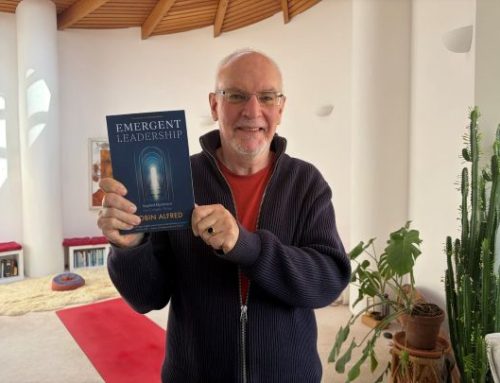
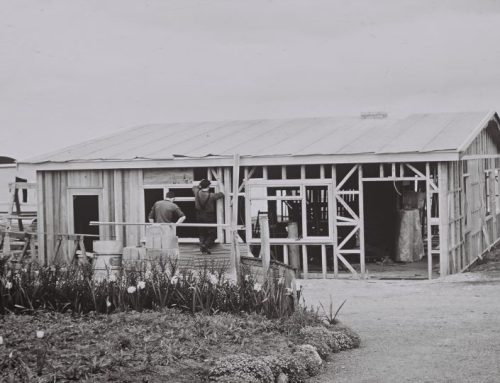

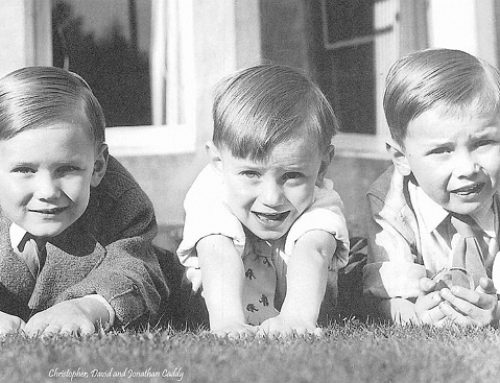


Leave A Comment