


Growing older in Community
“Getting older? I don’t feel old yet! I think 62 is pretty young. The older I get, the more middle age is just over there, it’s not me. I have to acknowledge I will get older and might have to work less, or even need care, but right now I don’t feel old at all!”
So says Hanna Morjan, who has been living as part of the Findhorn Foundation for 21 years, and is currently manager of the Universal Hall, plus some part-time hours in the Education Department. She continues:
“The whole question of retirement and pension comes up at this age though. When I allow myself to reflect on the fact I have no pension or means of supporting myself when older, it’s scary. I never took out a pension, or thought about my future, because since 1984 I thought we wouldn’t be here any more, so there was no point in having a pension.”
It’s obvious that the Foundation can’t have a third of its accommodation filled with people not working, so what to do? At the moment, Community members can apply to become an elder when they have been 25 years in the Foundation; and then they are eligible for food, accommodation and a staff allowance. But not everyone will, or can, become an elder.
While this is a challenge for the whole of the UK, in the Community it is being addressed in various ways:
a. the Duneland development has two flats purposely built for older people or those needing intensive care
b. fundraising to purchase a house to be rented out to older members is being considered and elders themselves can:
c. explore becoming non-residential staff members, and/or living as part of the NFA instead of the Foundation
d. attend the elders’ retirement group meetings (revitalised by Hanna).
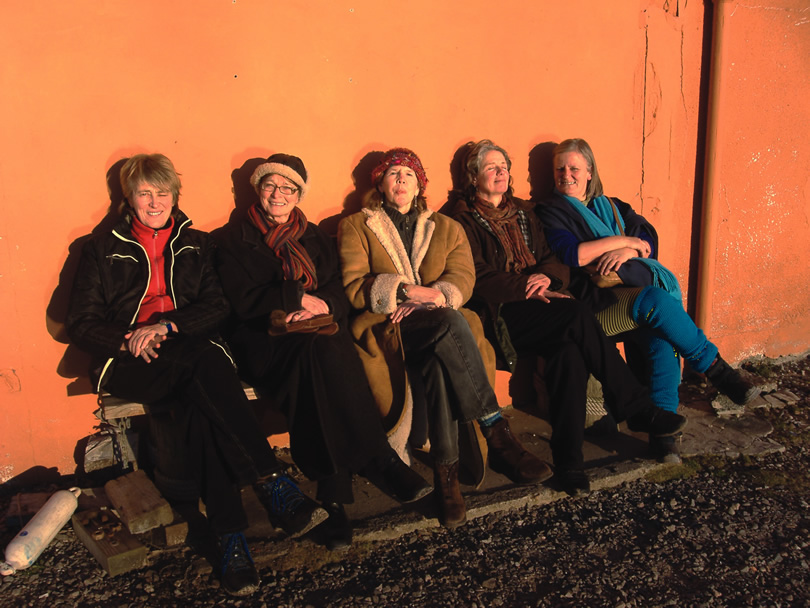 Says Hanna, “Of course there are always lots of discussions going on about other aspects of how to take care of ourselves and our Community members when they get older. It’s part of the ethos of living in community. And given that many people want to live in a community atmosphere when they are older, it’s very important that we are looking at this. I, for example, don’t want to live in a house with only old people; it’s much more creative to have a mixed house. The other day we had a women’s gypsy dance evening in my house with three generations attending, and it was so much fun. That’s what community is about, not living in ghettos. It’s very good for the younger women to see older women role models and for us to have the younger energy. Of course, it’s also good once in a while to meet with people of similar age to explore common issues.”
There has been much discussion in recent years about what happens when Community members reach 65, the age retirement used to be mandatory in the UK. But living in community, there is no such thing as retirement. It becomes an obsolete concept, because community living is all about contribution. The problem really is when you are unable, for whatever reason, to contribute. What happens then? Ideally, a network of friends and colleagues within the Community would want to take care of you, if possible.
Basically, though, how members manage within the Community is going to be much more down to individual circumstances. S&PD, the personnel department in the Foundation, invite those over 60 to consider their situation, and invite them to think practically about what they want, what they can still contribute, and where they are going in their lives. “This seems to me to be sensible,” adds Hanna. “We need to be responsible Community members, but we also as a collective need to be looking out for our members as a whole.”
Jane Duncan Rogers, based on an interview with Hanna Morjan

Jane, a coach, TedX speaker, writer and spiritual entrepreneur, now runs the Embracing Ageing community online.


Leave A Comment