


IN PETER CADDY’S WORDS
Work is Love in Action
The first insight card drawn during the 2012 Internal Conference expressed, You do what’s needed. Talking to John Willoner, one of the first people to join the community 45 years ago, these words seem to capture the ethos of the early years and the personality of Peter Caddy
 When John arrived in 1967, Peter handed him a sledgehammer and they got to work breaking large pieces of rock to create loose rubble. They were creating the foundations of the community, preparing for the seven cedar wood bungalows that Eileen had received in a vision. “Later on I met Dorothy and Eileen for the first time,” John said. “However, I knew this was a working community and I wasn’t just here for tea.”
Each member of the community had their distinct roles. Peter worked mainly in the garden with Janet Whitmarsh and John worked in maintenance and construction. Eileen cared for the children and Dorothy spent hours at her desk typing up her and Eileen’s guidance. Lena Lamont did the cleaning and Joannie Hartnell-Beavis and Eileen would prepare the meals from food grown in the garden.
Everyone would start work at dawn. Many months were spent digging shoulder to shoulder, “Putting light into the ground,” John remembers Peter saying. Their main focus was the physical work that was necessary, putting spiritual lessons into practice through love in action, one of the founding pillars of the community.
Peter had been initiated into the Rosicrucian Order Crotona Fellowship at the age of 19. He was determined to embody their principles and they became disguised as the power of positive thinking, for which he was renowned. These early years of spiritual training combined with his RAF leadership skills were channelled into the development of the community, along with his great sense of humour and determination to do God’s will. One of the youngest squadron leaders in the RAF, Peter wrote an article called Leadership and Morale, in which he said, “Leadership is a quality of the soul. The leader must have the ability to inspire others. There is in all men a spark of the divine. The true leader evokes this.”
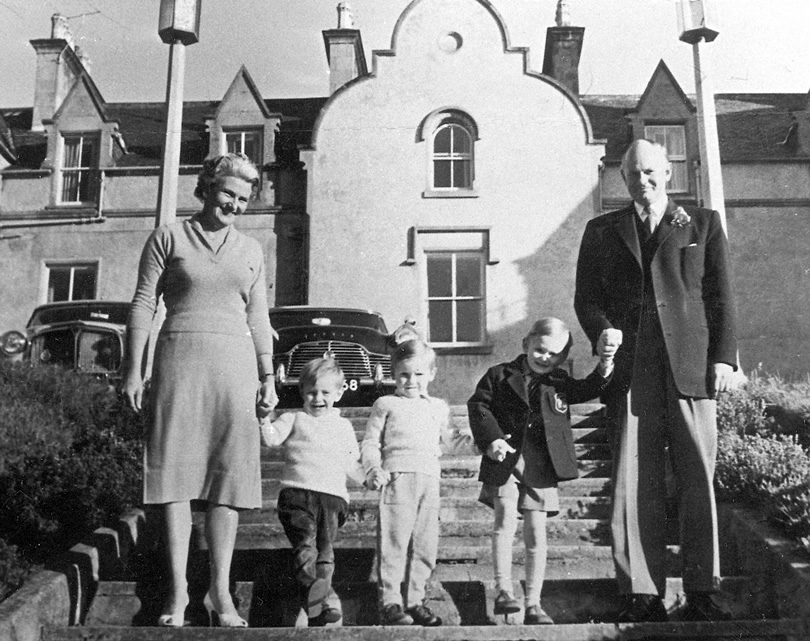 When new people arrived in the community Peter would ask what skills they had and find out how they could best contribute. He felt the importance of inspiring others, drawing out their inherent qualities of greatness, courage, faith and initiative.
One of Peter’s roles was to wield the sword of light on the ego, picking up on people’s language, behaviour and attitude. “This place is built on God’s word and if people disagree they need to go,” he said. Many people were shown the exit if they were working for the self rather than the benefit of the whole.
John remembers Eileen saying that Peter was completely dedicated and committed to whatever he was doing. Whether he was digging in the garden, or turning the compost, it had to be done with his full attention and done perfectly. He felt a great responsibility as a co-creator of the community, an unwavering commitment to serve and absolute faith that all their needs would be met.
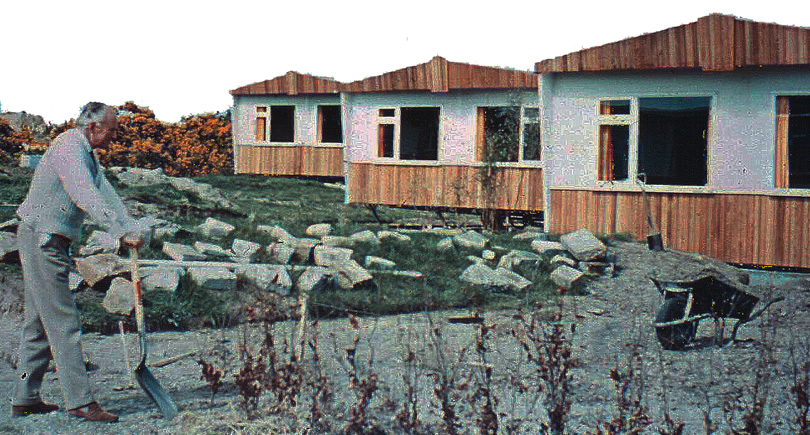 He was a doer rather than a meditator, a forceful dynamic person who led by example doing everything for God with the focus on love in action. His energy and enthusiasm was vital to bring Eileen’s and Dorothy’s guidance into material form and ground the unfolding vision of a city of light.
Peter was very good at delegating, however, ever-present and a great inspector checking for perfection. In late 1970 a turning point came in the community. Peter developed gallstones and was in a rare position of feeling vulnerable. After an operation in hospital he started digging again too early and his stitches broke. Through this, he slowly learnt to let go and trust others – until then he felt that without his presence things would slip.
 “I was amazed by how much work was done by so few in a relatively short time. This was synergy in action,” John commented. “There was no time for emotional processing. Peter’s approach was based on his training to control the emotions through the power of positive thinking.” He believed that selfmastery was the prerequisite to dedicate oneself wholly to service.
In 1970 there were only about 20 people living here; others came for a week or less. Then community numbers started to explode, with many young people coming from America after the arrival of David Spangler, who highlighted the educational aspect of the community during his three-year stay.
Myrtle Glines, David’s spiritual partner, brought awareness of an important element into the community: the psyche. A new openness to emotions began. Craig Gibsone said, “It was the first time in the community that the spiritual soul was not considered the only self. Myrtle looked at you in a more holistic sense and got you to work with whatever was happening.”
Within 18 months the community grew to 150 people and Peter realised that it was becoming too large for him to run alone. Instead of the small work groups of the 1960s, work departments were established to organise the number of guests arriving, and the community moved into its next stage of evolution.
Something magical happens when people work alongside each other, they have greater insights
than just being an observer. The difference here in the community is the attitude which people are still encouraged to bring to their work: a sense of attention, appreciation and love. Work is not just a duty or a chore; it can be a joy when approached with the right intention, and group energy creates synergy and inspiration.
Peter had a great sense of mission, which was the driving force of his life. In his own words, “This sense of mission seems to arise in the heart of a man who sees a need to be met or a work to be done, for which he feels himself to be especially fitted or chosen. It is this sense of mission that fortifies the will to achieve the aim regardless of hardship, obstacles or even seeming impossibility.”
John Willoner interviewed by Christine Lines

Born in England, I joined the Caddy Family in 1967 (aged 22) and pioneered Community living here. Findhorn has been my spiritual home ever since.




Leave A Comment