

Editor’s Note: The Park Librarian, Dina Leigh shares the three talks she gave to the Educational Council in 2006 about the relevance and importance of the library and education within the community vision.
Other Library articles in this series.
Recollections of the FF Libraries and Archives 2000-2006
An Exploration into the Effectiveness of the Function and Service of the Findhorn Foundation Park Library
***
The Educational Council invited me to talk about possible new steps for the Park library and Education into the future and to publish this in the Rainbow Bridge in 3 parts.
To read the text of each part Please click on the arrows on the left to expand the sections.
Part 1 Facts & Figures
Facts: Libraries could provide items for recreation, leisure, information, communication and education. These items can be printed for example, books, magazines, maps, etc. but can also be audio/video, such as CD/DVD. Apart from a lending service, access to computers, a study and reading space is as important. At this moment the Park library can provide books only, tapes/ cassettes need to be transcribed for modern usage and there is no space for computers and study desks.
There are many collections of books in our community with closed access, which means it is available for a particular group of users: Cluny library, Erraid, Iona, FF. College, Education, John Talbott’s Eco-village collection and in departments: Kitchens, Gardens: Cluny, The Park and Cullerne, Guest accommodation, Cluny family room (books and Audio/video).
The Park library has not only an open access to members of the Findhorn Foundation and the wider community, participants of workshops and programmes, guests, but also to local people.
The Park Library is by nature a special library which reflects and is funded by the Findhorn Foundation organisation for its members. A special library differs from a public or academic library because it is relatively narrow in scope. A special library cannot offer as wide a range of subjects as a public library, it is the specialisation/quality that counts. The Park library has an emphasis on spirituality, religion, healing, nature and environment.
Figures are all approximate but I hope it will give you a glimpse of a working year in the Park library.
The Park library has at least 4.500 books in stock. In January 2006 there are more than 3.800 available on the shelves and there are registered unreturned/borrowed, 41 in 2003, 42 in 2004, 190 in 2005, 77 in January 2006.
There is a circulation of approx. 2.600 per year, 1.600 books per year returned within one month, 900 books returned in the same year, and there are a small amount of books returned later or missing, being damaged or undergone other unexplainable accidents. In fact it is amazing that without a security system and without fines most books are returned within a reasonable time.
From 200 books in the section Health & Wholeness and Literature 70% has been taken out at least once since 2000. This means that there is still a need for updating and renewing the collection and to find the right balance between the old but precious and the new and exciting.
The good news is that the library receives 500-700 donations per year. These donations are usually a welcome addition to the collection and also provide for the replacements of missing books.
Since last year the Park library has a budget of £200 per year, from which some requested books by library users have been acquired. Donations and budget results in at least 500 new titles per year plus replacements of worn out and missing books.
The Park library has one unpaid co-worker librarian for 4 shifts per week.
Part 2 on Libraries and Education will follow next week.
With love, joy and gratitude Dina Leigh for the Park library.
Part 2 Library and Education
The Park library is created and funded by the Findhorn Foundation organisation for its members. The library reflects what and who we are and therefore we can look at it
– as a service for members, guests and the wider community
– as a collective memory
– as a sacred place of wisdom
– as an enrichment to the community
– as an important source for education
Libraries
A survey has found that libraries are still seen as places for traditional resources- books, reference materials and research assistance and they are not yet top choice for e-access (electronic). There is though a strong sense that libraries must, within their remit, redefine and refine what they are and what they should be. The revolution in communication and the open access movement not only changes the environment of libraries at a fast speed but it also gives it the opportunity to open new channels, such as the Web and iPod downloading.
Today library users like self-service and access to traditional and online resources in a relaxed environment. In London’s East End the old treasured library of Whitechapel, has changed into an Idea-shop. In Manchester a “green” new library, with photovoltaic cells, a rainwater recovery system and community garden opened its doors to students and public in January 2006.
In this context of changing use it is interesting to see how our library could develop. We have to concentrate on what we are good at and where other professionals/skilled people can bring insights. Libraries of the future need outgoing people, with business skills and an understanding of electronic information and technology.
Education The Findhorn Foundation presents herself as a spiritual centre for education. In these times of development of the human consciousness and the awakening of the individual, education will become even more important for the future. To get credibility we have to take ourselves seriously and present to the world not only a new way of education but also appropriate facilities such as an up-to-date and vibrant library or learning resource centre.
Education and libraries complement each other for the same purpose: to help people to develop and transform through education. They serve the same group of people, either internal or external, students and members of our community.
How can the library serve education ?
At this moment the library:
-could provide books
-could display and recommend books
-could support workshop leaders
-could acquire requested books
-could connect people with the same interest
-could help to find information on certain subjects
At this moment workshop leaders/teachers
-could point out to students that they can use the library to get more background or information to broaden their interest
– could create a compilation of cuttings or reading lists of books
– could present the library with a list of books to acquire
– could leave requests or inquiries on the desk in the library or in the “green folder” in the General Office.
For the future
-when there is a computer, communication and information will be more effective and efficient. On first class: there could be notices of new books and maybe other things like book reviews.
-when the library has moved into a bigger space, we could have desks to study and a sitting space for small study groups.
-when the library is growing into a learning resource centre, it could be a place not only for books, reference and archives, but there also could be an audio/visual section, a communication and electronic information location.
Part 3 “Dreaming from the past into the future” will follow next week.
With love, joy and gratitude Dina Leigh for the Park library.
Part 3 Dreaming from the past into the future
In its early days people of all ages were attracted to Findhorn, because they found there a group demonstrating a new way of life which gave expression to their dreams and hopes. From the original comradeship of seeking they developed into a fellowship of knowing- knowing that limitless love and harmony within and without, is co-operating with the Divine in a manifesting new age.
From old magazines in the reference section of the Park library I have put together some snapshots from the past to get a feeling of the sort of roots which we are now building on.
“Through guidance from Elixir and under direction of St. Germain The Park (building) was given freely to the community. For educational purposes it was an ideal place, which could be converted into one classroom and rooms for offices and a library.
After the first term of the Findhorn College plans are now being drafted by our architect, Robert Ribet, for the building of a college centre on the land which the Trust has purchased with the Park building, including buildings for classrooms and library as well as residential quarters for over a hundred people.”
Transformation of Findhorn 1971 Inward Vision, Outward Bound
“For the present time The Park (building) will be the scene of activity of an educational nature until such time as further buildings can be acquired or built by you. The library should be consecrated to the use of the educational side.”
Rokoczi and the Brotherhood excerpts of transmission through David Spangler from a being known as St. Germain, possibly identified as Rokoczi, on the 8th of November , 1971, at Findhorn.
“The whole of the community is really a University of Light and every activity is educational: the office, garden, studios, kitchen, publishing, construction and maintenance, shop, performing arts, photography, as well as the college. The college at present located in the Park until more buildings are constructed, is the focal point for the library, lectures, discussion groups, workshops andclasses, and group meetings.”
Findhorn News, September 1973
‘We live in an age when we are being forced to grow up, when, as has been well demonstrated within the Findhorn Foundation, outward guidance is being withdrawn so that we are compelling to rely upon our own inner guidance. But we are also moving into a new age of which Christ himself has said, “Behold , I make all things new.” What is going to be the use of our old brains tracks and habit patterns in such an age? Clearly this brings us to the major educational challenge with which centres like the Findhorn Foundation must experiment.
Our task in education is not to build structures of knowledge as such, thereby fixing people in certain habits and belief, but rather somehow to train them so that they can abandon old paradigms and enter into the greatest adventure, which is to set forth on a journey into wholeness.”
One Earth Conference, October 1976
‘The World Crisis and the Wholeness of Life’ Sir George Trevelyan
In 2000 I started to help Constance ( Connie) Marsham, former librarian of the Park library. For 5 years she had been visualising and praying for a new library, which would be open a full day with a full time librarian as a proper library should. Mae and Constance had started a fundraising effort to build a new library. Design studies, for a shelving arrangement for 7000 books and archive storage, IT accommodation were carried out. The project has so far not been taken further than an initial sketch design.
The future
In these times of development of the human consciousness and the awakening of the individual, education will become even more important for the future. To get credibility we have to take ourselves seriously and present to the world not only a new way of education but also appropriate facilities such as an up-to-date and vibrant library or learning resource centre.
A first step will be growing awareness of this source, this unique collection of books. It has been created by all the people who have been connected with this community from the early days till now and you are invited to use it to be beneficial for all.
A holistic approach of all the “community” libraries, archive and other resources. Now new facilities are planned with an eco-village “resource library” it could be a time to reorganise the library control systems to manage the resources more effectively and efficiently.
To get credibility in the world as a spiritual centre for education we need a vibrant library/learning resource centre. ( The president of the USA, Bill Clinton gave his people a library – could we give a library appropriate for the new age to the world ?
With love, joy and gratitude Dina Leigh for the Park library.
More Facts & Figures
The Park Library is a special Library which reflects the organisation. which differs from a public or academic library.
Funded by the organisation for its members.
The collection of approx. 4.500 books is relatively narrow of scope, which emphasis on spirituality, healing and environmental or eco-village awareness.
A special library cannot offer as wide a range of subjects as a public library.
approximate 4.500 books
2.600 total circulation per year
3.810 in stock
41 out in 2003
42 out in 2004
190 out in 2005
77 out in January 2006
2.600 books out per year
1.248 books returned in one month
572 books returned in the same year
728 books returned late
49 books ?
500-700 donations per year Budget £200 per year
which results in at least 500 new tittles per year (10 per week) plus replacements of worn out and missing books.
staff 1 unpaid co-worker librarian 4 shifts per week
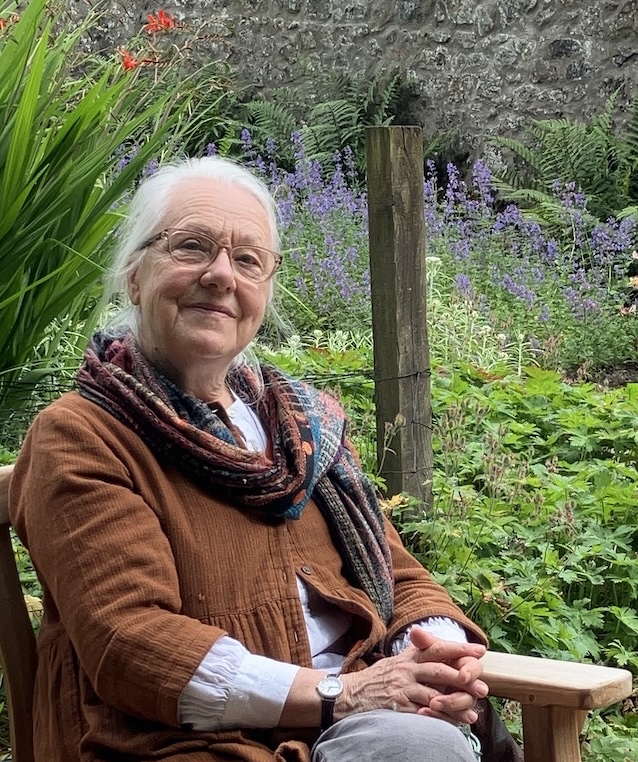
Visited Findhorn: 1976. Lived in The Park:1999-2007
NFA member, librarian for the Findhorn Foundation libraries 2000-2006, painter MA Fine Art, teacher Art and the Human Soul, gardener and member Anthroposophical Society in GB





Leave A Comment